
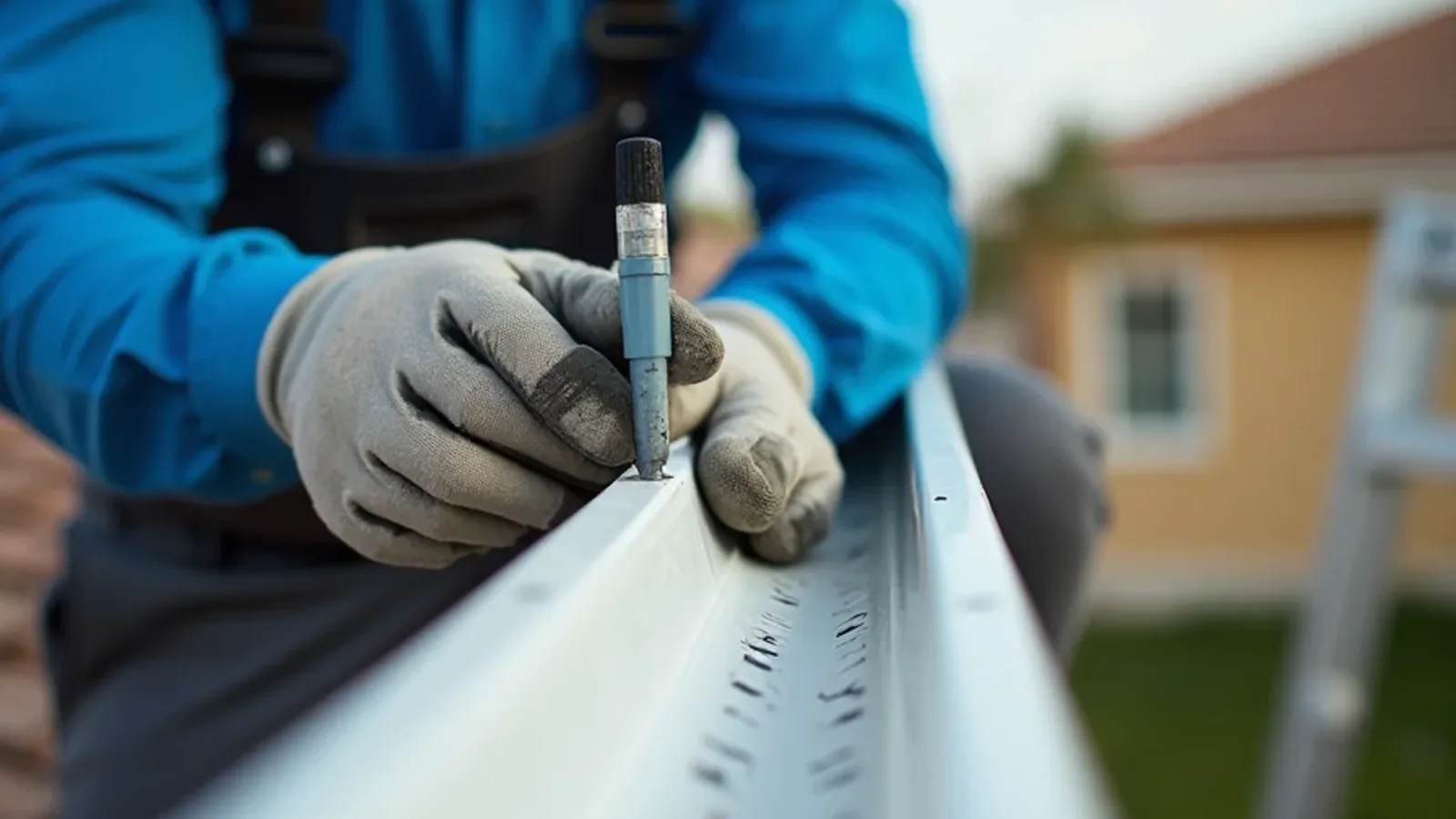
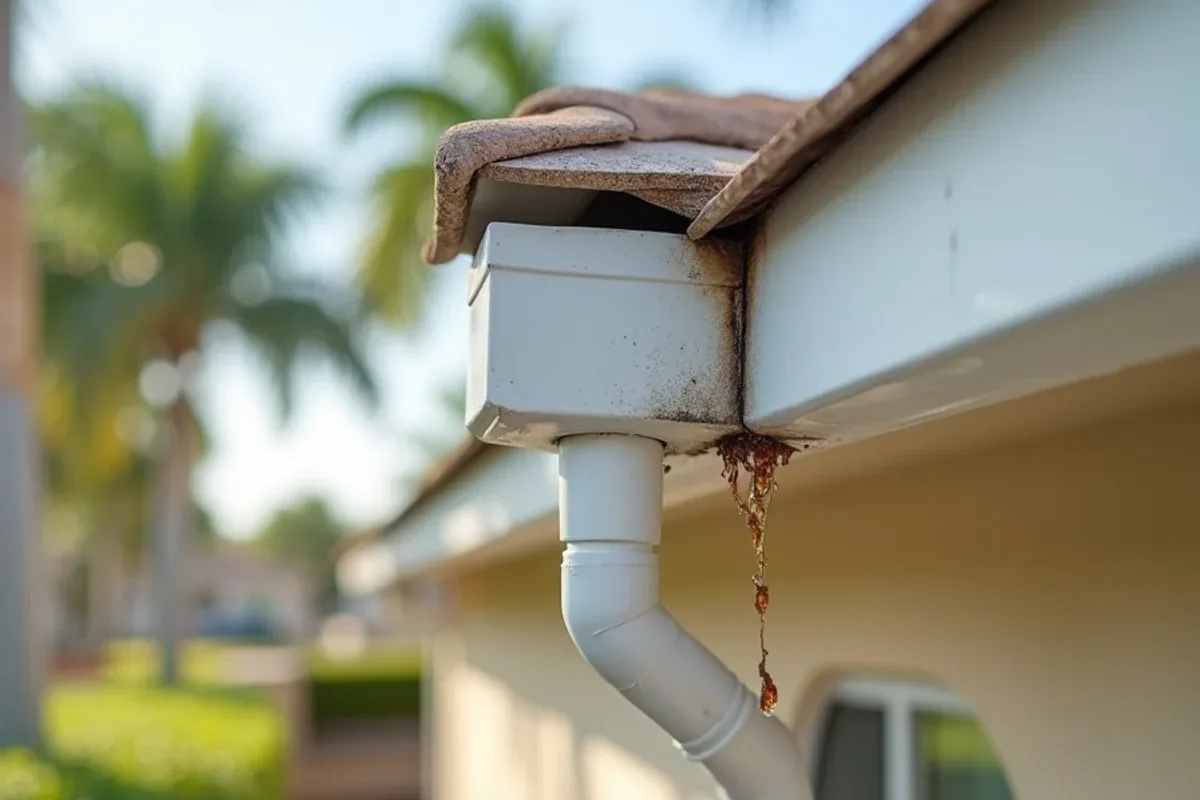
A gutter that leaks rarely leaks everywhere. It drips from one corner, one end cap or the ring around one downspout outlet, and that single drip lands in the same place every storm until it stains the stucco, eats the mulch or soaks the fascia. Leaking gutter repair is about finding that one joint, preparing it the right way and sealing or rebuilding it so it stays dry.
Southern Gutters FL handles these repairs across Broward, Palm Beach and Miami-Dade as part of our wider gutter repair service. Plenty of the leaks we see have already been caulked once by a homeowner or a handyman. When that fix failed, it usually wasn't the product so much as what was under it.
Where is the drip coming from? Reading the clues below your gutter
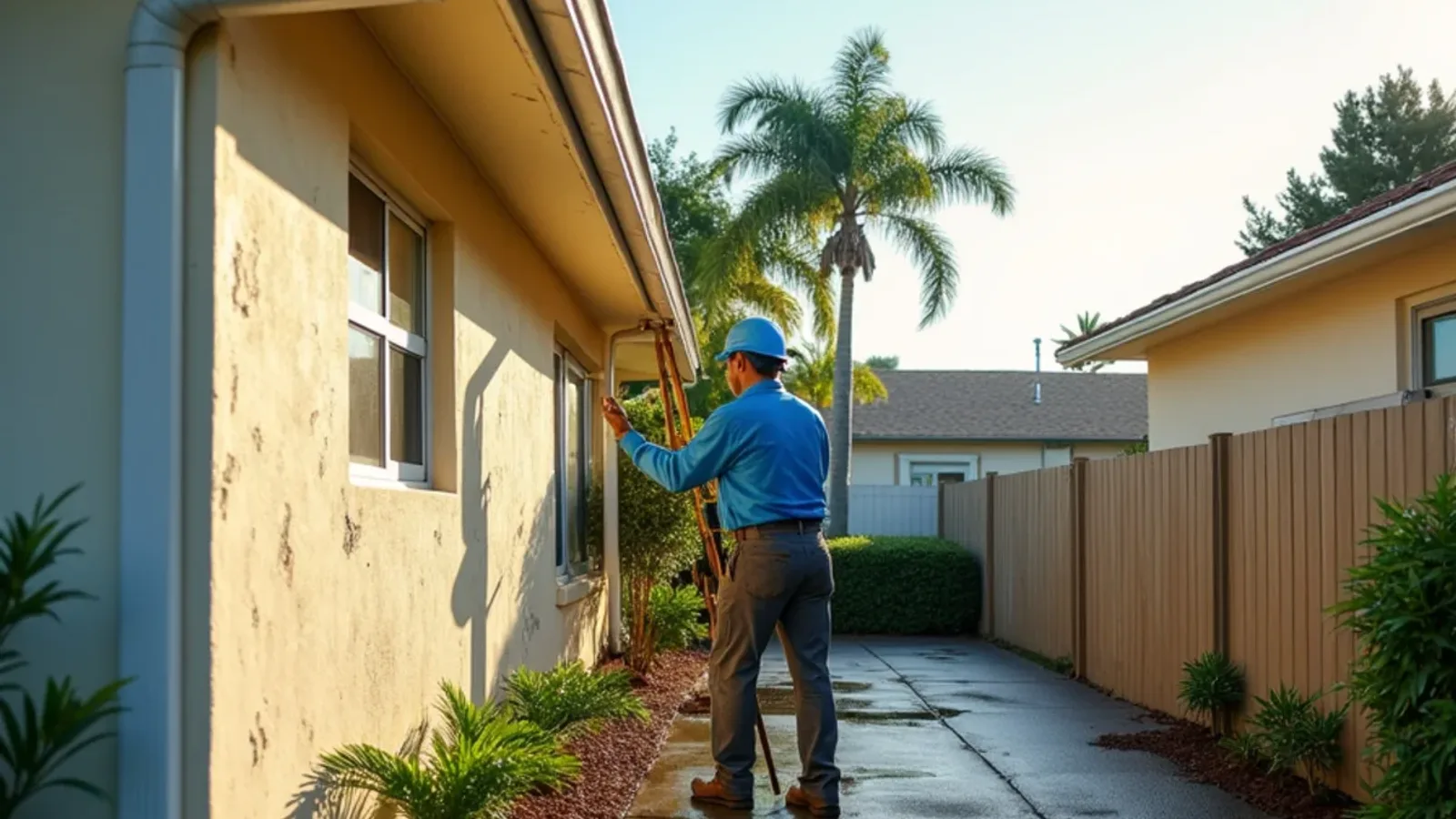
Before anyone climbs a ladder, the wall and the ground usually point to the problem. A narrow dark streak running straight down the stucco under one spot almost always means a joint directly above it. A splash crater in the mulch or a washed-out strip of rock tells the same story from below.
Wider staining, or paint peeling along the full length of the fascia, points to something different: water getting behind the gutter instead of through it. That is a separate problem with a separate fix, covered further down this page.
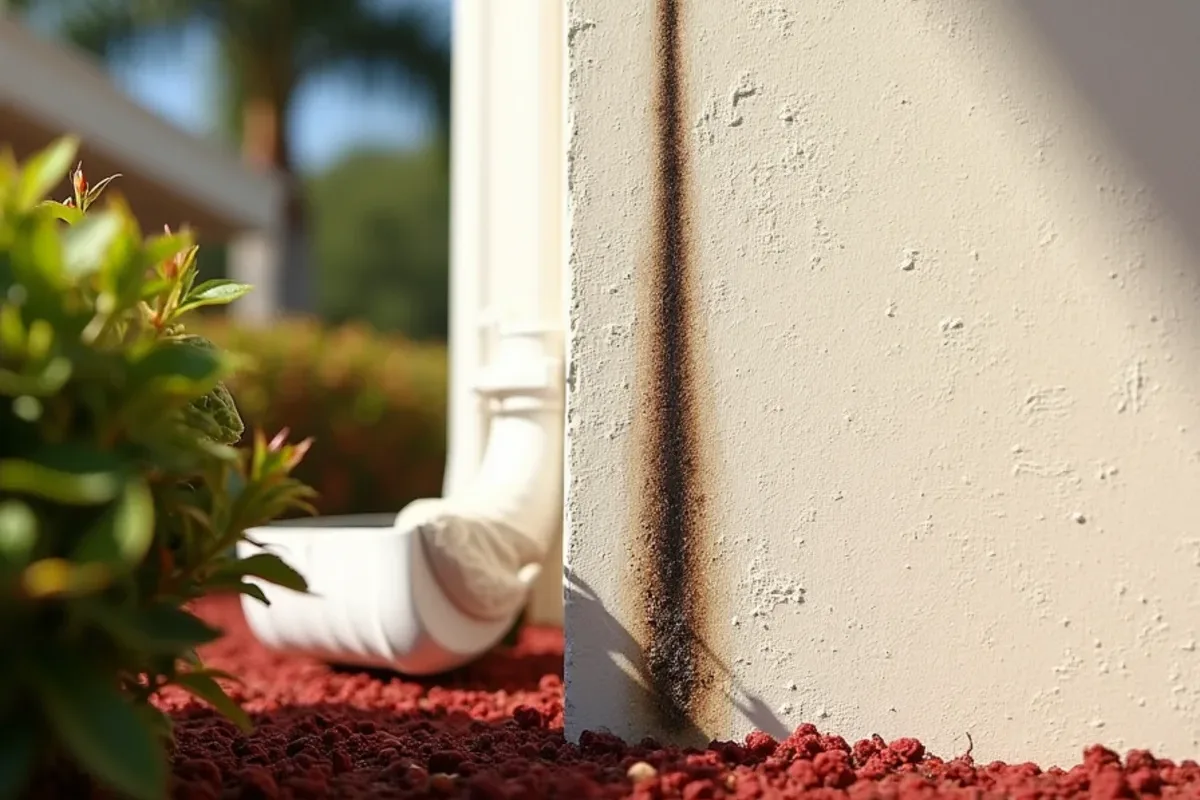
- Drip only during heavy rain: often an overloaded corner or an outlet that cannot keep up
- Drip that continues for an hour after the rain stops: water trapped behind a debris dam and seeping through a joint
- Drip at a downspout: a cracked drop outlet or failed seal where the outlet meets the gutter
- Peeling paint on the fascia beside a single joint: a slow leak that has been running for several seasons
Why a gutter corner keeps leaking season after season
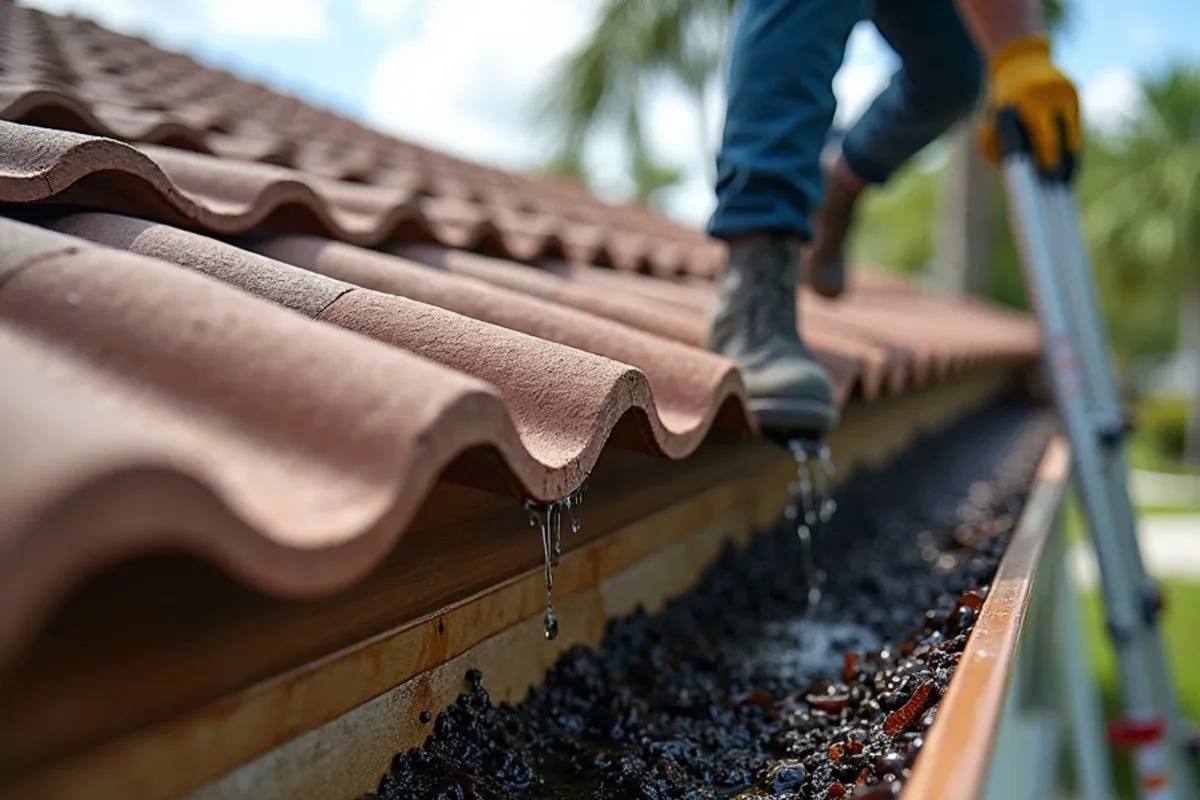
Corners carry more load than any other spot on the system. Two roof planes, and often a valley, empty into the same few inches of gutter. In Broward neighborhoods lined with black olive trees, the leaves ride that flow straight into the inside corner and pack into a mat that holds water against the joint for days.
Heat makes it worse. Aluminum grows and shrinks with temperature, and a long run that bakes in afternoon sun then gets hit by a cold cloudburst flexes right at the corner. Over a few rainy seasons that movement tears the sealant away from the metal. Our guide to why gutters leak at the corners explains the forces in more detail.
Gutter seam leak or end cap leak? Tracing the joint that failed
A true seamless gutter has no splices along its length, so a mid-run gutter seam leak usually means sectional gutters or an old patch where someone joined two pieces. Those overlapping seams fail far more often than a factory miter, and a home with a dozen of them is a different conversation than a home with one.
End caps
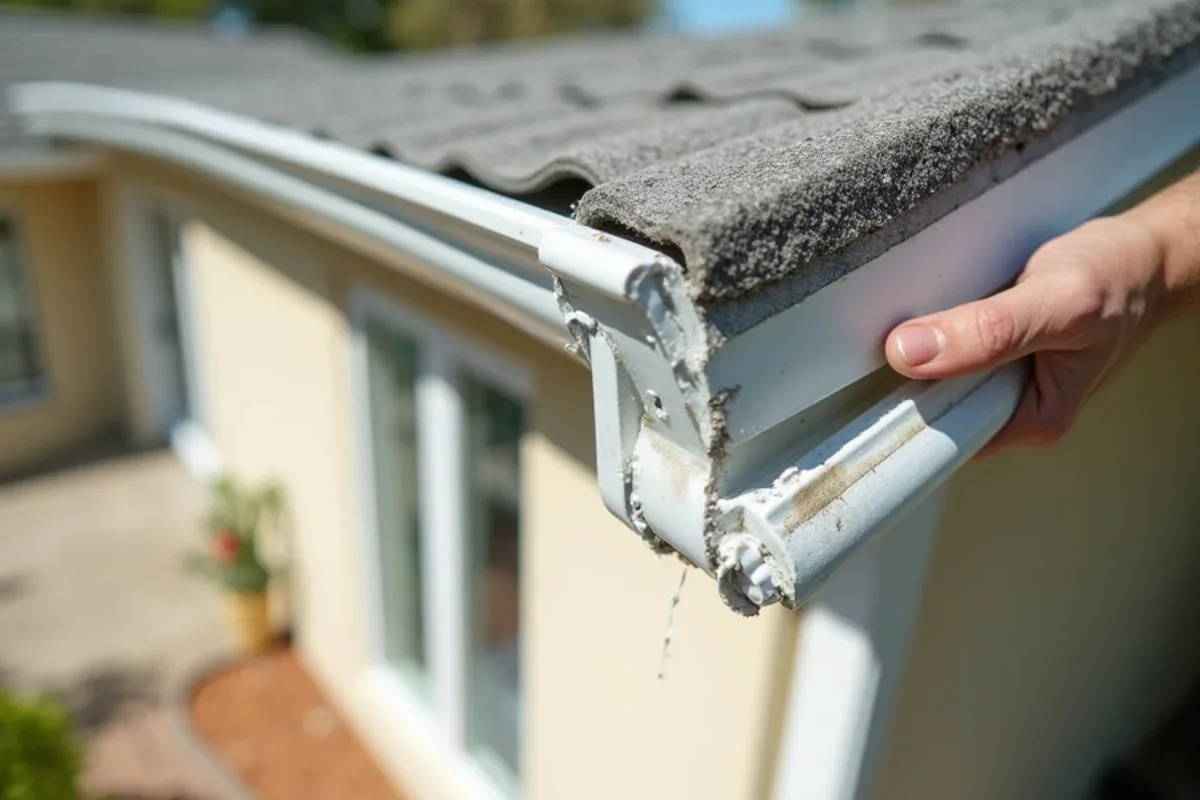
A gutter end cap leak tends to start at the bottom corner of the cap, where water sits longest. Caps that were crimped and sealed but never riveted can creep outward as the gutter expands, opening a gap you can see from the ground on a sunny day.
Drop outlets
The outlet is a short tube riveted and sealed into a hole cut in the gutter bottom. A downspout bumped by a mower or a ladder can twist the outlet and crack its seal. When the outlet is also undersized for the roof above it, water stacks up and finds that weak seal quickly.
Reseal gutters or rebuild the joint? Comparing the fixes
Fresh sealant is the right answer more often than not, but only if the metal under it is sound and the surface is properly prepared. Here is how we choose.
| Fix | Best for | Trade-off |
|---|---|---|
| Scrape, clean and reseal | Sound metal, failed or dirty sealant | Quickest fix; still needs a check every few years |
| Add rivets, then reseal | Joints that move or caps that creep | Stops the flexing that tore the old seal |
| New end cap | Bent, corroded or loose caps | Small part, lasting result |
| Replace the corner miter | Pitted, cracked or badly patched corners | More labor, but a clean new joint |
| Replace the drop outlet | Cracked or undersized outlets | May also mean resizing the downspout |
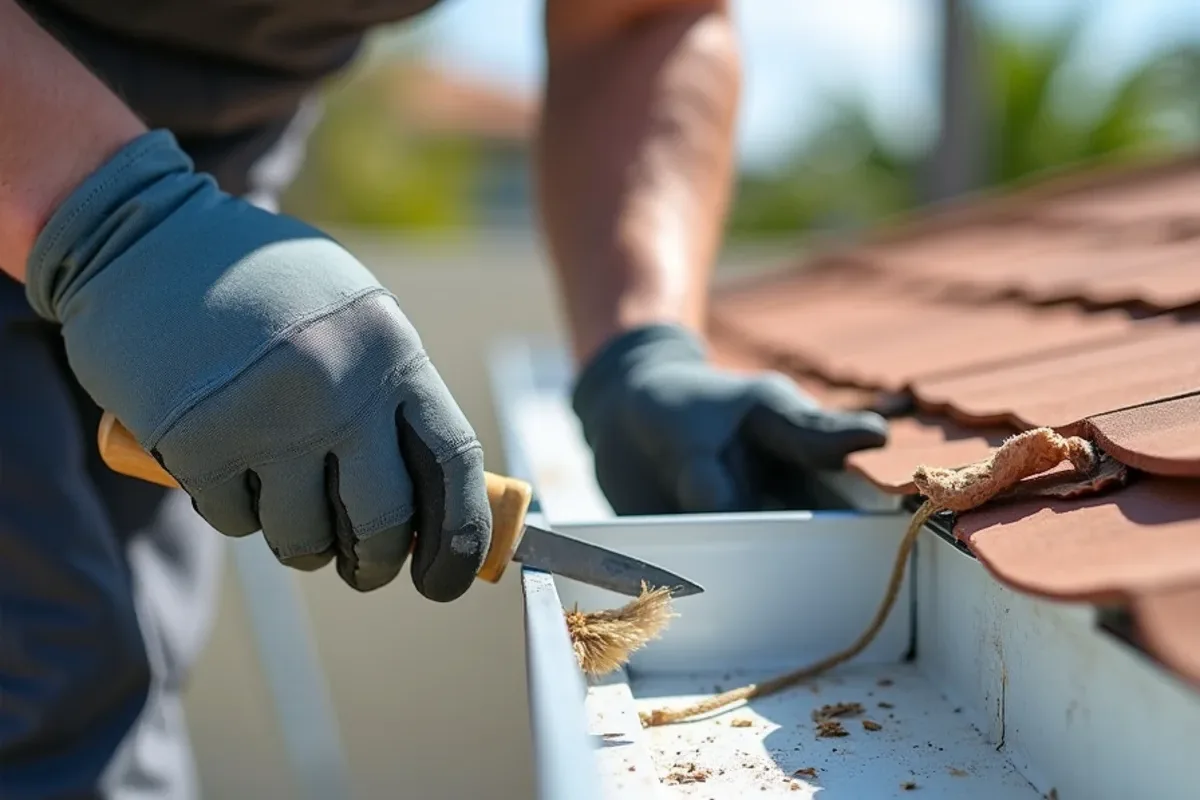
Household silicone is the most common failed fix we remove. It does not grip dirty aluminum well, it peels in sheets, and new sealant will not bond to the residue. Every scrap has to come off before we reseal gutters, or the new bead fails the same way.
Permits, HOA color rules and contractor checks
Sealing and riveting a joint is routine maintenance. Rules come into play when a leak repair grows: replacing fascia, or swapping whole runs on a Broward or Miami-Dade home inside the Florida Building Code's High-Velocity Hurricane Zone, may need a permit, and your city or county building department makes that call. Under an HOA, replacement end caps and miters should match the approved gutter color. For bigger work, Florida's DBPR keeps contractor license records that anyone can look up, and every contractor should hand over a certificate of insurance on request.
Gutter drip behind the gutter: when the joints are not the problem
Sometimes every joint is tight and water still runs down the wall. In that case it is slipping between the back of the gutter and the fascia, usually because the drip edge stops short, the gutter hangs too low, or a clog is pushing water over the back lip.
We check for this on every leak call, because sealing a corner will not help if the real path is behind the gutter. Gaps at the roof edge are handled through our roof-edge leak repair service, and the guide on water running behind your gutters shows the warning signs to look for between visits.
What leaking gutter repair covers, and who stands behind it
A leak call is not a caulk gun and a quick climb. We clear the run first, because a joint buried under sludge cannot be judged, and we look at why it failed before we seal it. A corner that leaks because the run holds standing water, or because a clogged downspout backs water up against it, will leak again unless pitch or flow gets corrected too. The written quote lists each joint and what it needs, so you can see the scope before anything is scraped.
- Hose testing every joint on the run, not only the one that stains
- Scraping, cleaning and riveting miters, splices and end caps before fresh sealant goes on
- Patching pinholes or small punctures with an aluminum patch set in sealant
- Resealing or replacing cracked drop outlets
- Correcting a low spot or blocked outlet that keeps water sitting on a joint
Typical before
Typical after
Why call Southern Gutters FL for a dripping joint
Leaks are judged in the rain, so the call after the job matters as much as the repair. Since Chance started the company in West Palm Beach around 2020, through Oakland Park and now North Lauderdale, every job has ended with a follow-up call. Reviewers rate us most for Quality, Value, Professionalism, Responsiveness and Punctuality, and they mention cut edges painted and gates closed behind the crew. Photos of a drip can go to SouthernGuttersFL@gmail.com before the free estimate.
How a leak repair visit runs, and how to keep the joint dry afterward
- We book a dry window, often mornings in rainy season, because sealant needs clean, dry metal.
- The run is cleared of leaves and sludge so nothing hides a second leak.
- A hose test from the high end confirms each leaking joint.
- Old sealant is scraped and wire-brushed off, the metal is wiped clean and allowed to dry, then joints are riveted with stainless or aluminum fasteners and resealed with gutter-grade sealant.
- Once the sealant has set, we run light water to confirm the repair, then clean up and haul away debris.
- After the next real storm, we call to make sure the stain line under that joint has stayed dry.
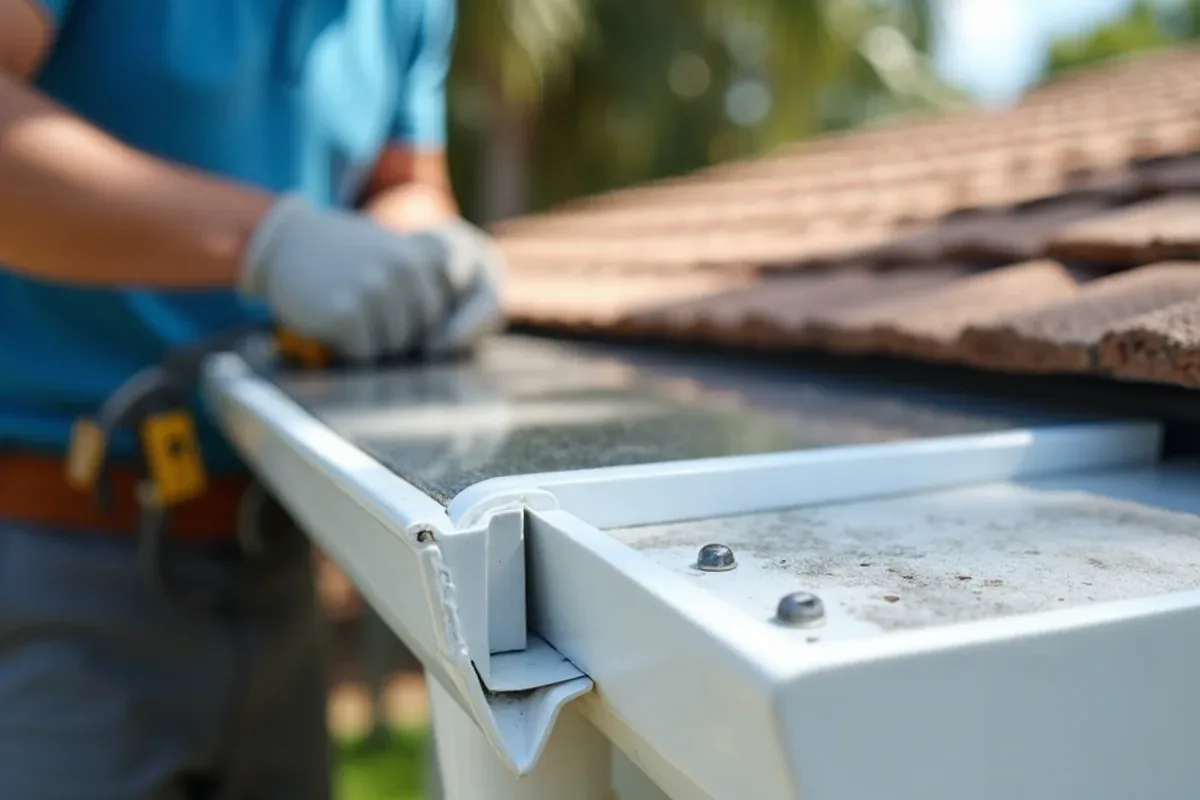
Your written quote reflects the number of joints, whether they need resealing or rebuilding, story height, debris load and any fascia damage we uncover. After the repair, keeping inside corners free of leaves does more than anything else to protect the new seal; regular gutter cleaning before and during the rainy season takes care of that.
What moves the price of a leak repair in South Florida
- Joint count. One end cap is a short job; a sectional system with a splice every ten feet is not.
- Reseal versus rebuild. Cutting in a new miter or outlet takes more time and material than resealing sound metal.
- Height and roof. Two-story eaves and barrel tile edges need more ladder setup and slower work.
- Prep. Old silicone, packed leaves or sludge must come out before any sealant can bond.
- What we uncover. Soft fascia behind a long-running drip may need replacing before the joint can hold.
Leaking Gutter Repair: specialized services
What customers say about our leaking gutter repair work
4.9 average from 54 Google reviews · Read all reviews
“Had new seamless gutters installed due to previous installation being done improperly and causing water damage. Chance fixed the issues with new appropriately sized seamless gutters that look super clean and even added some underground drainage to get the water away from the house where it was pooling. Highly recommend. Pricing was competitive after several other quotes.”
“Chance and his team were great. The gutter installation was timely, efficient and cost as quoted, even after improvement changes. Would definitely recommend Southern Gutters for any install or repair.”
“Great experience! I had sections of gutters that needed repair. Chance addressed all the issues effectively and promptly. Absolutely thrilled with the results and the cost.”
Leaking Gutter Repair questions, answered
Why do gutters leak at the corners?
Corners collect water from two roof planes, and often a valley, so they handle the heaviest flow and catch the most leaves. Debris mats keep the joint wet, while heat expansion in long aluminum runs flexes the corner and pulls sealant loose. Older or poorly made miters may also have been sealed without rivets, which lets them move until the seal tears.
Will sealant fix a leaking seam permanently?
No sealant is permanent, especially under South Florida sun. A properly prepared joint, scraped clean, dried, riveted and sealed with gutter-grade sealant, can stay dry for years. If the metal at the joint is pitted or cracked, or the seam belongs to a sectional gutter with many splices, rebuilding or replacing that section is the more lasting choice.
Why is water running behind my gutter?
Usually because there is a gap between the back of the gutter and the fascia. The drip edge may stop short of the gutter, the gutter may hang too low, or a clog may be pushing water over the back lip. Sealing a corner will not stop it. The fix is closing that gap at the roof edge and keeping the gutter flowing.
Can leaking gutters damage stucco and fascia?
Yes. A steady drip stains stucco and can leave mineral deposits, and water running behind the gutter soaks the fascia until the paint peels and the wood softens. Rotted fascia no longer holds hanger screws, which leads to sagging. Splash at the base of the wall also erodes mulch and soil near the foundation, so small leaks are worth fixing early.
Related services
Roof-Edge Leak Repair
Leaks where the roof meets the gutter traced, flashed and sealed before they rot fascia or stain soffits.
Learn moreFascia Board Repair & Replacement
Rotted fascia cut back to sound wood, new boards primed and finished, and gutters re-hung tight in one visit.
Learn moreGutter Cleaning Service
Hand-cleaned gutters, every downspout flushed and tested, roof-edge debris bagged and hauled away.
Learn moreHelpful guides
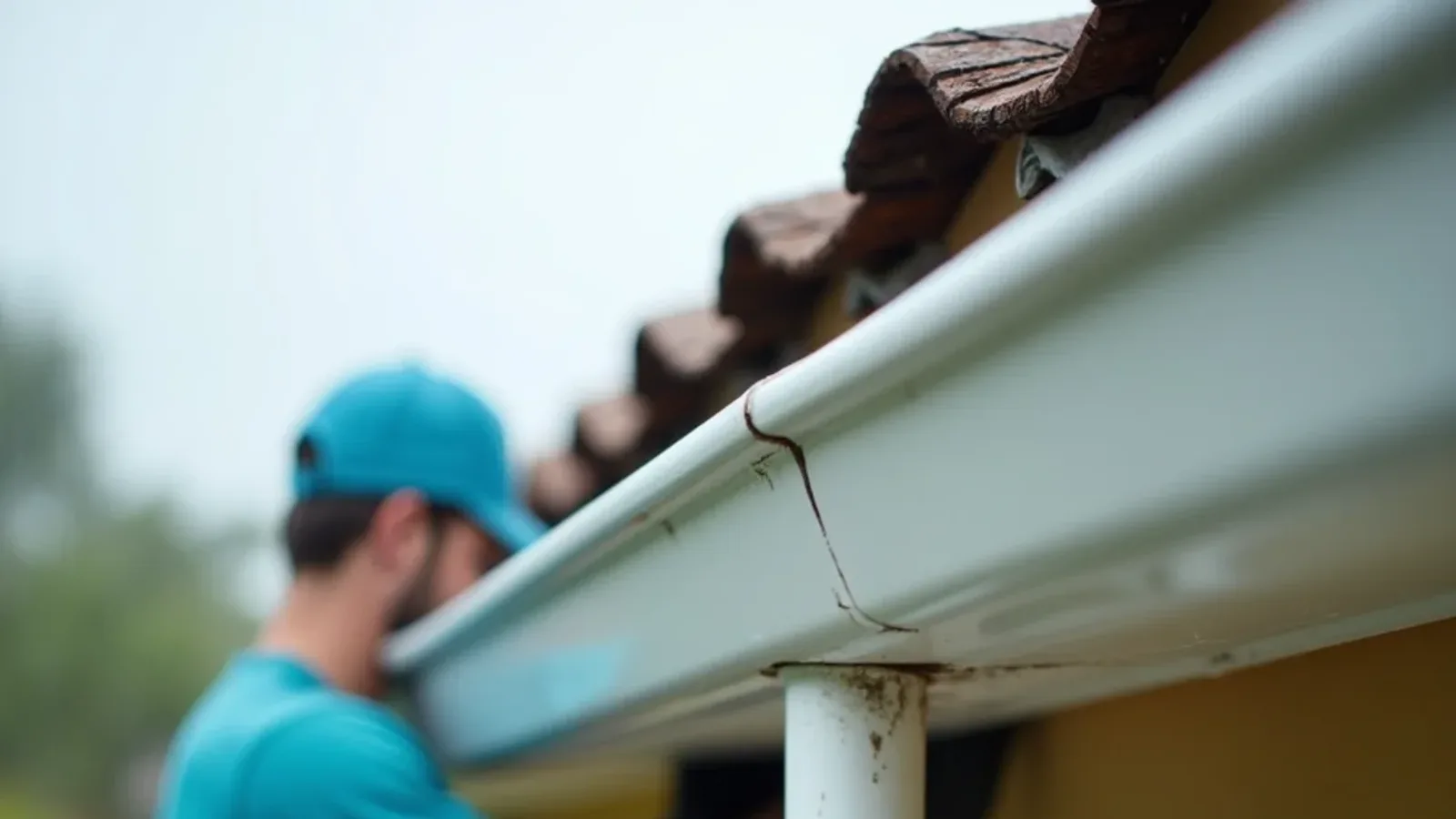
Why Gutters Leak at the Corners (and the Real Fix)
Corners are where gutters leak first. Why miters and end caps let go in Florida heat, how to find the exact joint, and the repair that actually lasts.
Water Running Behind Your Gutters? Fix It Fast
Water running behind gutters instead of into them rots fascia and stains stucco. How to confirm it, the usual causes like a drip edge gap, and the permanent fix.
Where we provide leaking gutter repair
- Leaking Gutter Repair in Coral Springs
Black olive leaves pack inside corners and keep miters wet for days.
- Leaking Gutter Repair in Sunrise
Long sun-baked runs flex at the corners until old sealant tears.
- Leaking Gutter Repair in Lauderhill
Older sectional gutters drip from splices that seamless runs never have.
- Leaking Gutter Repair in Pompano Beach
Salt air pits end caps and miters, so some joints need rebuilding.
- Leaking Gutter Repair in Fort Lauderdale
Drips onto pool decks and patios stain pavers along canal-front yards.
- Leaking Gutter Repair in Plantation
Shaded oak lots keep leaf mats damp against corner joints.
- Leaking Gutter Repair in Tamarac
Villa rows share long gutter runs, so one cracked outlet can soak a shared walkway.
- Leaking Gutter Repair in Margate
Household caulk patches from past owners usually need scraping out first.