
By Chance, owner of Southern Gutters FL · Published · Last updated
Key takeaways
- Drips between the gutter and wall are a flashing or attachment issue, not a clog.
- The most common cause is a gap between the roof edge and the back of the gutter.
- A gutter apron or properly lapped drip edge directs water into the trough.
- Left alone, water behind the gutter rots fascia within a few rainy seasons.
- Check the fascia for soft wood before any flashing or gutter work is done.
Water running behind gutters almost always means a gap between the roof edge and the back of the gutter: a drip edge that is missing or too short, a gutter hung too low, or a section pulled off the fascia. The lasting fix is a gutter apron or corrected drip edge, sound fascia, and a re-hung gutter.
Your gutters are clean, they are not overflowing, and yet there is a line of drips falling between the gutter and the house every time it rains. Water running behind gutters is one of the sneakiest problems on a South Florida roofline because it looks minor. Meanwhile, it soaks the fascia board, wets the soffit, and paints dark streaks down the stucco.
The fix is usually small and specific. The trick is finding the right cause, because the four or five possibilities look nearly identical from the ground. Here is how to narrow it down, what each cause looks like, and what a permanent repair involves.
Gutter leaking behind, or overflowing in front? How to tell
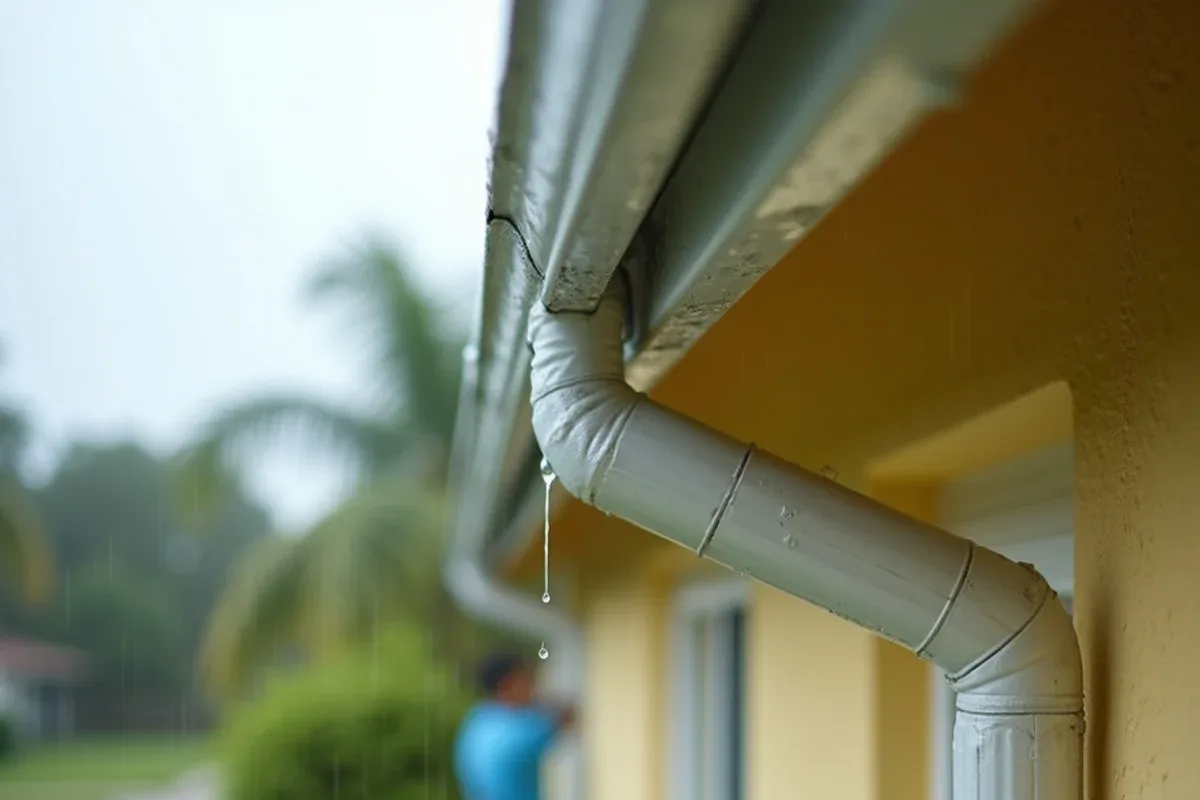
Overflow spills over the front lip and lands a foot or two out from the house. Water running behind the gutter drips straight down against the wall, or runs down the face of the fascia and stucco. Go outside during a steady rain and look along the eave from the side.
- Drips land right at the wall or on the top of window frames: water is getting behind.
- A wet, darker stripe on the fascia below the gutter: behind.
- Splashing a foot or more out from the house: that is overflow, and a different fix.
- Drips only at one seam or corner: possibly a leaking joint rather than water behind the gutter.
The drip edge gap: the usual culprit
On a shingle roof, rainwater clings to the underside of the roof edge and wicks back toward the house. A metal drip edge is supposed to break that path and drop water into the gutter. When the drip edge is missing, too short, or sits behind the gutter instead of over it, water follows the roof deck down the fascia.
We see this most after a re-roof, when the new drip edge was installed without regard for where the gutter sits, or on older homes where the gutter was hung low on the fascia to get the pitch right. Either way, there is a gap between the roof edge and the back of the gutter, and water finds it.
What a gutter apron does
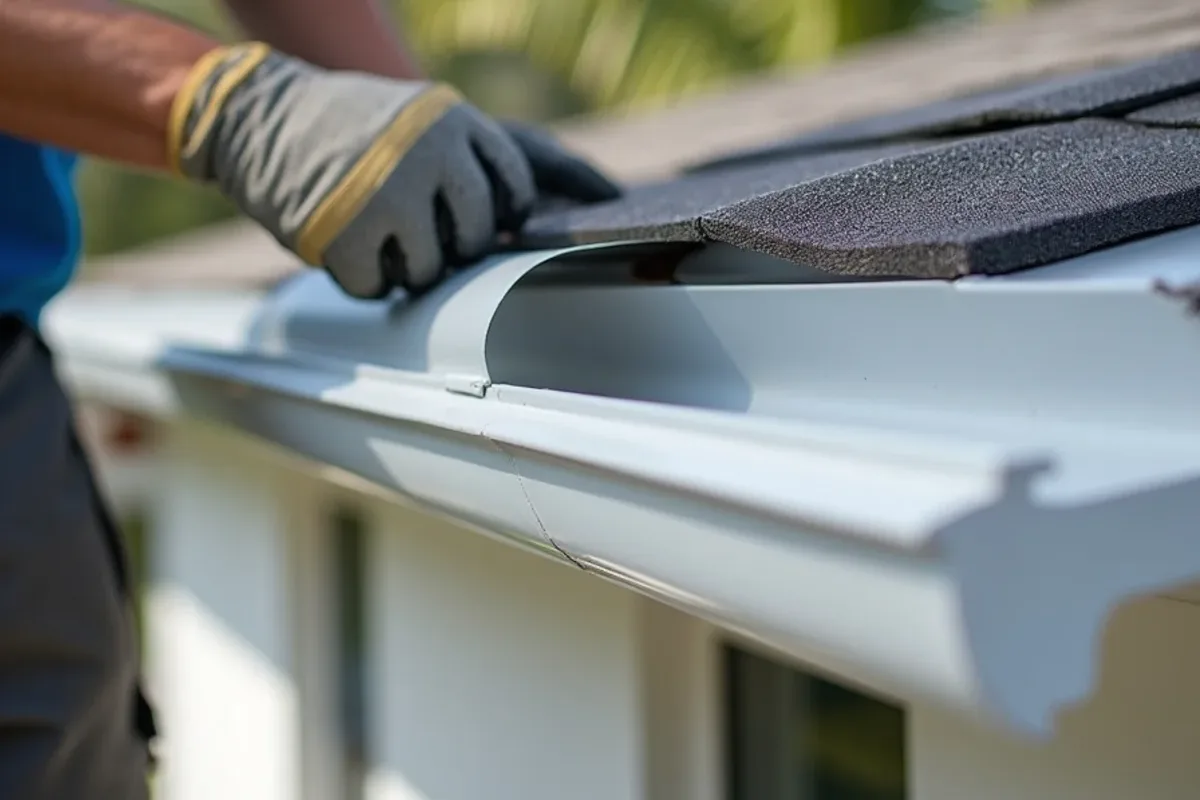
A gutter apron is an L-shaped flashing that slips under the first course of roofing and laps down into the gutter. It bridges the gap completely, so water has only one way to go. It is often the simplest permanent answer when the drip edge cannot be reworked.
Other reasons water gets behind a gutter
| What you see | Likely cause | Fix |
|---|---|---|
| Steady drip line along the whole run | Drip edge gap or missing apron | Install a gutter apron or correct the drip edge |
| Water behind only in one section | Gutter pulled away from fascia there | Re-hang on new hangers into solid wood |
| Water behind at the low end of the run | Back-pitched section pushing water to the wrong end | Re-pitch toward the outlet |
| Drips at a corner or seam only | Failed sealant at a miter or end cap | Reseal or reconstruct the joint |
| Water behind on a tile roof | Tile overhang and flashing not reaching the gutter | Extend flashing into the trough |
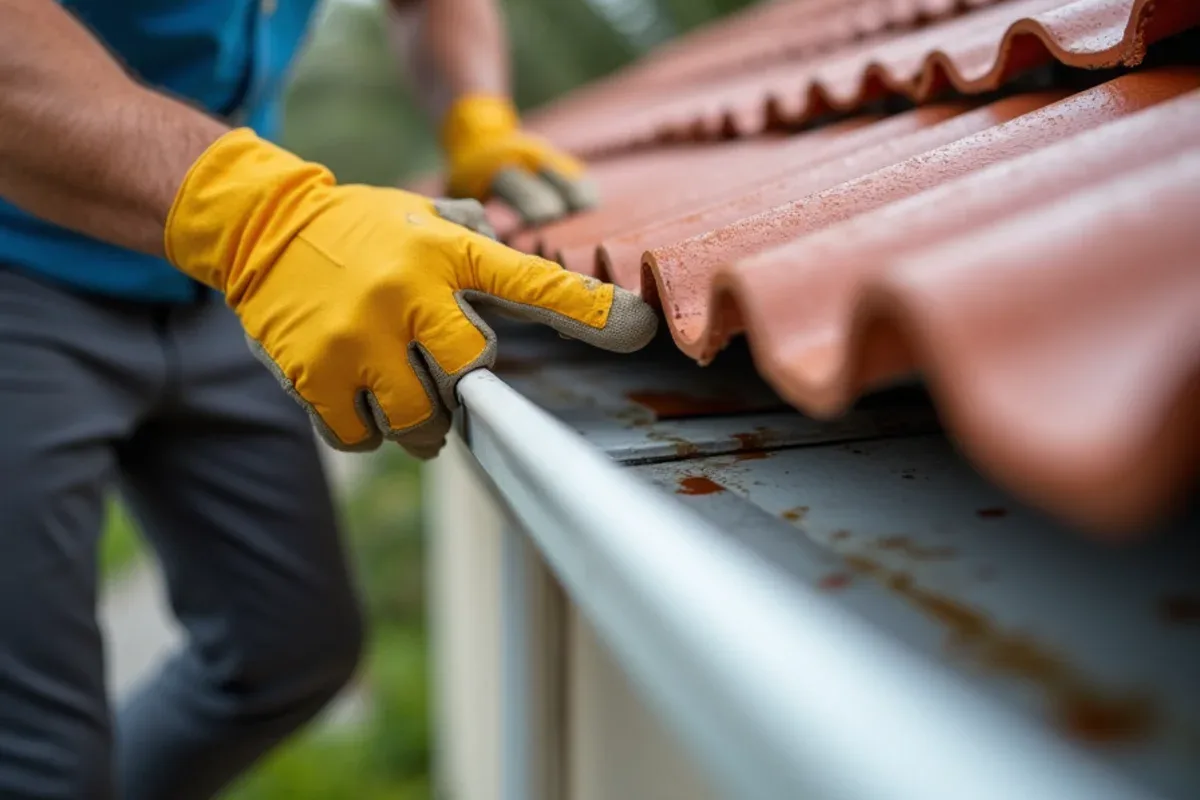
Barrel tile roofs deserve their own note. Water comes off the pan of the tile, and if the tiles end short of the gutter, or the gutter sits too low, the water lands on the fascia instead. The fix is flashing that carries it into the trough, done without cracking tiles.
Fascia rot from gutters: how much damage is normal?
Fascia boards in South Florida are usually pine or another softwood, painted to match the house. Paint holds off occasional splashes, but water running down the board every afternoon storm for months will get through at nail holes and seams.
Push a screwdriver gently into the bottom edge of the board behind the problem area. Firm wood with stained paint means you caught it early. Soft wood that crumbles means that length of fascia needs replacing, and the gutter should not be re-hung on it. Also check the soffit below for stains, since water often travels along the board and into the soffit.
Water behind gutter fix: what a lasting repair includes
Caulking the gap is the fix people try first, and it rarely lasts more than one season in our sun and heat. A proper repair addresses the path the water takes.
- Remove or loosen the gutter where needed to see the roof edge and fascia clearly.
- Probe and replace any soft fascia, then prime and paint it.
- Install a gutter apron or correct the drip edge so it laps into the gutter.
- Re-hang the gutter tight to the fascia and at the right height, using hidden hangers.
- Re-pitch toward the outlet and reseal any corners or end caps.
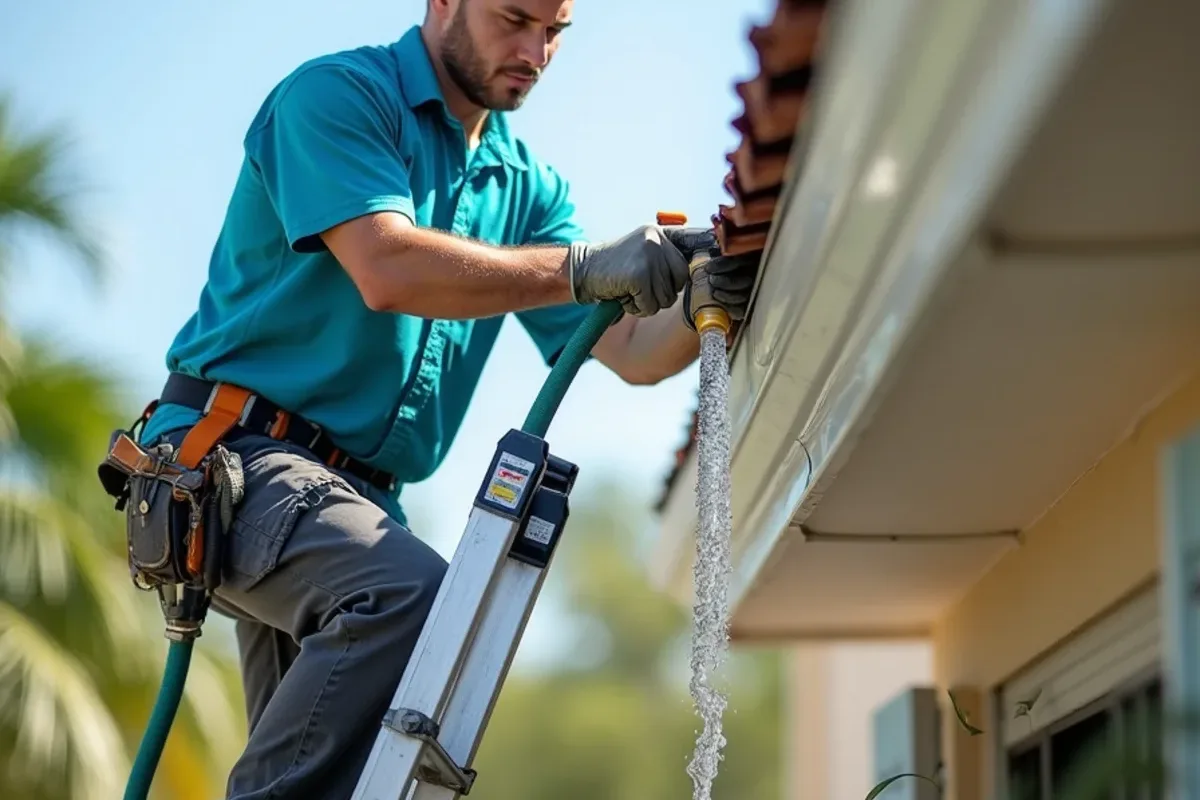
- Flush-test with a hose and watch the back edge for drips.
When the issue is at the roof edge itself, our roof-edge leak repair service handles the flashing and drip edge correction. When the gutter is the problem, with failed joints, a section pulled off the fascia or poor pitch, our leaking gutter repair visit covers it. Often the job is a bit of both.
Older homes, new roofs and where this shows up most
Two kinds of homes give us most of these calls. The first is the mid-century house with original fascia and a gutter that has been re-hung several times, common in Wilton Manors and the older parts of eastern Broward. The second is any home that just got a new roof without anyone checking how the new drip edge meets the existing gutter.
We also work north into Palm Beach County, including the older coastal towns, where salt air speeds up paint failure on fascia and makes water damage show sooner.
What we see at the roof edge, roof type by roof type
From a ladder with standoffs, the gap that lets water behind the gutter is usually obvious within a minute. What causes it changes with the roof, and so does the right repair.
- Shingle roofs after a re-roof: the new drip edge sits flush against the fascia and the gutter hangs below it, leaving a slot where water slips down the board.
- Barrel and flat tile: tiles that stop short of the gutter, or an eave closure that leaves a gap, drop water onto the fascia instead of into the trough.
- Long runs hung low to gain pitch: the outlet end can sit well below the roof edge, so water skips the gutter at that end only.
- Wind-driven rain: in a squall, water gets pushed back under the roof edge and finds any gap, which is why the drips sometimes appear only on one side of the house.
The Florida Building Code’s residential roofing rules call for drip edge at the eaves of asphalt shingle roofs, and the Florida version has its own details on how far it projects and laps. Reworking a drip edge is roof work, so it should be done or approved by the roofer who holds that roof’s warranty, or coordinated with them. A gutter apron that tucks under the first course is often the less invasive option, and we will explain which one fits your roof before anything is touched.
Just had a new roof installed?
Call the roofer first if water started running behind the gutters after the re-roof. Many roof warranties cover workmanship at the edge, and altering the drip edge yourself could complicate a claim. We are happy to document what we see so the conversation is easier.
Small gap, big consequences: stop it this season
Drips behind the gutter look minor, but they work on the fascia, soffit and stucco every time it rains. Confirm where the water lands, probe the wood, and fix the path the water takes instead of caulking over it. Caught early, it is a small flashing and re-hanging job rather than a fascia replacement.
If you are seeing drips between your gutters and the wall, call Southern Gutters FL for a free estimate. Our family-owned crew checks the roof edge, the fascia and the gutter together and writes up the repair in plain language before any work begins.
Questions about water running behind gutters
Can I just caulk the gap between my gutter and the roof?
Caulk might slow it down briefly, but it cracks in South Florida heat and does not change where the water flows. A gutter apron or corrected drip edge that laps into the gutter is the reliable fix.
Should water ever run behind a gutter?
No. Properly installed, every drop that comes off the roof edge should land in the trough. Any steady dripping behind the gutter is a sign the flashing, height or attachment needs attention.
What is the difference between a drip edge and a gutter apron?
A drip edge is part of the roof: metal installed at the eave so water drips clear of the fascia, usually put in by the roofer. A gutter apron is an L-shaped flashing added later that slides under the first course of roofing and laps down into the gutter. When the drip edge leaves a gap, an apron bridges it without tearing into the roof.
Can water behind gutters damage the soffit?
Yes. Water that runs down the fascia often travels along the bottom of the board and soaks into the soffit, staining vinyl or aluminum panels and rotting wood ones. Look for brown lines, sagging panels or peeling paint directly below the problem area. If the soffit is damaged, it gets repaired along with the fascia before the gutter goes back up.
Services mentioned in this guide
Roof-Edge Leak Repair
Leaks where the roof meets the gutter traced, flashed and sealed before they rot fascia or stain soffits.
Learn moreLeaking Gutter Repair
Dripping corners, seams and end caps scraped, riveted and resealed, or rebuilt when sealant alone won't last.
Learn moreServing Wilton Manors, Palm Beach County and the rest of South Florida.