
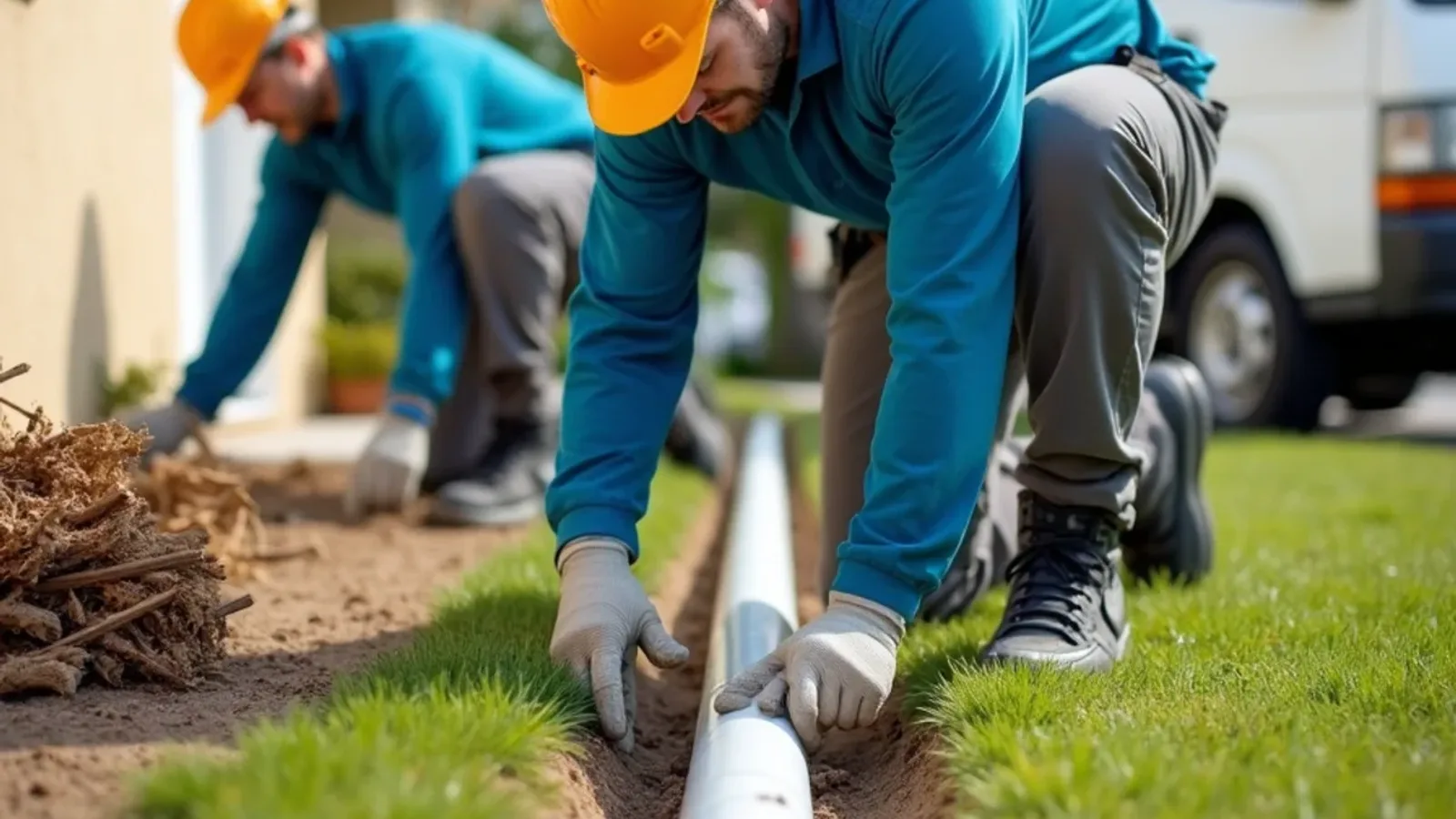
Underground downspout drainage is the job our customers mention most in their Google reviews, and for good reason. Once roof water is inside a buried pipe, it stops eroding beds, flooding walkways and soaking the ground beside the slab. Southern Gutters FL has been routing runoff below grade since 2020, as part of our wider downspout and drainage services, and we design every line around the thing that makes South Florida different: groundwater that is already close to the surface.
A buried drain that works fine in Georgia clay can fail here. A line laid too deep sits in groundwater by August. Perforated pipe in sandy soil slowly fills with sand. An emitter placed in the lowest corner of the lawn just bubbles in place. Below is how we choose the parts, set the route and keep the system flowing for years.
What goes into an underground gutter drain we install
Each system has the same core parts, chosen for sandy, often saturated ground rather than borrowed from northern practice.
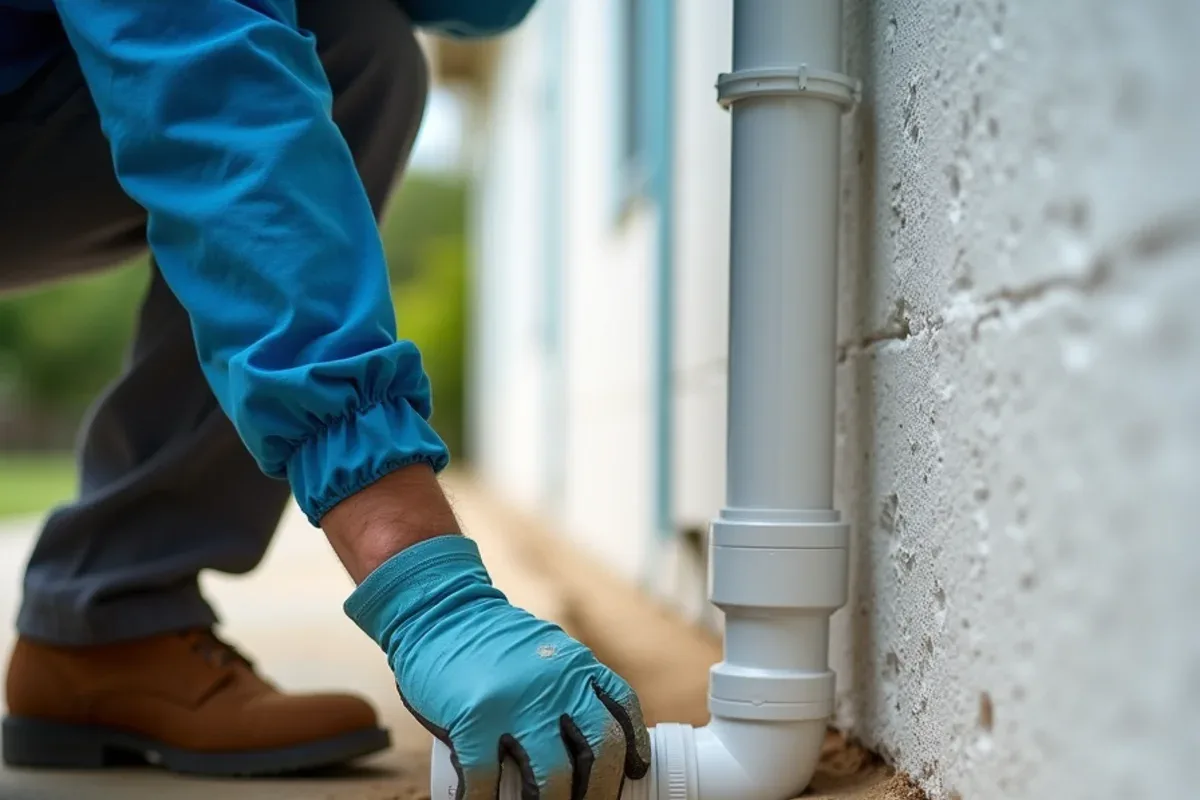
- Downspout adapter and cleanout. A fitting that transitions the rectangular downspout to round pipe, usually with a removable cap or debris trap so the line can be flushed from the top.
- Solid smooth-wall PVC. We use solid pipe, not perforated corrugated tubing. Corrugated pipe holds sediment in every rib, and perforations let sand in.
- Long-radius sweeps. Gentle bends instead of tight 90-degree elbows wherever the route turns, so leaves and seed pods keep moving.
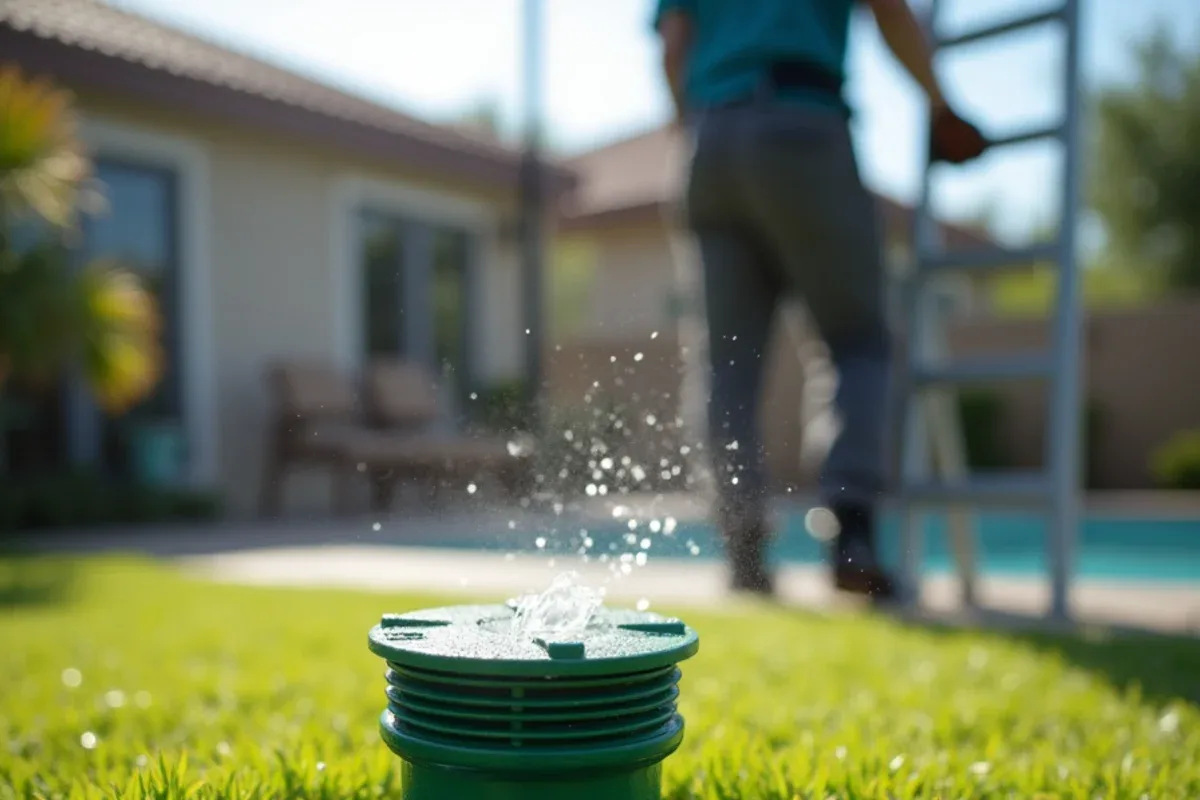
- An outlet. A pop-up emitter in the lawn, a discharge at the swale, or a tie-in to an existing drainage structure if the property already has one.
- Testing and restoration. Every run is water-tested before it is covered, then sod strips, mulch and any lifted pavers go back where they came from.
Where two downspouts sit close together we may join them into one trunk line, but only if the combined flow fits the pipe. A downspout under a big tile valley usually deserves its own run.
Can buried downspouts work where groundwater sits this high?
Most calls start with one of these:
- Fans of bare sand and washed-out mulch below each elbow
- Runoff sheeting across the walkway or driveway after every storm
- Extensions the lawn crew keeps kicking loose or running over
- An old buried line that gurgles or spills at the downspout because its emitter lid is grown over or the pipe is full of sand
They can, as long as the design respects the water table. Much of western Broward, including large parts of Plantation and Sunrise, was drained Everglades marsh before it was subdivided, and groundwater there rises toward the surface during the rainy season. That shapes three decisions.
Shallow cover, not deep trenches
We bury pipe only as deep as needed to protect it from mowers and foot traffic. A shallow line stays above groundwater for more of the year, so it drains instead of sitting full of water.
Continuous fall from top to bottom
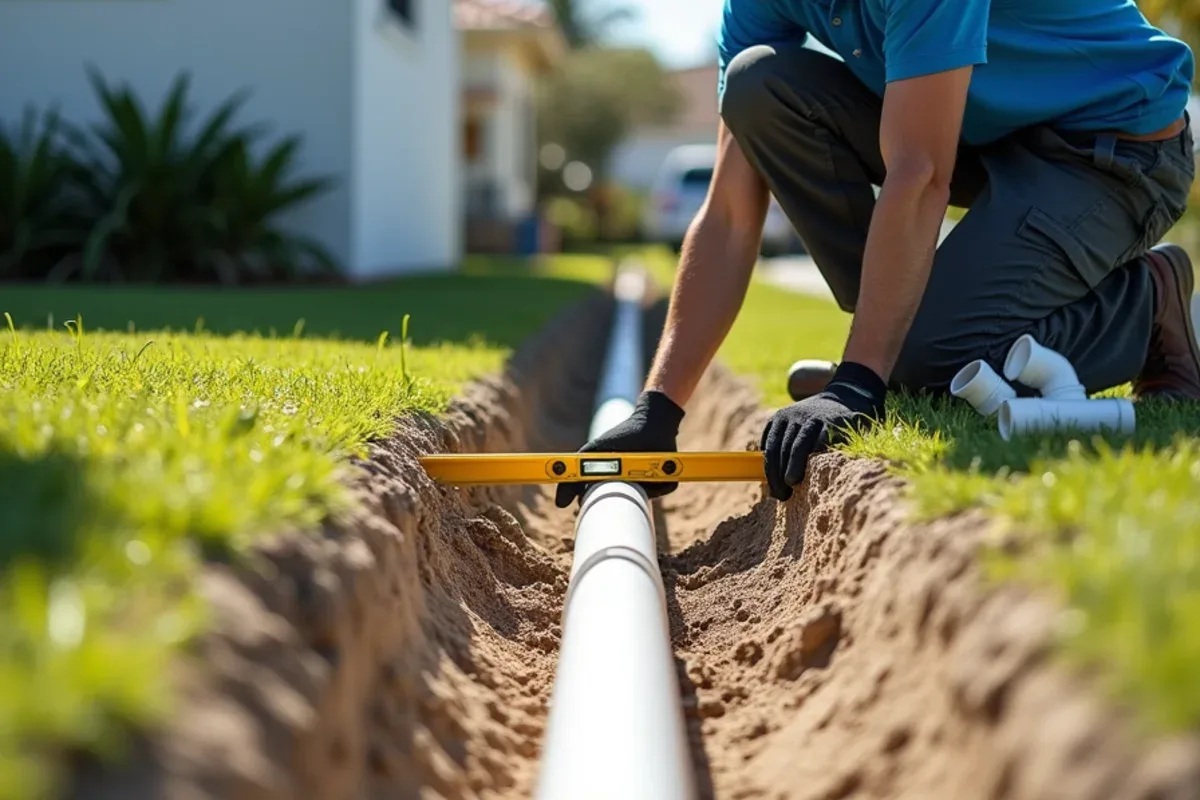
Gravity is the only pump. We keep at least an eighth of an inch of fall per foot, checked with a level along the trench, and avoid bellies where water and sand would settle. On a very flat lot that sometimes means choosing a nearer outlet over a distant one.
Release at the surface, not into a pit
Dry wells and gravel pits depend on soil that can absorb water. With groundwater a couple of feet down, they fill from below and stop accepting runoff exactly when storms hit. We prefer outlets that release water at grade, away from the house, where it can spread out or flow to the street.
Downspout to swale or pop-up emitter: where should the pipe end?
Picking the outlet is half the design. The two most common choices on South Florida lots each have their place.
| Pop-up emitter | Swale outlet | |
|---|---|---|
| How it works | A cap in the lawn lifts when water arrives and drops closed when flow stops | The pipe ends at the grassed swale along the street, which is built to hold and absorb stormwater |
| Best fit | Backyards, side yards and lots where the swale is far away or off-limits | Front downspouts on homes with a swale close by |
| Watch for | Placement in a low spot where water cannot spread; needs open lawn around it | Many cities regulate digging in the right-of-way and may require a permit |
| Upkeep | Clear clippings and sand from the cap | Keep sod from creeping over the outlet |
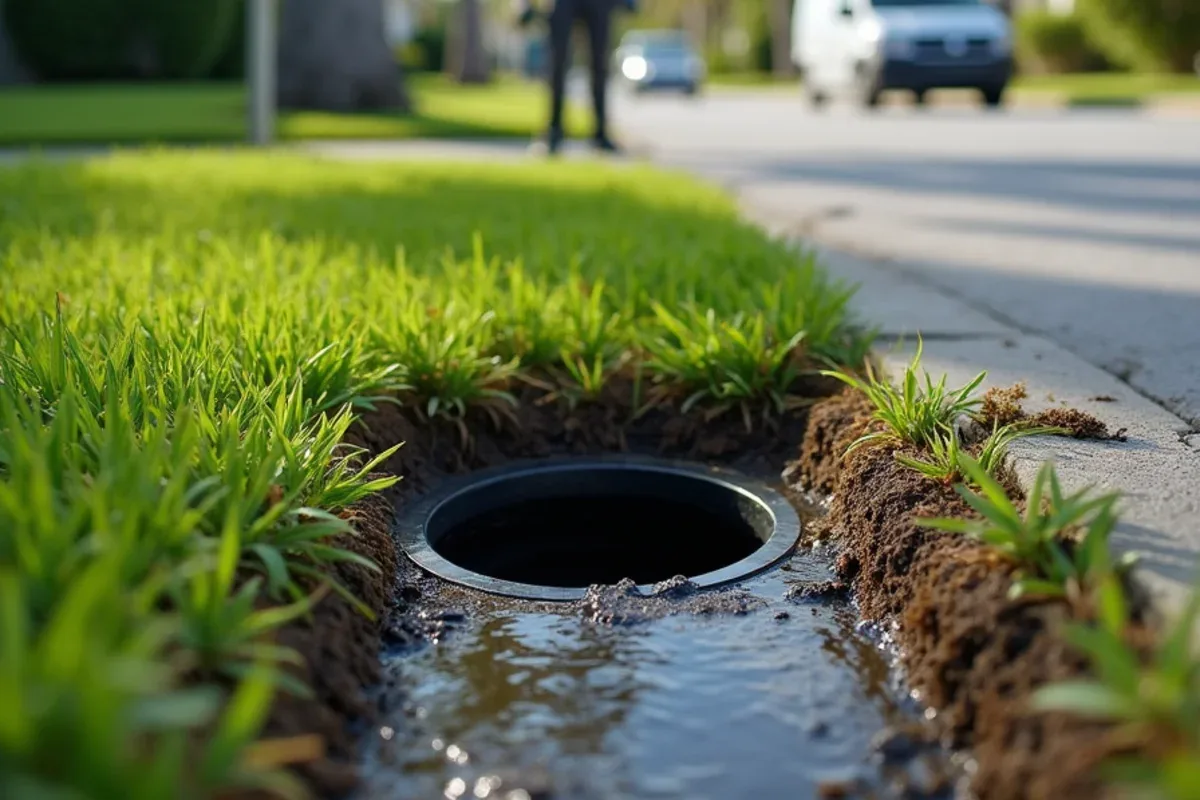
We never discharge onto a neighbor's lot, into a septic drain field or across a public sidewalk. Rules on where a buried downspout may outlet differ from city to city and HOA to HOA, so we confirm them for your address before trenching. Our guide on where downspouts should drain covers the options in more detail.
Permits, Sunshine 811 and HOA approval
Florida’s Underground Facility Damage Prevention and Safety Act (Chapter 556, Florida Statutes) requires a Sunshine 811 notice before anyone digs, and utilities mark their lines before the trench opens. The swale belongs to the public right-of-way, so the city or county decides whether a pipe may end there; several Broward and Palm Beach cities ask for a right-of-way permit first. Where downspouts are replaced in Broward or Miami-Dade, that part of the job sits inside the Florida Building Code’s High-Velocity Hurricane Zone. HOAs may want emitter locations on a site sketch. Ask any installer for license details and a certificate of insurance before work starts.
From utility locate to fresh sod: how installation day runs
- Locate. Florida law requires a Sunshine 811 notice before digging, so buried utilities are marked before the crew arrives.
- Layout. We flag the route, mark sprinkler heads, lay tarps for the spoil and cut sod in strips so it can go back down.
- Trench and pipe. The trench is dug by hand or with a compact trencher, pipe is laid and glued, and slope is checked every few feet.
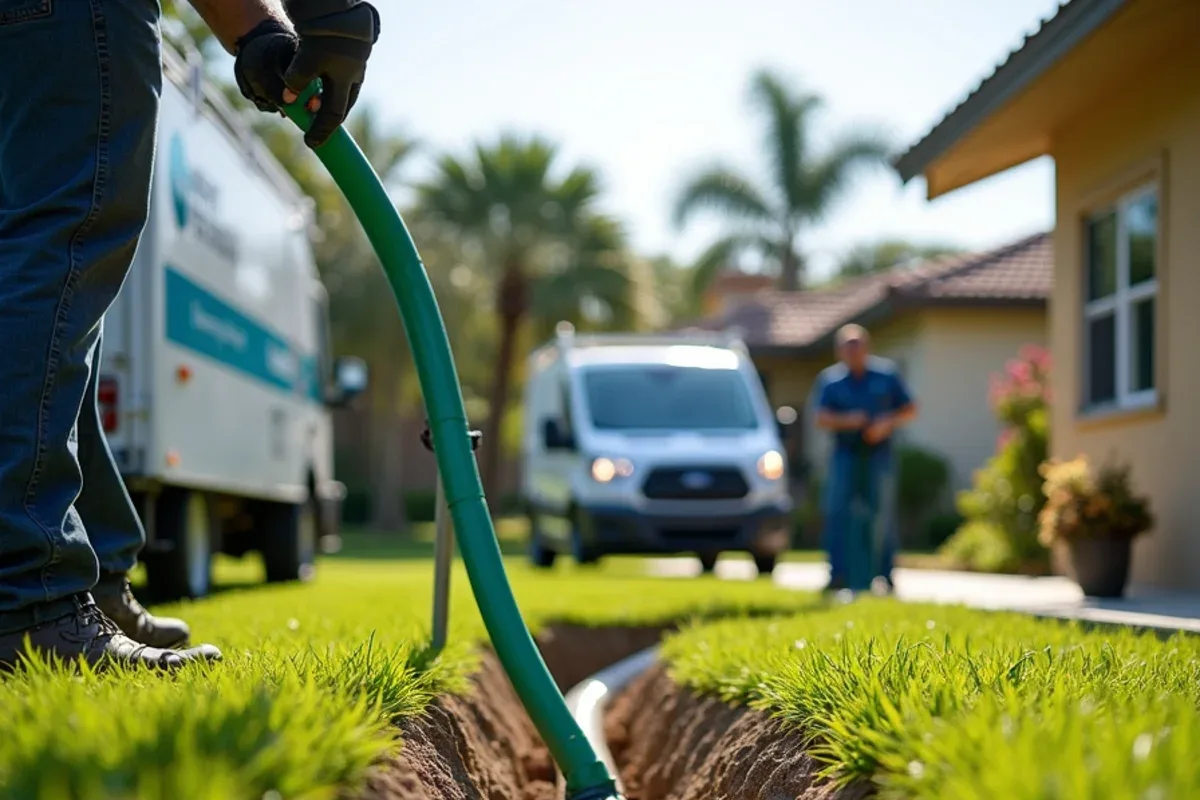
- Connections and test. The adapter goes on at the downspout, the emitter or outlet at the far end, and we run a hose through the system before covering anything.
- Backfill and cleanup. Sand is tamped around the pipe, sod is re-laid and watered in, and walks and beds are cleaned before we leave.
If a sprinkler line crosses the route, we work around it or repair it before backfilling. Long runs, driveway crossings and paver removal take more time, and an afternoon thunderstorm occasionally pauses trenching.
Underground drainage cost: what moves the number up or down
Two quotes for buried downspouts can look very different because the work underneath is different. These are the factors we price:
- Total pipe length and how many downspouts tie in
- What the route crosses: open lawn, planted beds, pavers, a driveway or a sidewalk
- Root density near ficus, black olive and other large trees
- Outlet type and any permit the city requires for swale work
- Whether downspouts are replaced or upsized to 3x4 at the same time
- Restoring sod, mulch and pavers
Your written quote lists each run separately, so you can phase the work if you prefer. Our article on underground drainage cost breaks these factors down further.
Timing changes the scope as well. Most homes with two to four downspouts take one day after the utility marks, while long runs, a driveway bore or dense roots can add a second day. Coverage for drainage work is written into the same estimate; our 3-year workmanship and 20-year materials warranty is reserved for gutter installations.
Keeping buried lines flowing, plus what the warranty covers
Most clogs start at the top. Gutter debris, roof grit and sand wash into the downspout and settle wherever water slows. A debris trap at the adapter, smooth pipe and steady slope reduce that, and pairing the system with regular gutter cleaning or gutter guards helps most of all.
Once a year, ideally before the rainy season starts in May, run a garden hose into the cleanout and watch the emitter open. If it stays shut, book downspout flushing before the first heavy storm. Warranty terms for the drainage work are spelled out in your written estimate before we dig.
Who digs the trench, and why it matters
Buried drainage is the service our reviewers single out more than any other, and the same family-owned crew that hangs our seamless gutters lays the pipe. Chance has run Southern Gutters FL since about 2020, moving from West Palm Beach to Oakland Park and now North Lauderdale, so the sandy, high-water lots of western Broward are familiar ground. Reviewers rate us 4.9 across 54 Google reviews and tag quality and value most often. They also mention the small things that matter in a dug-up yard: gates closed for the dogs, sod set back down, and a follow-up call to hear how the line handled the next storm.
Underground Downspout Drainage: specialized services
What customers say about our underground downspout drainage work
4.9 average from 54 Google reviews · Read all reviews
“After receiving three quotes, I went with Chance. Chance and his crew were all professional, arrived on-site to complete the project as promised. All the gutter and downspouts were meticulously done. Chance also did an incredible job of routing all of the run-off underground and away from my home. 10 star is a better rating for this guy.”
“Had new seamless gutters installed due to previous installation being done improperly and causing water damage. Chance fixed the issues with new appropriately sized seamless gutters that look super clean and even added some underground drainage to get the water away from the house where it was pooling. Highly recommend. Pricing was competitive after several other quotes.”
“Installed seamless gutters all the way around the house w/ 8 downspouts. Great looking work and attentive to the little details around the corners and painting any cut/exposed edges as he went.”
Underground Downspout Drainage questions, answered
Does underground drainage work with South Florida's high water table?
Yes, when it is designed for it. We keep pipes shallow, use solid smooth-wall pipe instead of perforated tubing, hold a continuous slope and release water at the surface through an emitter or swale outlet rather than into a pit. Systems that rely on water soaking away underground, like dry wells, are the ones that struggle here once groundwater rises in late summer.
Where can buried downspouts legally discharge?
Generally onto your own property or into the street swale, as long as the water does not flow onto a neighbor's lot, a public sidewalk or a septic system. Cities across Broward, Palm Beach and Miami-Dade set their own rules on swale and right-of-way work, and HOAs often add more. We check the requirements for your address before we dig and tell you if a permit is needed.
How do you keep underground lines from clogging?
By stopping debris before it enters and giving it nowhere to settle. We add a cleanout or debris trap at the downspout, use smooth-wall pipe with sweeping bends and keep the slope even from end to end. Clean gutters make the biggest difference. An annual hose test before the rainy season catches a slow line early, and we can flush it if needed.
How long does underground drainage installation take?
Most homes with two to four downspouts are finished in a single day once utilities have been marked, which takes a couple of business days after the locate request. Longer runs, driveway or paver crossings and dense roots can stretch the work to a second day. If an afternoon storm interrupts trenching, we protect the open work before leaving.
Related services
Downspout Cleaning & Flushing
Clogged downspouts flushed, snaked and flow-tested, including buried lines and frog-packed elbows.
Learn moreGutter Guards
Guards matched to the palm, black olive and oak debris over your roof, fitted to new or existing gutters.
Learn more6" & 7" Oversized Gutters
Wider 6- and 7-inch seamless troughs with 3x4 downspouts that keep up with cloudbursts and big tile roof valleys.
Learn moreHelpful guides
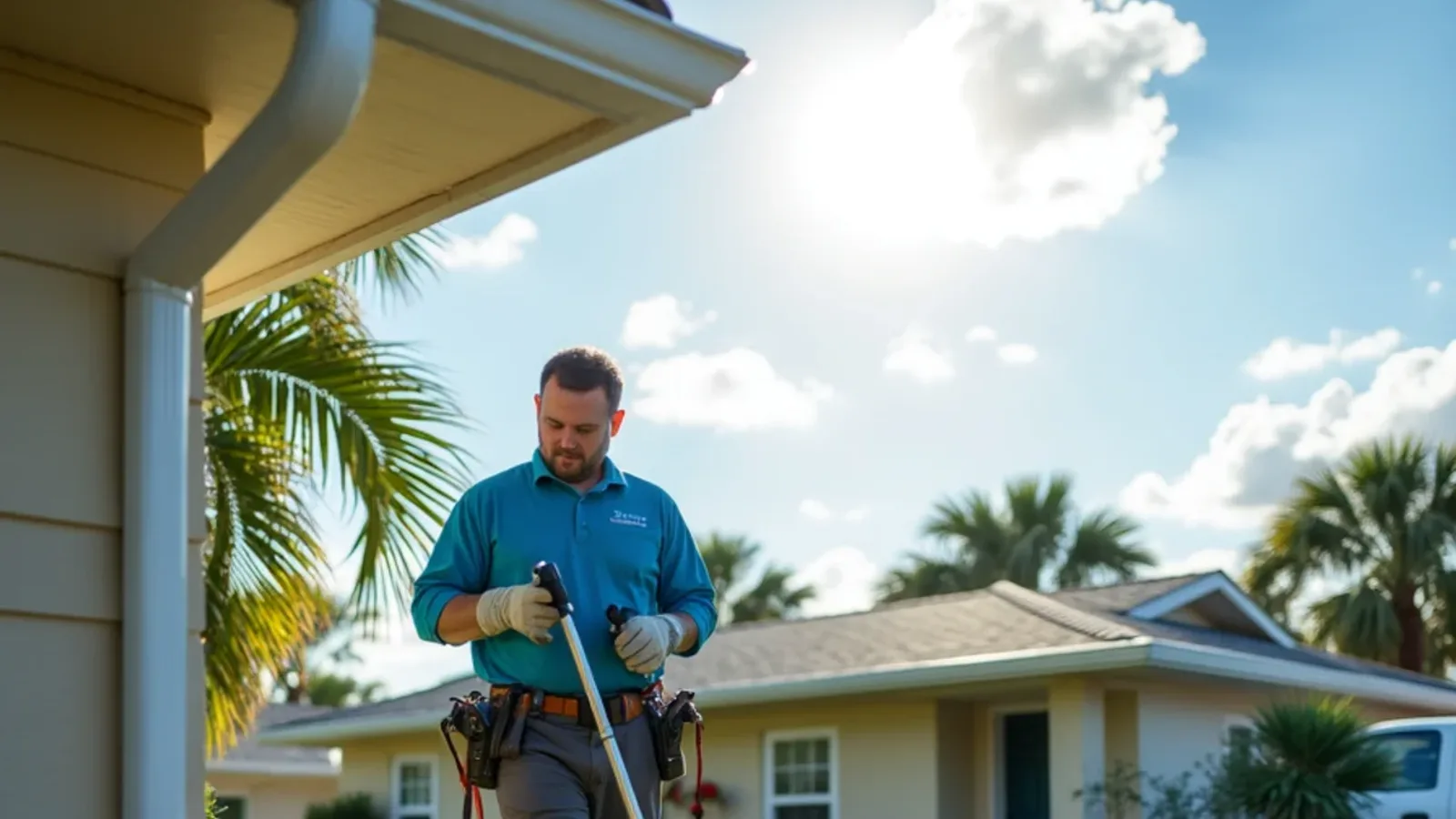
Underground Downspouts on a High Water Table
Buried downspout lines back up when groundwater sits a few feet down. The design rules that keep underground downspouts in Florida yards draining all summer.
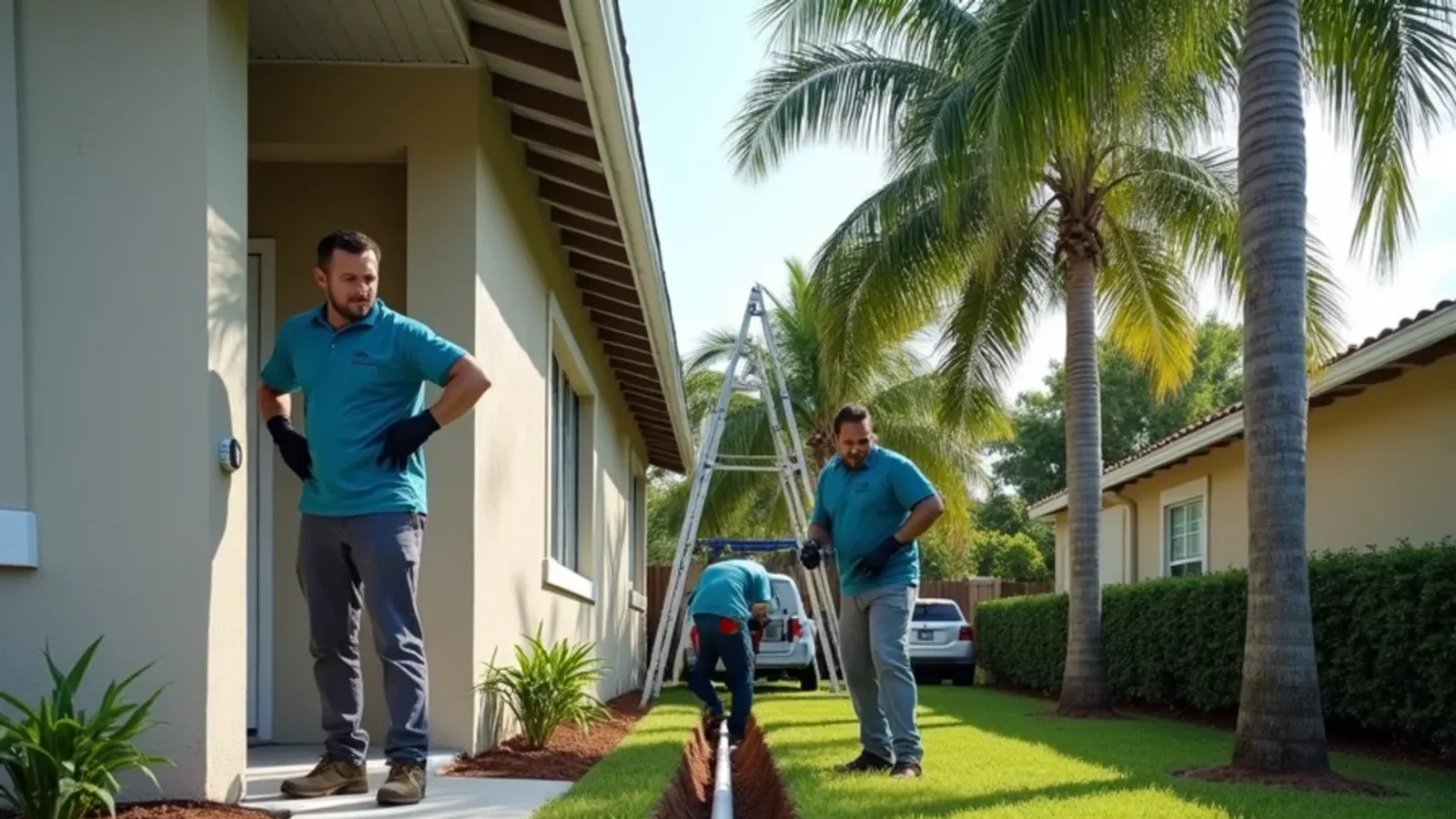
Underground Downspout Drainage: Cost & Factors
Underground downspout drainage cost explained by following the water: adapters, pipe runs, emitters, swales, pavers and a South Florida high water table.
Where we provide underground downspout drainage
- Underground Downspout Drainage in Plantation
Former Everglades marsh where groundwater climbs in summer, so lines must stay shallow and pitched.
- Underground Downspout Drainage in Sunrise
Western Broward lots with a high wet-season water table that drowns dry wells.
- Underground Downspout Drainage in Coral Springs
Planned neighborhoods where HOAs often review emitter placement before trenching.
- Underground Downspout Drainage in Pompano Beach
Flat sandy lots near the coast where a buried line beats a lawn full of extensions.
- Underground Downspout Drainage in Fort Lauderdale
Canal and tidal neighborhoods where outlets must sit high enough to drain at king tide.
- Underground Downspout Drainage in Weston
Lake-lot communities where roof water is piped toward the bank under HOA rules.
- Underground Downspout Drainage in Davie
Large lots with long runs from the house to an open, well-drained spot.
- Underground Downspout Drainage in Lauderhill
Older slab homes where front downspouts often pipe to a nearby street swale.