
By Chance, owner of Southern Gutters FL · Published · Last updated
Key takeaways
- SB 4-D created milestone inspections for condo buildings of three or more stories once they reach a set age, with repeat inspections on a cycle.
- It also requires structural integrity reserve studies; the roof and waterproofing are among the components covered.
- Gutters and roof drains are not named as a regulated item, but water management is part of keeping the roof and building envelope sound.
- Dated service reports, photos and repair records give engineers, insurers and owners a clear history.
- The statute has been amended since 2022, so confirm current requirements with the association’s attorney and engineer.
Florida’s post-Surfside condo law does not regulate gutters, but it makes condo gutter maintenance worth documenting. Milestone inspections and structural integrity reserve studies look hard at roofs, waterproofing and water damage, so dated records of cleared drains, scuppers, gutters and downspouts give boards, engineers and insurers a clear history.
After the Champlain Towers South collapse in Surfside in June 2021, Florida rewrote much of its condominium law. Senate Bill 4-D, passed in a 2022 special session, created milestone structural inspections for older condo and cooperative buildings three or more stories tall, and required structural integrity reserve studies. Boards and managers across South Florida have spent the years since catching up.
Let us be clear up front: the law does not single out gutters. What it does is put a spotlight on how buildings handle water and on how well associations document maintenance. That makes routine condo gutter maintenance in Florida, and the paper trail that goes with it, more useful than it used to be. This guide explains how the pieces connect and what we suggest boards keep on file.
What the milestone inspection Florida law actually requires
In broad terms, SB 4-D and later amendments did three things that matter for maintenance planning:
- Milestone inspections: condo and co-op buildings three stories or taller must have a structural inspection by a licensed architect or engineer once they reach a set age, generally 30 years, and then on a recurring cycle. Local governments can set an earlier trigger in some cases.
- Structural integrity reserve studies (SIRS): associations must study and fund reserves for key components. The roof, load-bearing structure, waterproofing and several other systems are on the list.
- Reserve funding: for components covered by the study, associations can no longer simply vote to waive or underfund reserves the way many once did.
The details have shifted since 2022. A 2023 law, SB 154, narrowed milestone inspections to buildings that include residential condominium or cooperative units, and HB 913, effective July 1, 2025, revised deadlines and reserve rules again. Treat this summary as background, not legal advice. Your association’s attorney and engineer are the authority on what your building owes and when.
Where condo roof drains and gutters fit in
Water is the enemy of concrete and steel. Rain that ponds on a roof, overflows a clogged scupper onto a balcony slab, or runs down a wall because a gutter outlet is blocked, finds cracks, reaches rebar and starts the corrosion that engineers look for during inspections.
That is why roof drainage deserves a place in the maintenance record even though no statute calls it out. A board that can show the roof drains, scuppers, gutters and downspouts were cleared on a schedule, with photos and notes on anything damaged, has a clear answer when an engineer, an insurer or a buyer’s lender asks how the roof is maintained.
Condo association maintenance by building type
South Florida’s condo stock is not one thing, and roof drainage varies with it.
High-rise towers
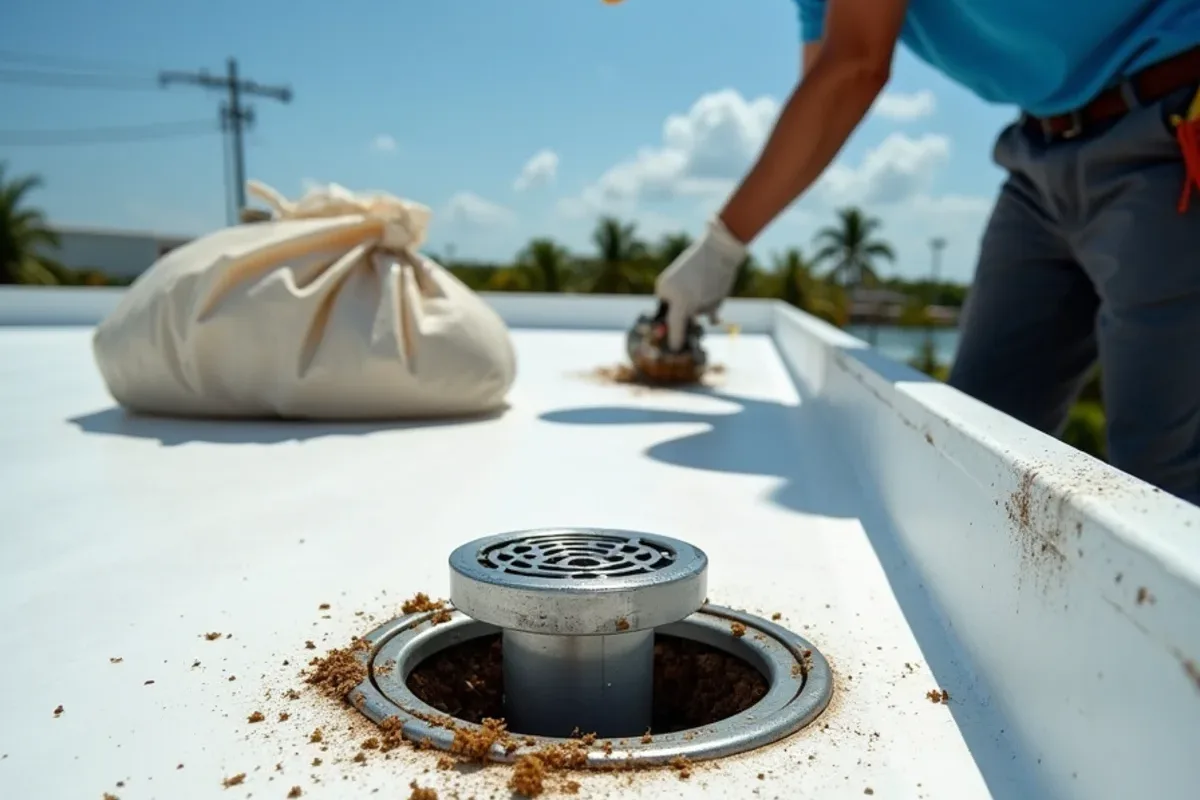
Coastal towers like many in Aventura usually drain flat roofs through interior drains and overflow scuppers, with few or no exterior gutters. Upkeep centers on drain strainers, scupper openings, pool-deck and amenity-level drains, and balcony drainage, the same work our flat roof scupper cleaning crews handle on smaller buildings.
Garden-style and mid-rise buildings
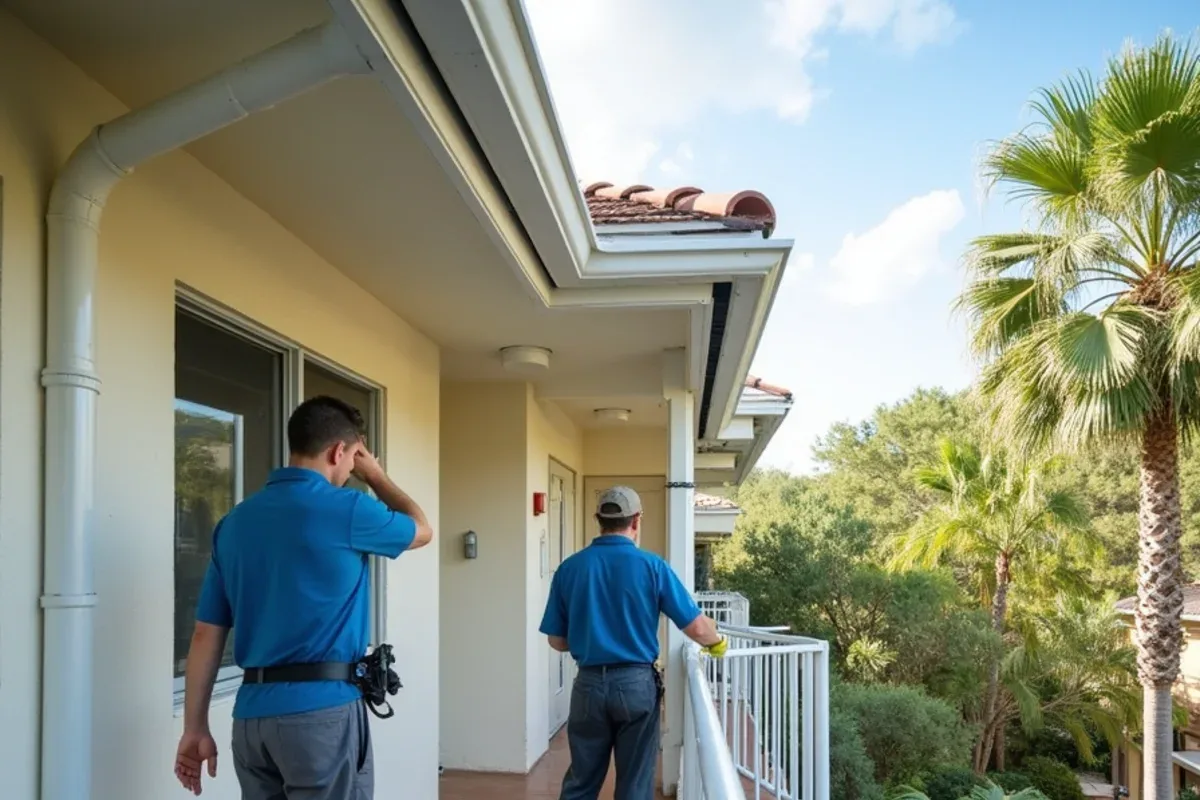
The three- and four-story buildings common in older communities around Deerfield Beach and across central Broward often have pitched or mansard roofs with long gutter runs, walkway-side downspouts and covered breezeways. These buildings are frequently old enough to fall under the milestone rules, and their gutters sit right above common walkways where overflow becomes a slip and stain problem.
What to keep on file
Good records are easy to keep when the contractor produces them as part of each visit. Here is the set we suggest associations keep for roof drainage:
| Record | What it shows | Who usually needs it |
|---|---|---|
| Dated service report per visit | Drains, scuppers and gutters cleared; debris level | Board, manager, inspecting engineer |
| Before-and-after photos | Condition at each drain point | Engineer, insurer |
| Deficiency notes | Rust, open seams, loose hangers, ponding locations | Board, roofer, reserve study preparer |
| Repair invoices with scope | What was fixed, where and when | Reserve study, insurer, owners |
| Post-storm inspection notes | Condition after named storms | Insurer, board |
| Drain location map | Every drain, scupper and downspout numbered | Every contractor who follows |
These records also help whoever prepares the reserve study. Reserve studies often list gutters, downspouts and roof drainage components with an estimated remaining life. A preparer working from dated photos and deficiency notes can judge that remaining life far better than one working from a single walk-through, and that makes the funding plan more realistic for owners.
Number the drains
A simple roof plan with each drain, scupper and downspout numbered makes every future report comparable. If the building does not have one, ask your drainage contractor to sketch it on the first visit.
What to put in an association gutter contract
Our HOA and condo gutter maintenance agreements are written so the board knows exactly what it is getting. Whoever you hire, the contract should spell out:
- Every building and drain point covered, ideally referenced to the numbered map.
- Visit frequency, with at least one visit before the rainy season and one after hurricane season.
- Optional post-storm checks after named storms, such as a post-storm debris clean-out, scheduled as soon as conditions and the calendar allow.
- Report format and delivery: photos, deficiency notes and who receives them.
- Access rules: roof hatch keys, elevator use, resident notice, quiet hours and parking for the crew.
- Certificate of insurance naming the association, kept current.
- How repairs are handled: a written quote for approval, never work done on a verbal okay.

What we see on South Florida condo roofs and walkways
Condo drainage problems are rarely dramatic on the day we find them. On flat roofs the usual culprits are roofing scraps and fasteners left in a scupper after a reroof, strainer domes knocked off by other trades, and rooftop AC condensate lines dripping right beside a drain, which keeps a patch of membrane wet and green year-round.
On garden-style buildings, the trouble is lower down. Downspouts along walkways get crushed by mowers and carts, outlets fill with black olive leaves, and pigeons nest behind the mansard trim above the gutter. Any one of those turns a single afternoon storm into water sheeting across a breezeway.
The biggest gap we see is not physical, though. Many associations change managers or contractors every few years and lose the history with them. When the engineer arrives for a milestone inspection, nobody can say when the drains were last cleared. A numbered drain map and a report folder that stays with the association, not the vendor, fixes that.
Questions a board should ask after every drainage visit
- Were all numbered drains, scuppers and downspouts reached, and if not, which ones and why?
- Where did debris or standing water show up, and is it the same place as last visit?
- Did the crew note rust, open seams, loose hangers or damaged strainers?
- Are any items urgent enough to fix before the next rain, or before hurricane season?
- Has the report and photo set been filed where the next manager will find it?
The trade-off for boards is frequency versus cost. More visits mean more paper and fewer surprises; fewer visits save budget but leave longer gaps in the record. Buildings under heavy tree canopy or with a history of ponding usually justify the extra visit.
Scheduling around residents and the calendar
Condo work runs smoother with a fixed calendar. We like a late-spring cleaning ahead of the rainy season, a fall visit once the worst of hurricane season passes, and extra visits for buildings under heavy tree cover. Posting notices a few days ahead, keeping walkways clear while crews are overhead and cleaning up debris the same day keeps complaints to the manager’s office down.
When a building is due for its milestone inspection, consider timing a drainage visit a few weeks before the engineer arrives. Clear drains make it easier to see real ponding patterns, membrane damage and wall staining, and a fresh report gives the engineer current information instead of a guess about when the roof was last serviced.
Building a drainage record your engineer can use
SB 4-D and the laws that followed do not name gutters, but they reward associations that can prove how their buildings shed water. A scheduled cleaning calendar, a numbered drain map, dated photos and written deficiency notes turn routine maintenance into the kind of record engineers, reserve-study preparers and insurers can rely on.
If your association wants that record started, call Southern Gutters FL for a free estimate. We will walk the buildings, map the drain points and propose a schedule the board can approve in writing.
Questions about condo gutter maintenance florida
Does Florida’s milestone inspection law require gutter cleaning?
No. The law focuses on structural inspections and reserve studies, not gutters specifically. But roof drainage affects the roof and building envelope those inspections and studies look at, so dated cleaning and repair records are useful supporting documentation.
Do condo buildings under three stories need milestone inspections?
The statewide milestone requirement applies to condo and co-op buildings three stories or taller. Shorter buildings may still be covered by local rules or the association’s own policies, so check with your attorney and local building department.
Who is responsible for condo gutters, the association or the unit owner?
In most Florida condominiums, roofs, gutters and downspouts are common elements, so the association maintains them. The declaration of condominium is the controlling document, though, and some communities treat parts of balconies or patios as limited common elements with shared duties. Check the declaration and ask the manager before an owner hires anyone to work on the building.
Are gutters part of a structural integrity reserve study?
Not usually as a named SIRS component. The structural study centers on items like the roof, load-bearing structure and waterproofing. Gutters and downspouts more often appear in the association’s broader reserve schedule with an estimated remaining life. Dated service photos help the preparer judge that life accurately, so share them before the study is updated.
Services mentioned in this guide
HOA & Condo Gutter Maintenance
Building-by-building gutter care for condos, villas, townhomes and 55+ communities, with resident notices and one invoice.
Learn moreFlat Roof Scupper & Gutter Cleaning
Scuppers, leader heads and flat-roof drains cleared and flood-tested before ponding water finds a seam.
Learn morePost-Storm Debris Clean-Out
Branches, fronds and roof grit cleared from gutters and roof edges after a storm, followed by a photographed damage check.
Learn moreServing Aventura, Deerfield Beach and the rest of South Florida.