
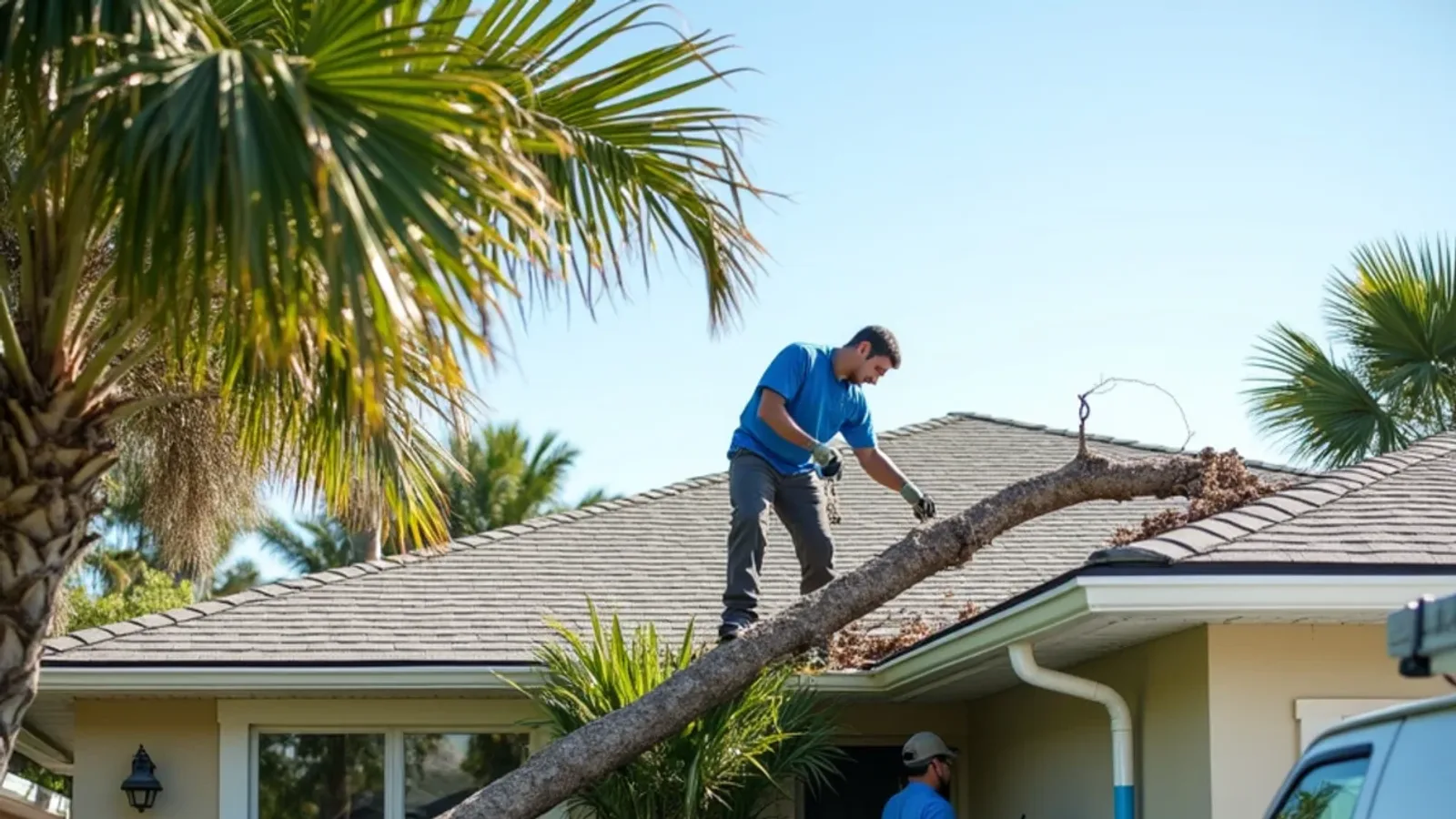
After a tropical storm or a hard squall line, gutters and roof edges catch everything the trees let go of: fronds, seed clusters, snapped oak branches, black olive leaves by the bucket, and grit washed off the roof. Storm debris gutter cleaning clears that load before the next downpour, and it is also the first real look anyone gets at whether the gutters underneath were damaged.
Southern Gutters FL handles post-storm clean-outs across Broward, Palm Beach and Miami-Dade from our North Lauderdale base. We remove the debris, haul it away, flush the downspouts and photograph anything that looks wrong. It is one of our emergency and storm gutter services, and after a big storm it is the call we get most.
Branches in gutters: when a clean-out cannot wait
Rainy season keeps going after a storm passes. Another afternoon thunderstorm usually follows within days, and gutters packed with storm debris will overflow on the first one. Some situations move a clean-out to the front of the line.
From the yard, the giveaways are easy to spot once you know them: frond tips hanging over the eave, a gutter line that dips where something heavy landed, coconuts or seed clusters on the roof, and downspouts that barely dribble during the first rain after the storm. Gritty brown water spilling at a corner usually means roof granules and leaf mush have sealed the outlet.
- A limb is resting on the gutter and bending it down
- Debris has dammed the outlet and water is standing in the trough
- Fronds are draped over the roof edge on a tile roof, where foot traffic is risky for owners
- Leaves and grit are clogging a downspout that drains a doorway or patio
- Mosquitoes are already hatching in standing water
That last one is easy to dismiss but real. Stagnant water in a debris-choked gutter is a breeding spot within about a week in South Florida heat.
Storm debris removal from the roof: what's safe and what isn't?
We remove fronds, small branches and loose debris lying on the roof edge and in the gutters. We do not cut large limbs, and nobody should touch a limb that is under tension, hung up in another tree, or touching a power line.
| Debris | Who should remove it |
|---|---|
| Fronds, leaves, small branches on the roof edge and in gutters | Our crew, during the clean-out |
| Limbs too heavy to lift by hand, or needing a saw | A licensed, insured tree service |
| Anything touching the electric service line | Your utility, before anyone else |
| Broken tiles, lifted shingles, roof punctures | A roofer; we photograph and point them out |
Tile roofs after storms
Barrel and flat tile can crack under foot, especially if a branch already loosened it. We work tile roofs from the eave where possible, as described on our tile roof gutter cleaning page.
County pickup piles, tree rules and power lines
After a declared storm, Florida counties and cities run separate curbside pickups for vegetative debris and for construction debris, and the Solid Waste Authority of Palm Beach County asks residents to keep piles clear of mailboxes, fire hydrants and overhead lines. If you want fronds left at the swale, we sort them the way your city's storm bulletin asks: leaves and branches in one pile, broken tile and bent aluminum in another. For trees, Florida Statutes 163.045 generally lets owners remove a residential tree that an ISA-certified arborist or Florida-licensed landscape architect documents as a danger without a local permit. That is tree-service work, and lines belong to FPL.

Gutter cleanout after a storm, step by step
A post-storm clean-out covers the roof edge, the gutters and the downspouts in one visit, and it ends with a damage report rather than just a clean trough. It is not tree work, and it is not roof repair. What we pull out and what we find underneath both go into the photo set, so you know whether the next call is to us, a roofer or nobody at all.
- Fronds, small limbs and seed clusters lifted off the roof edge by hand
- Every gutter run emptied, including grit and broken tile chips
- Each downspout flushed to grade or to its underground line
- Dents, punctures, split seams and bent hangers logged with photos
- Debris bagged and hauled, or sorted at the swale if you prefer
- Hazard check from the ground: wires, hanging sections, limbs under tension.
- Roof-edge clearing: fronds and small branches lifted off and lowered, not thrown, so they do not hit windows or screen enclosures.
- Gutter clearing by hand: working from each outlet outward and bagging as we go.
- Downspout flush: every downspout run with water to confirm it drains to grade or into its underground line.
- Inspection and photos: each run checked once it is clear.
- Haul-away: bagged debris leaves with us; your swale pile is left for the county pickup only if you prefer.
Typical before
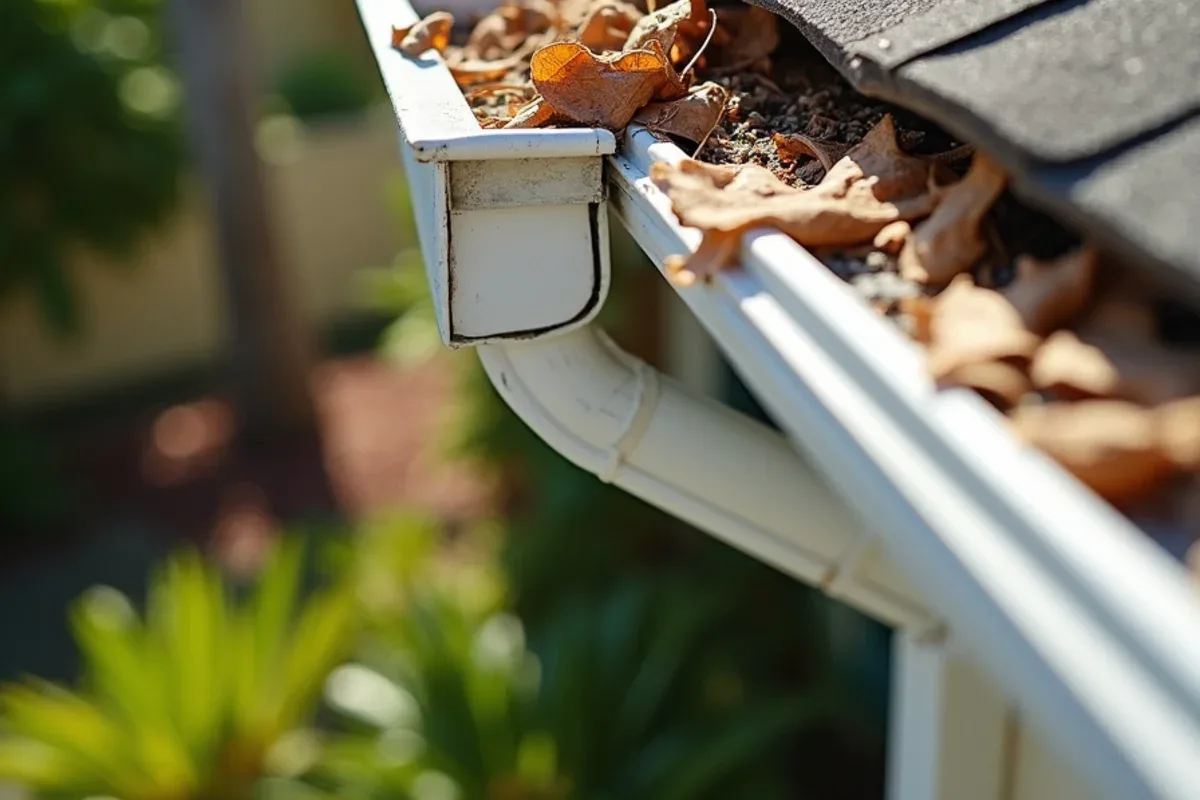
Typical after
Big palm loads are a specialty of their own; if royal or queen palms drop on your roof every season, see our palm frond and roof debris removal service for regular visits.
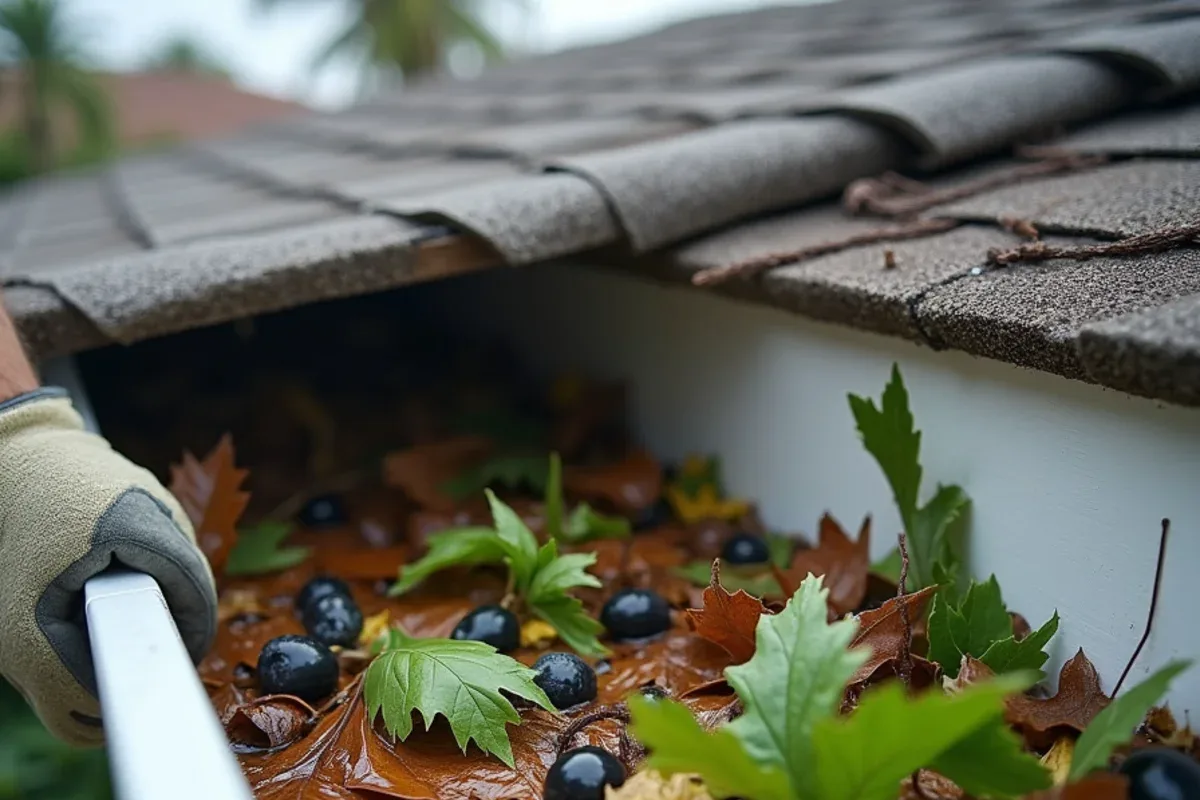
Post storm gutter inspection: damage hiding under the debris
A gutter full of leaves can look fine from the lawn while hiding a puncture or a bent hanger. Once it is empty we look for:
- Punctures and dents from falling branches or coconuts
- Hangers bent downward under the weight of wet debris
- Seams and miters split open
- Downspouts crushed, kinked or pulled off their straps
- A heavy layer of shingle granules, a sign the roof surface took a beating
- Cracked or shifted tiles along the first course
Every issue goes into a photo report. Gutter problems get a written repair quote; roof issues are noted for your roofer. If the damage is extensive, our hurricane gutter damage repair page covers what happens next.

After hurricane gutter cleaning: how soon, and who pays?
Aim for before the next heavy rain, which in rainy season usually means within days. After a major hurricane, when every crew is booked, we triage: clogged gutters over entrances and anything with limbs on it first, routine clean-outs after.
On cost, debris clean-out is usually treated as maintenance, while debris removal tied to a covered loss may be handled differently. That is your insurer's call, not ours. We give you dated photos and a clear description of what we removed and what we found.
Why our crew handles the clean-out and the damage check together
Splitting the job between a yard crew and a gutter company means nobody looks closely at the metal. Southern Gutters FL has cleaned and repaired South Florida gutters since 2020, so the person emptying your trough also knows what a pulled hanger or split miter looks like. Customers have given us a 4.9 average across 54 Google reviews, and many mention that we clean up after the job and close gates for the dogs. Chance's family-run company takes Visa, Mastercard, American Express and Discover, and keeps office hours Monday through Friday, 9 to 5.
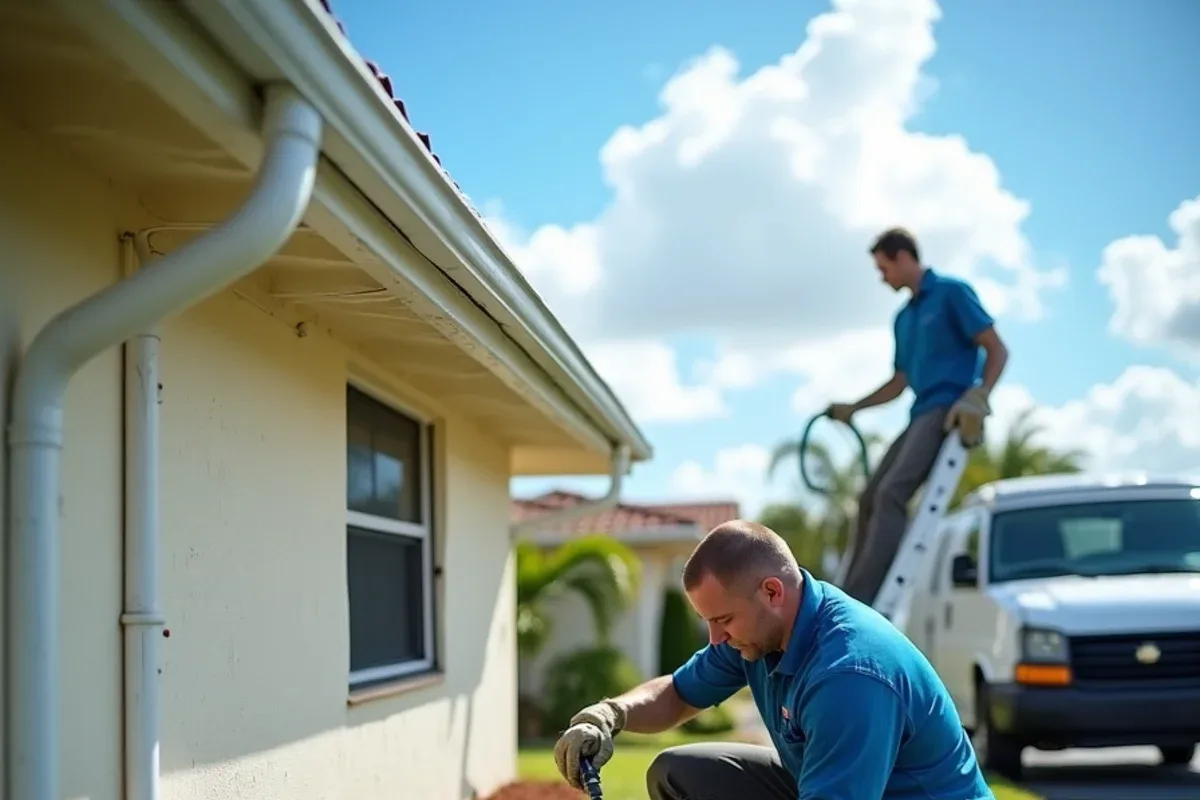
What changes the scope of storm debris gutter cleaning
No two post-storm jobs look alike, so the written quote reflects what is actually on your roof.
- Volume of debris and how much is on the roof versus in the gutters
- Size of branches and whether some need a tree service first
- Roof type: tile and steep roofs take more care and time
- One or two stories, and access around pools and screen enclosures
- Haul-away volume
- Repairs found during the inspection, quoted separately
Two jobs on the same street can look alike from the road and price very differently. A single-story shingle roof with fronds in the gutters is mostly bucket work. A two-story barrel-tile home with a screen enclosure below, branches across the valleys and a buried downspout line full of grit is a long day, with slower footing and more debris lowered by hand. Haul-away volume grows fast after a big storm, and anything found broken underneath is quoted on its own line, never folded into the cleaning.
Post-Storm Debris Clean-Out: specialized services
What customers say about our post-storm debris clean-out work
4.9 average from 54 Google reviews · Read all reviews
“Chance was amazing when i needed new gutters after a flood. He explained all options and delivered exceptional work. His customer service skills went beyond any other competitors and i even made a point to refer all my neighbors to him. I will only trust this company moving forward to handle any gutter needs. Five stars.”
“Chance and his team were great. The gutter installation was timely, efficient and cost as quoted, even after improvement changes. Would definitely recommend Southern Gutters for any install or repair.”
“Great experience! I had sections of gutters that needed repair. Chance addressed all the issues effectively and promptly. Absolutely thrilled with the results and the cost.”
Post-Storm Debris Clean-Out questions, answered
How soon after a storm should gutters be cleaned out?
Before the next heavy rain if possible. During rainy season that often means within a few days, because packed gutters will overflow at the next thunderstorm. Standing water in clogged gutters also starts breeding mosquitoes within about a week. Hazards like limbs resting on the gutter should be handled first.
Do you inspect for hidden gutter damage after a storm?
Yes. Once the gutters are clear we check for punctures, dents, bent hangers, split seams and damaged downspouts, and we note signs of roof damage such as heavy granule loss or cracked tiles. You get dated photos of everything we find and a written quote for any gutter repairs.
Can you remove branches lying on the roof?
We remove fronds, small branches and loose debris that can be safely lifted and lowered by hand. Large limbs that need cutting, limbs under tension and anything touching a power line need a tree service or your utility first. We can come back for the gutters once those are cleared.
Is post-storm cleaning covered by insurance?
That depends on your policy and the circumstances, and the decision is your insurer's. Routine gutter cleaning is generally considered maintenance, while debris removal connected to a covered loss may be treated differently. We provide photos and a written description so you can ask your agent or adjuster.
Can wet storm debris left in gutters damage the fascia?
Yes, if it sits. Packed fronds and leaf mush hold water against the back of the gutter, and in South Florida heat and humidity that keeps the fascia damp for days at a time. Repeated soaking softens the wood behind the hangers, which is how a clogged gutter becomes a sagging one. Clearing debris before the next round of afternoon storms keeps the board dry.
Related services
Palm Frond & Roof Debris Removal
Fronds, seed stalks, black olive leaves and mahogany pods cleared from roofs, valleys and gutters, then hauled off.
Learn moreTile Roof Gutter Cleaning
Barrel and concrete tile gutters cleaned from ladders at the eave, so the tile stays intact.
Learn moreGutter Guards
Guards matched to the palm, black olive and oak debris over your roof, fitted to new or existing gutters.
Learn moreHelpful guides

Hurricane Gutter Damage: Your First 48 Hours
The storm has passed and a gutter is bent, hanging or gone. An hour-by-hour plan for safety, photos, temporary fixes and getting repairs started.

Mosquitoes and Clogged Gutters in South Florida
A clogged gutter can hold enough standing water to raise mosquitoes all summer. How drain-and-cover advice applies to gutters, downspouts and rain barrels.
Where we provide post-storm debris clean-out
- Post-Storm Debris Clean-Out in Coral Springs
Laurel oak, ficus and black olive canopy dumps branches and leaves onto tile roofs in every strong storm.
- Post-Storm Debris Clean-Out in Plantation
Mature live oak and mahogany limbs over 1950s ranch homes land on gutters when storms snap them.
- Post-Storm Debris Clean-Out in Sunrise
Mango, black olive and palm debris fills gutters on both the eastern ranch streets and the western HOA tile roofs.
- Post-Storm Debris Clean-Out in Davie
Oak debris from wooded acreage and long gutter runs on ranch homes and barns after storm winds.
- Post-Storm Debris Clean-Out in Weston
Royal palms in landscaped yards drop heavy fronds on concrete tile roofs when wind crosses the stormwater lakes.
- Post-Storm Debris Clean-Out in Southwest Ranches
Big estate roofs and barns on acre-plus lots collect oak and palm debris in long seamless runs.
- Post-Storm Debris Clean-Out in Wilton Manors
Mature live oaks over 1940s–50s cottages shed limbs and leaves into gutters on shallow eaves.
- Post-Storm Debris Clean-Out in Lighthouse Point
Dockside palms and sea grape on canal lots blow straight into gutters during storms.
- Post-Storm Debris Clean-Out in Coconut Creek
Dense native landscaping, live oaks and sabal palms leave gutters heavy with debris after a squall line.