
By Chance, owner of Southern Gutters FL · Published · Last updated
Key takeaways
- Aedes aegypti, the yellow fever mosquito, breeds in small containers of standing water, and a clogged gutter is one.
- Eggs stick to container walls above the waterline and can survive dry spells, then hatch when the next rain refills the gutter.
- Florida’s “drain and cover” guidance lists house gutters among the places to empty after rain.
- Sagging sections and poor pitch hold water even when the gutter is clean, so some fixes are repairs, not cleanings.
- Rain barrels need a tight lid and fine screen on every opening or they become breeding tanks.
Yes, clogged gutters breed mosquitoes. A leaf dam or sagging section can hold a shallow pool of rainwater for days, and health officials warn that container species such as Aedes aegypti can breed in as little as a bottle cap of water. Gutters that stay clear, correctly pitched and fully drained remove that site.
When people picture mosquito breeding sites, they think of swamps and retention ponds. The species that worries South Florida health officials most prefers something much smaller: a bucket, a plant saucer, a bottle cap. Or a shallow puddle trapped behind leaves in a gutter, eight or ten feet above your patio, where nobody ever looks.
Mosquitoes in gutters are a real and fixable problem. Below we explain why your roofline makes such a good nursery, where water hides in a typical gutter system, and how the state’s drain-and-cover message applies to the parts of the house we work on every day.
Why Aedes aegypti breeding thrives in a blocked gutter
Aedes aegypti is a container mosquito. Females lay eggs on the inside wall of a container just above the waterline. When rain raises the water level, the eggs hatch, and in warm weather the larvae can reach adulthood in about a week. The eggs can also survive drying out for months, waiting for the next storm.
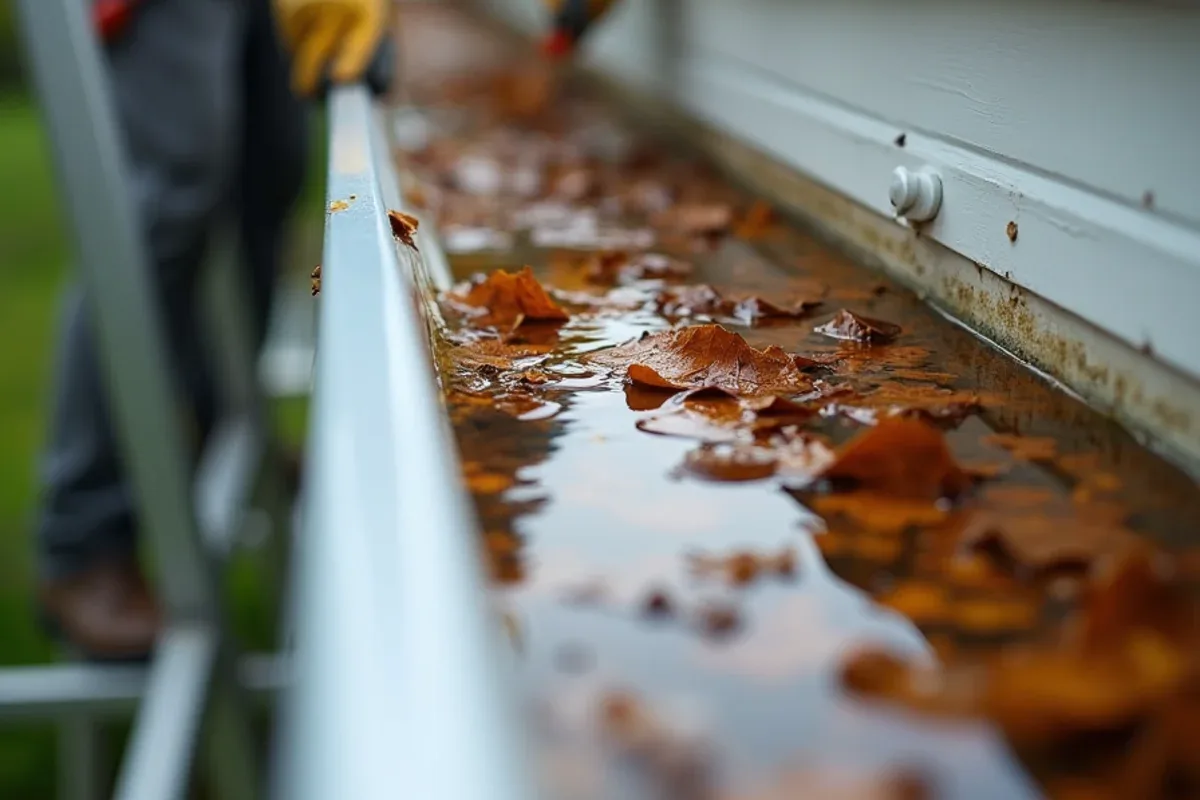
Now picture a gutter with a leaf dam near the outlet. Rain fills the section behind the dam, the sun warms it, decaying leaves feed the larvae, and the shaded trough keeps the water from evaporating quickly. Every afternoon storm tops it up. During the rainy season, roughly mid-May to mid-October, that cycle can repeat many times.
Aedes albopictus, the Asian tiger mosquito, uses the same kinds of sites and is also common here. Both are aggressive daytime biters, which is why you may notice them around doorways and patios under the roof edge.
What 2016 taught Miami-Dade about standing water
In the summer of 2016, Florida health officials confirmed local transmission of Zika virus by mosquitoes in Miami-Dade County, first in the Wynwood neighborhood and later in parts of Miami Beach. It was the first locally acquired Zika in the continental United States. Aedes aegypti was the main vector.
The response included spraying and door-to-door inspections, but officials stressed that much of the breeding was happening in ordinary residential containers. That lesson still applies across Miami-Dade County and beyond. Mosquito control crews cannot reach water hidden on private rooftops; homeowners have to.
Report persistent problems
If you have cleared standing water at home and mosquitoes remain heavy, contact your county’s mosquito control program. They track activity and can inspect neighborhoods.
Standing water in gutters: where it hides
Clogs are the obvious culprit, but they are not the only one. We find standing water in all of these spots on service calls:
| Spot | Why water sits there | Fix |
|---|---|---|
| Behind a leaf or seed-pod dam | Debris blocks flow to the outlet | Clean the trough and outlet |
| Low point in a sagging run | Hangers loose; gutter dips mid-span | Re-hang and restore pitch |
| Back-pitched end cap | Gutter slopes away from the downspout | Re-pitch toward the outlet |
| Under a gutter screen | Debris mat holds water below the screen | Remove, clean, upgrade guard |
| Crushed or capped downspout extension | Water backs up inside the pipe | Replace extension |
| Uncovered rain barrel | Open water at the downspout outlet | Screened inlet, sealed lid |
Drain and cover, applied to your roofline
The Florida Department of Health’s “drain and cover” campaign boils mosquito prevention down to two ideas: drain standing water at least once or twice a week, and cover your skin, windows and doors so mosquitoes cannot reach you. Gutters are on the department’s list of places to drain. For a gutter, draining means keeping water moving, which comes down to three things.
Keep the trough clear
Regular gutter cleaning removes the dams that hold water. For most homes here that means a cleaning before the rainy season and another as it ends, more often under heavy trees. Our crews also flush every downspout so you know water leaves the system completely.
Fix the shape, not just the debris
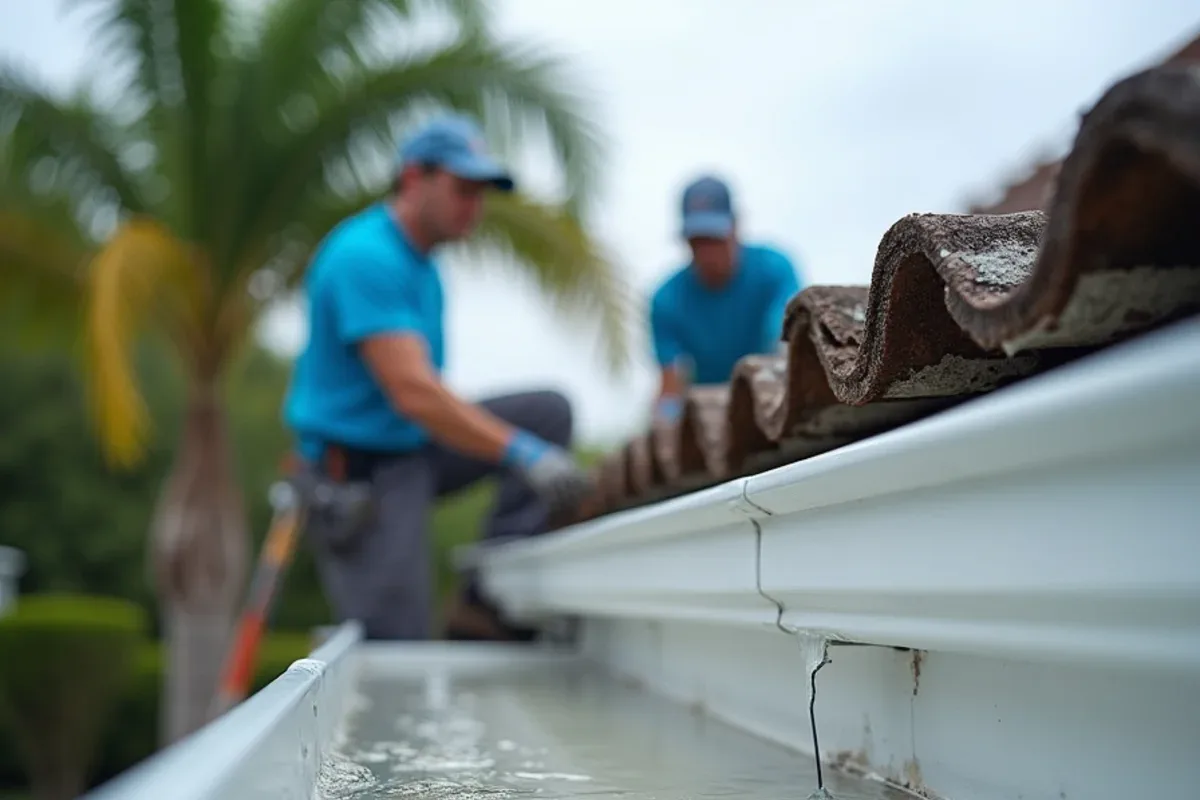
A gutter that has dropped between hangers holds a puddle at its low point even when it is perfectly clean. You will often see a line of grime marking the water level. Sagging gutter repair replaces failed hangers and re-pitches the run so it drains fully after every storm, which removes the breeding site for good.
Check after storms
A day or two after heavy rain, look along the gutter from the yard or an upstairs window. Water still visible in the trough, or drips continuing long after the sky clears, means something is holding it.
Rain barrel mosquitoes and downspout extensions
Rain barrels are a good way to save water for landscaping, but an open barrel under a downspout is close to an ideal Aedes habitat. To keep yours mosquito-free:
- Use a barrel with a sealed lid and a fine mesh screen over the inlet and the overflow.
- Check the screen after storms; debris can push it aside or tear it.
- Use the water regularly so it does not sit for weeks.
- If you treat the water, use a product labeled for mosquito larvae in water containers and follow the label.
- Make sure flexible downspout extensions are not kinked or sagging in a way that holds water.
Our guide to rain barrels in South Florida covers setup in more detail. Homes in north Miami-Dade communities like Miami Gardens, where many single-story houses have open yards and plenty of downspouts, benefit from a quick walk-around after every major storm to tip out anything that collected water.
Where our crews actually find mosquito water around the roof
The main gutter run is only the start. When we look for trapped water on a South Florida house, the worst spots tend to be the ones nobody can see from the patio, and several of them hold water even on homes with spotless gutters.
- Pool cage gutters: the light gutter along the top of a screen enclosure often sags between posts and is almost never cleaned, so it holds a long, shallow puddle all summer.
- Lower roofs on two-story homes: an upper downspout that empties onto a lower roof can wash grit into a dam right where the lower gutter turns a corner.
- Foam and brush inserts: these stay damp inside long after a storm, and debris rotting in them keeps the water stained and warm.
- Buried downspout lines: pipe that runs to a pop-up emitter holds some water at its lowest point between storms, and a silted line holds more.
- Scuppers and leader heads: on flat roofs a half-blocked scupper leaves a pond on the roof deck and another in the leader head box.
The honest limit is that gutters are one source among many. Bromeliads, plant saucers, tarps, and a neighbor’s forgotten bucket can keep mosquitoes around even after we leave your gutters bone dry. What a cleaning and a re-pitch can do is make sure your roofline is not adding to the problem, and our before-and-after photos show you exactly where water was sitting.
A five-minute check after a heavy storm
- Wait until the rain has stopped for a day, then walk the perimeter with the sun behind you so standing water glints.
- Look for any downspout that is still dripping long after the sky clears.
- Check the pool cage gutter and any lower roof you can see from an upstairs window.
- Tip out saucers, toys and buckets under the eaves, where gutter overflow refills them.
- Note any spot that holds water two storms in a row; that one needs a repair, not another look.
Dry gutters mean one less place for mosquitoes to start
Mosquito control in South Florida starts in the yard, and the roofline is part of the yard. Clear the dams, fix the low spots, screen the barrels and check the system after big storms, and your gutters stop adding to the swarm on the patio every evening.
If water keeps sitting in your gutters after rain, Southern Gutters FL can find out why. Call for a free estimate and we will clean, flush and flow-test the system, then show you any section that needs re-hanging so it drains completely.
Questions about mosquitoes in gutters
Can mosquitoes really breed in a gutter that only has a little water?
Yes. Container-breeding Aedes mosquitoes need very little water, far less than most people expect. A shallow pool behind a few inches of leaves is enough, and the shade and decaying debris in a gutter make it a comfortable spot for larvae to develop.
Do gutter guards stop mosquitoes?
Good guards help by keeping leaf dams from forming, but they are not a complete answer. Water can still collect under a coarse screen or in a sagging section beneath any guard. The key is a gutter that drains fully, which depends on correct pitch and clear outlets as much as on what covers the top.
How fast can mosquitoes hatch in a clogged gutter?
Fast. In South Florida summer heat, container mosquitoes can go from egg to biting adult in roughly a week to ten days. Because their eggs sit on the trough wall above the waterline, every afternoon storm that refills a clogged section can start a new batch, which is why the rainy season months matter most for keeping gutters clear.
Should I spray or treat my gutters for mosquitoes?
Removing the standing water works better than treating it. A clear, correctly pitched gutter leaves nothing to treat. If water collects somewhere you cannot fix right away, use only a larvicide labeled for that kind of container and follow the label. For heavy mosquito activity across a neighborhood, your county mosquito control program is the right call.
Services mentioned in this guide
Gutter Cleaning Service
Hand-cleaned gutters, every downspout flushed and tested, roof-edge debris bagged and hauled away.
Learn moreSagging Gutter Repair & Re-Pitching
Drooping or pulling-away runs re-hung on screwed hidden hangers and re-pitched so rain drains to the downspout.
Learn moreServing Miami-Dade County, Miami Gardens and the rest of South Florida.