
By Chance, owner of Southern Gutters FL · Published · Last updated
Key takeaways
- Remove gutters before tear-off; reinstall only after the drip edge or edge metal is in place.
- Old seamless gutters in good shape can often be reused, but sectional systems and rotted fascia usually tip the decision to new.
- A reroof is the cheapest moment to fix fascia, because it is fully exposed.
- Agree in writing who removes, stores and hauls away the old gutters.
- Plan for temporary runoff during the rainy season while the gutters are down.
The short answer to “gutters before or after new roof” is both: the old gutters come down before the roofers tear off, and gutters go back up once the new roof edge is finished. Hanging new gutters first and reroofing later is the costliest mistake, because roofers working the eave bend, scratch or rip them loose.
What takes more thought is everything in between: who removes the gutters, whether the old ones are worth reusing, and how to keep water off the house while the roof is open. This guide walks through the sequence we follow with homeowners and roofers across South Florida.
The order of work when gutters and roof replacement overlap
Here is the sequence that protects both the roof and the gutters. Your roofer may tweak it, but the logic holds for shingle, tile and metal roofs alike.
- Walk the house together. Before any work, note gutter condition, fascia damage and where downspouts discharge. Photos help settle questions later.
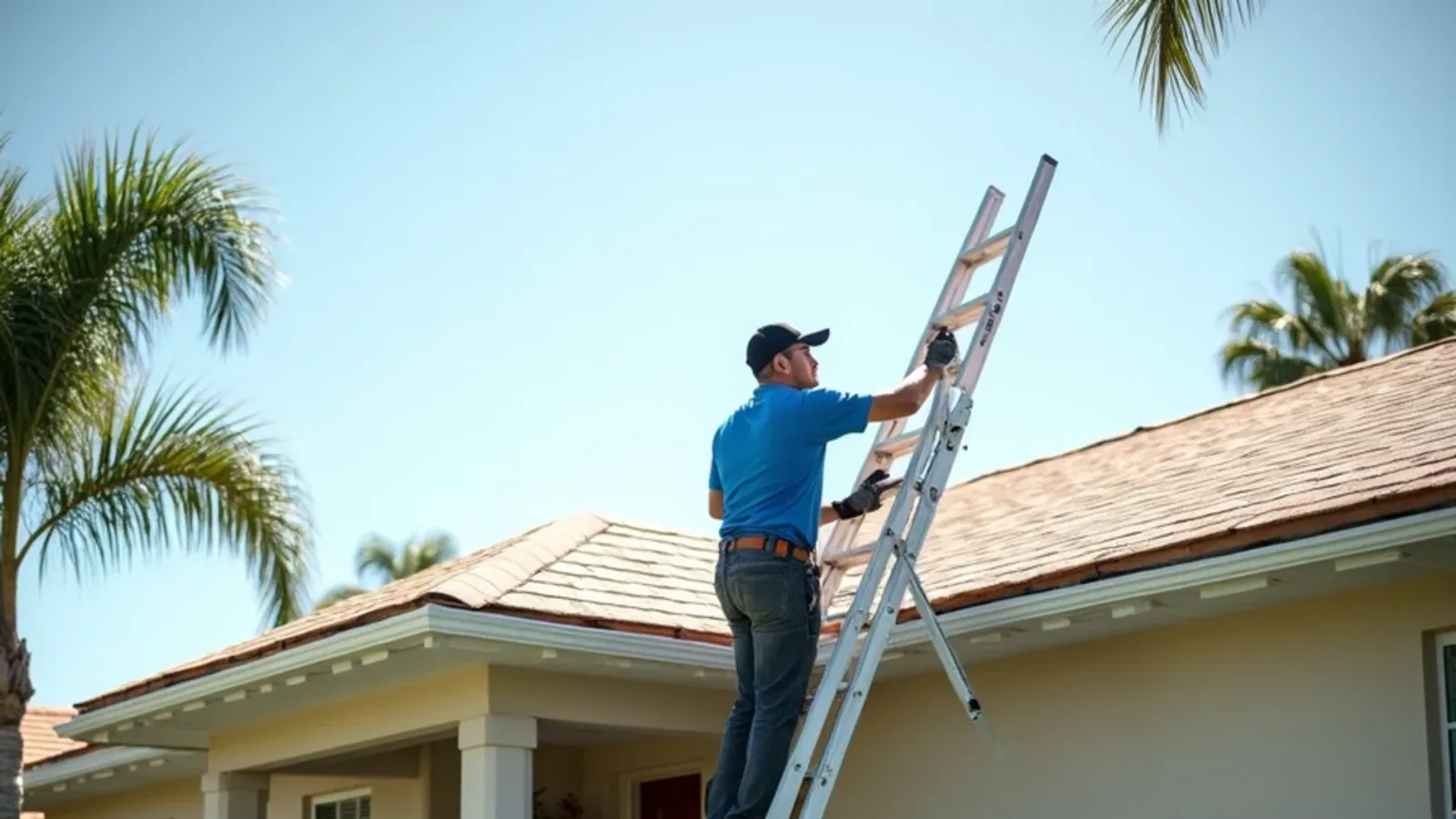
- Remove gutters and downspouts. We take them down a day or two before tear-off, label runs if they will be reused, and either store them on site or haul them away.
- Repair fascia while it is exposed. Rotted boards are easy to see and replace now, before the drip edge goes on.
- Roofer installs underlayment and edge metal. The drip edge, or tile eave closure, sets the line the gutter will hang below.
- Roof is completed and inspected where required. Building departments in Broward and Miami-Dade inspect reroofs in stages; wait for the roofer to finish the edge work.
- Gutters go back up. Reused or new, the gutter is hung behind or under the drip edge so roof water lands inside the trough.
- Water test. Every outlet and downspout is flushed to confirm pitch and flow.
Reinstall gutters or put up new ones? How we decide
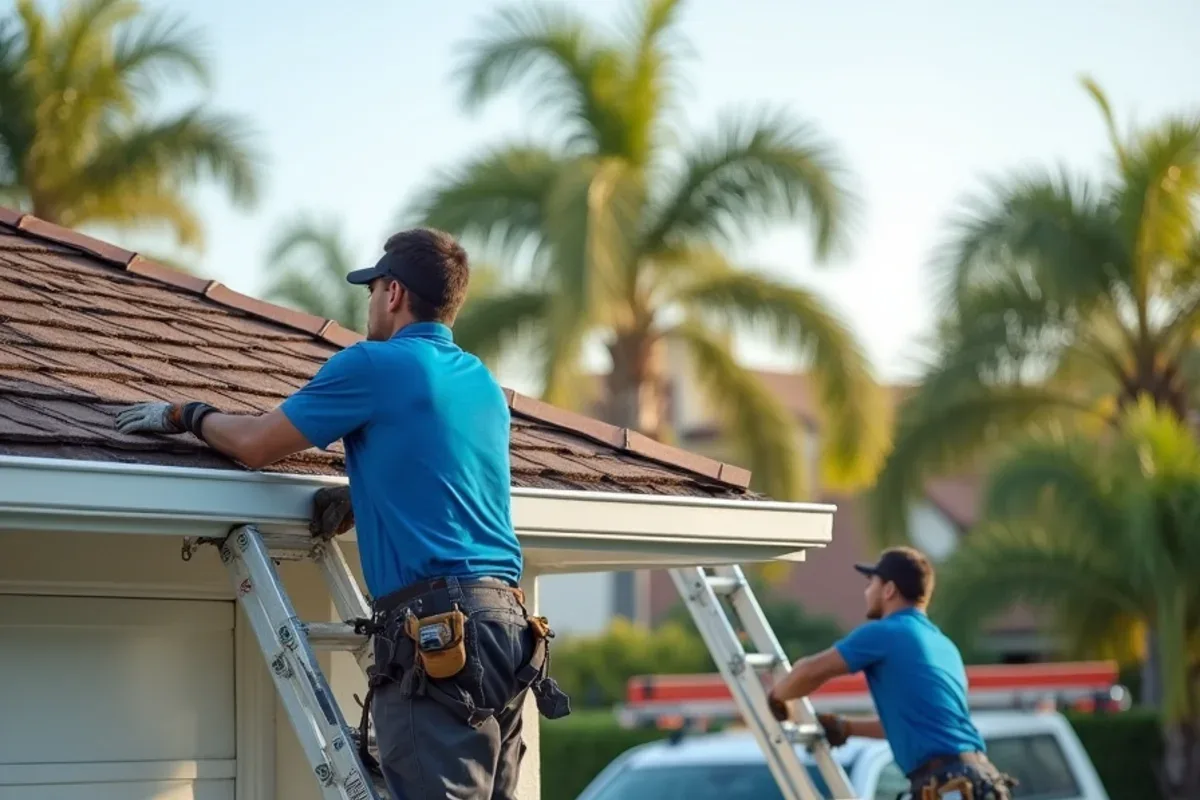
Plenty of homeowners assume a new roof means new gutters. Sometimes it does. Often a seamless system that is only a few years old comes down clean and goes back up looking like it never moved.
| Condition of existing gutters | Usually reinstall | Usually replace |
|---|---|---|
| Seamless aluminum, straight, no dents | Yes | |
| Sectional with many caulked seams | Yes, joints rarely survive removal | |
| Bent, kinked or sagging runs | Yes | |
| Color no longer matches new roof or trim | Often, especially under HOA rules | |
| Undersized for a new tile roof’s runoff | Yes, consider 6-inch | |
| Spike-and-ferrule hangers | Possible with new hidden hangers | If the metal is tired |
| Corroded near the coast | Yes |
A reroof also changes how water leaves the roof. Concrete or barrel tile throws water farther out than shingle, and a steeper or larger roof plane may outrun an old 5-inch gutter. If you are upgrading roof material, it is worth checking whether gutter size and outlet count should change with it.
Fascia condition can override everything else. If the boards behind the old gutter are soft, the reroof is the moment to replace them, while the drip edge is off and nothing is hanging from the wood. New or reused, a gutter is only as secure as the board its hangers bite into.
Drip edge, tile closures and flat-roof edges: where gutters meet the new roof
Shingle roofs
Shingle roofs get a metal drip edge at the eave. The back of the gutter should sit under that drip edge, or a gutter apron should bridge the gap, so water cannot run behind the gutter and rot the fascia. That detail only works if the gutter goes on after the drip edge.
Barrel and flat tile roofs
Tile overhangs the edge and sheds water farther out. We set the gutter to catch that throw and check that the eave closure or bird stop is not blocking flow. Gutters on tile homes also need careful hanger placement because there is little room to work under the tile.
Flat roofs and metal roofs
Flat roofs usually drain through scuppers, so the work is matching leader heads and downspouts to the new scupper locations. Metal roofs shed water fast and can send it over a shallow gutter, so outlet size matters.
Remove gutters for roof replacement: who does what
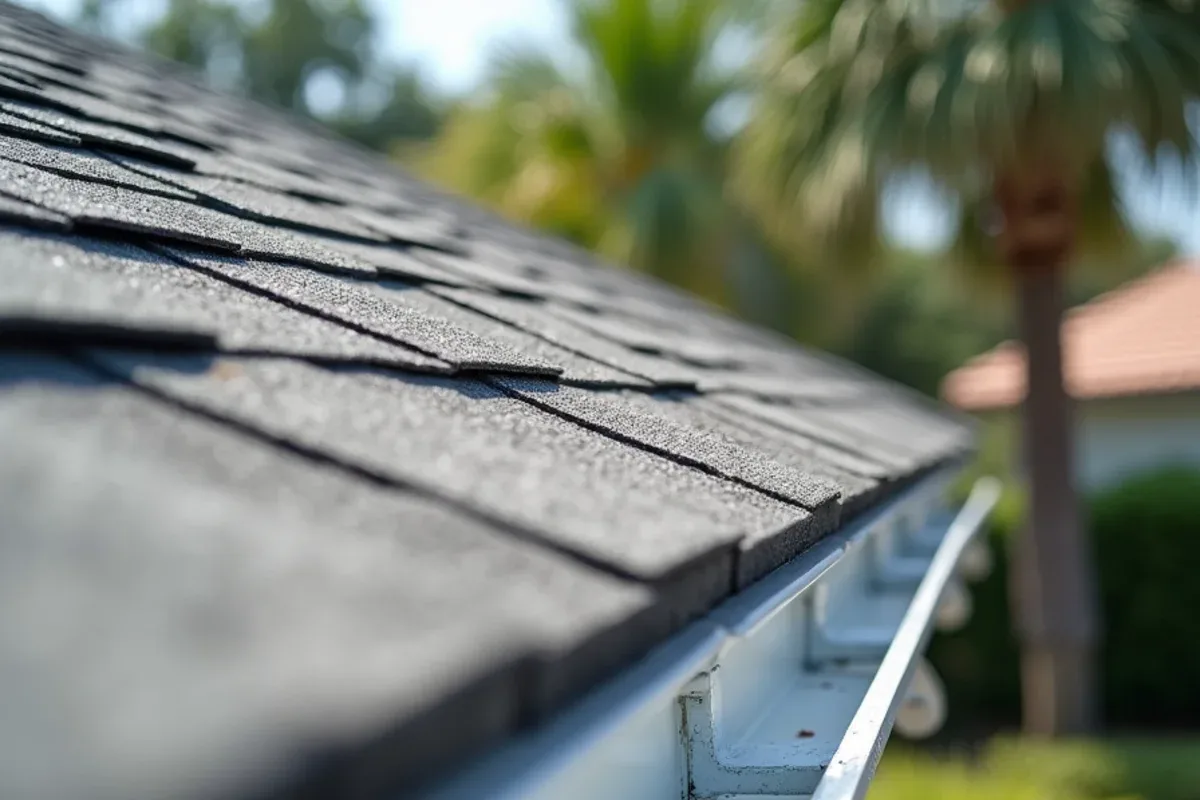
Some roofers pull gutters themselves, and some will not touch them. When the roofing crew rips them off with the old shingles, the gutters are usually scrap. If you want to keep them, ask a gutter crew to remove them first.
Our gutter removal and reinstall service is built around reroof schedules. We take the system down, store reusable runs or haul away what is not worth keeping, and come back when the roofer is done. We also take removal-only jobs, where you just need the old gutters off and gone, with no requirement to buy new ones from us.
Get it in writing
Your roofing contract and gutter quote should both say who removes the gutters, who is responsible if they are damaged, and when they go back up. Gaps here cause most of the finger-pointing we see.
Managing water while the gutters are down
Most reroofs in South Florida take longer than homeowners expect, especially between May and October when afternoon storms halt work. For those weeks the house has no gutters. Move potted plants away from the drip line, lay a tarp or splash pads at entries, and clear underground downspout inlets so they do not fill with roof grit.
Plan the gutter return date with the roofer, not just the start date. In Pompano Beach, the 1950s–60s ranch homes in Cresthaven and Kendall Green carry low hip roofs of shingle or flat tile, and switching from one to the other on a reroof makes the gutter size question real. Farther north around Delray Beach, flat-roof homes with scuppers need their leader heads matched to the new roof edge.
What we see when gutters go back on a freshly roofed house
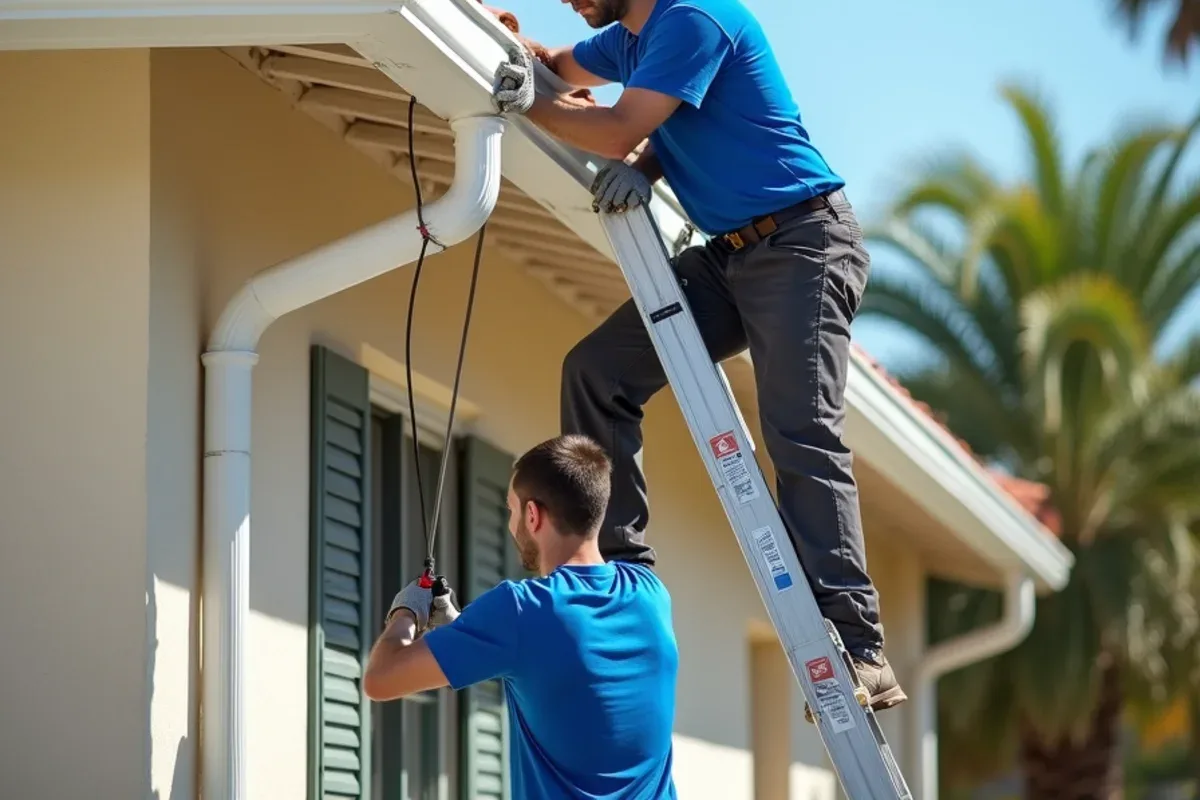
The roof is new, so everyone expects the gutter part to be easy. Most of the trouble we run into on reroof jobs sits in the few inches where the roof edge meets the fascia.
- Drip edge set too tight to the fascia. With no room to slip the gutter’s back flange behind it, water finds the seam between the two and stains the board.
- Old hanger holes everywhere. Reused gutters go back on with hangers shifted to fresh wood, because a screw driven into a stripped hole holds nothing in a summer storm.
- Fascia patched instead of replaced. A thin trim wrap over soft wood looks fine on day one. Hangers pull out of it within a season.
- Tile that changed the throw. A shingle-to-tile reroof can send water past a gutter that used to catch everything, so the run may need to sit lower or go up a size.
The honest trade-off on reuse: putting a sound seamless system back up saves material and waste, but it will carry its old scratches and may not match a new roof color. When the table above points to new metal, our gutter replacement work is timed to the same reroof window. When the boards behind the old gutter are soft, fascia board repair happens before the drip edge closes the gap.
Five things to settle with your roofer before tear-off
- Who removes the gutters and downspouts, and who stores or hauls them.
- Which edge metal goes on (drip edge, tile eave closure or gravel stop) and how far it should project.
- Whether soft fascia is in the roofing scope or the gutter scope.
- The day the roofer expects to be finished at the eaves.
- Who pays if a reusable run is damaged on site.
Getting the timing right on your reroof
Gutters off first, roof and edge metal next, gutters back on last. Inside that order, the decisions that matter are whether your old system is worth reusing, whether the fascia needs work, and how soon the gutters return once the roofer leaves the eave. Put each of those answers in writing on both contracts.
If a reroof is on your calendar, call Southern Gutters FL for a free estimate. We will look at the existing gutters and fascia, tell you honestly whether reuse makes sense, and plan our dates around your roofer’s.
Questions about gutters before or after new roof
Can my roofer just work around the gutters?
Rarely well. Tear-off debris, ladders and the new drip edge all happen at the eave. Gutters left up during a reroof tend to get dented, pulled off their hangers or trapped above the new drip edge, which leaks behind the gutter later.
How soon after the roof is done should gutters go back up?
As soon as the edge metal is finished and the roofer is off the eave. In rainy season, aim for days rather than weeks; every storm without gutters soaks the fascia and splashes the walls you just finished protecting with a new roof.
Does a new roof warranty depend on how the gutters are installed?
Roofers generally warrant their own work, and a gutter hung incorrectly can cause leaks they will not cover, such as water running behind the gutter onto the fascia. Ask your roofer how they want the gutter to meet their drip edge, and make sure the gutter crew follows that detail.
Does Florida code require a drip edge on a new roof?
For asphalt shingle roofs, yes. The Florida Building Code calls for metal drip edge at the eaves and rakes of shingle roofs, and building departments check edge details during reroof inspections. Tile and metal roofs use their own eave closures and edge trim. Either way, the gutter should hang so that edge metal sends water into the trough, which is why the gutters go back up after the roofer finishes.
Services mentioned in this guide
Gutter Removal & Reinstall (Roof Replacement)
Gutters taken down before a reroof and reset or replaced after, plus removal-only jobs with no new purchase required.
Learn moreGutter Replacement
Rusted, leaking or undersized gutters swapped for seamless aluminum, with old runs hauled off and fascia checked first.
Learn moreFascia Board Repair & Replacement
Rotted fascia cut back to sound wood, new boards primed and finished, and gutters re-hung tight in one visit.
Learn moreServing Pompano Beach, Delray Beach and the rest of South Florida.