
By Chance, owner of Southern Gutters FL · Published · Last updated
Key takeaways
- Salt deposits hold moisture against metal, and that wet, salty film drives most coastal gutter corrosion.
- Plated steel screws and hangers usually rust first, staining the gutter and loosening their grip on the fascia.
- Stainless-steel hardware and painted aluminum are the practical standard for gutters near the ocean.
- Copper and aluminum must never touch or share runoff; mixing them in salt air speeds up corrosion of the aluminum.
- A gentle fresh-water rinse of sheltered gutter areas a few times a year slows the buildup that rain misses.
Salt air rarely eats an aluminum gutter first. It attacks plated screws, steel hangers, rivets and bare cut edges, which rust, stain and loosen long before the trough wears through. On coastal South Florida homes, seamless painted aluminum hung with stainless-steel hardware, kept clean and rinsed in sheltered spots, is the combination that lasts.
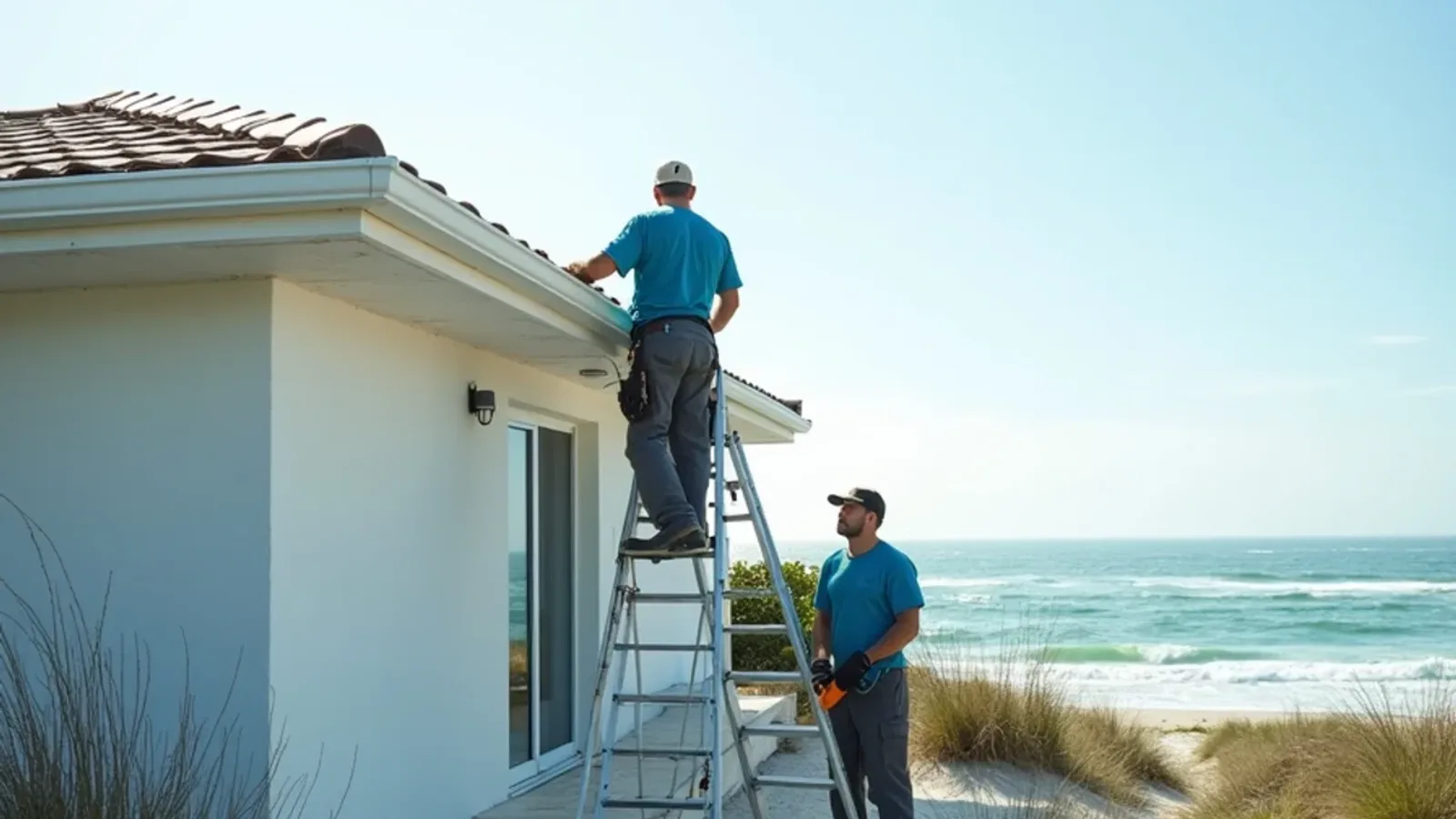
Live within sight of the Atlantic or the Intracoastal and you learn fast that salt gets into everything: window tracks, car door hinges, the pool screen frame. Gutters are no exception. The surprise for most owners is where the damage starts. With salt air, gutters usually fail at the fasteners and joints long before the aluminum trough wears through.
This guide is written for homes on the barrier islands and the first few blocks inland, from Hollywood up through Palm Beach County. It explains what salt actually does to metal, which parts of a gutter system give out first, and the materials and hardware choices that hold up best when the wind is coming off the water most of the year.
How coastal gutter corrosion actually starts
Ocean spray carries fine salt particles inland on the breeze. They settle on every surface, and because salt pulls moisture out of humid air, each deposit turns into a thin, wet, salty film that rarely dries out completely. That film is an excellent conductor, which is what lets corrosion get started.
Aluminum handles this better than most metals because it forms a tough oxide skin that protects the surface. Under constant salt exposure, that skin can still break down in small spots, causing pitting, especially where debris holds moisture in the trough. Bare steel has no such defense. It rusts outright, and the rust spreads.
Rain is actually a help on the coast. A good storm rinses salt off the exposed face of the gutter. The trouble spots are the sheltered ones: the back of the gutter against the fascia, the underside of hangers, inside corners under a deep overhang, and anything shaded by a balcony above.
Rusted gutter screws and the other weak points
When we inspect gutters on a beachside home, we look at the small parts first. Here is where corrosion tends to show up, roughly in the order it appears.
| Component | What salt does to it | Better choice on the coast |
|---|---|---|
| Zinc-plated screws | Plating wears off, orange streaks run down the gutter face | Stainless-steel screws |
| Steel hangers and straps | Rust swells, weakens and lets the gutter droop | Aluminum hangers with stainless fasteners |
| Pop rivets at miters | Steel-mandrel rivets rust and stain the corner | Aluminum or stainless rivets |
| Bare cut edges | Unpainted metal pits and chalks first | Painted edges |
| Galvanized steel gutters | Coating breaks down, rust-through along the bottom | Seamless painted aluminum or copper |
| Downspout straps | Rust stains on stucco, loose downspouts | Aluminum straps, stainless screws |
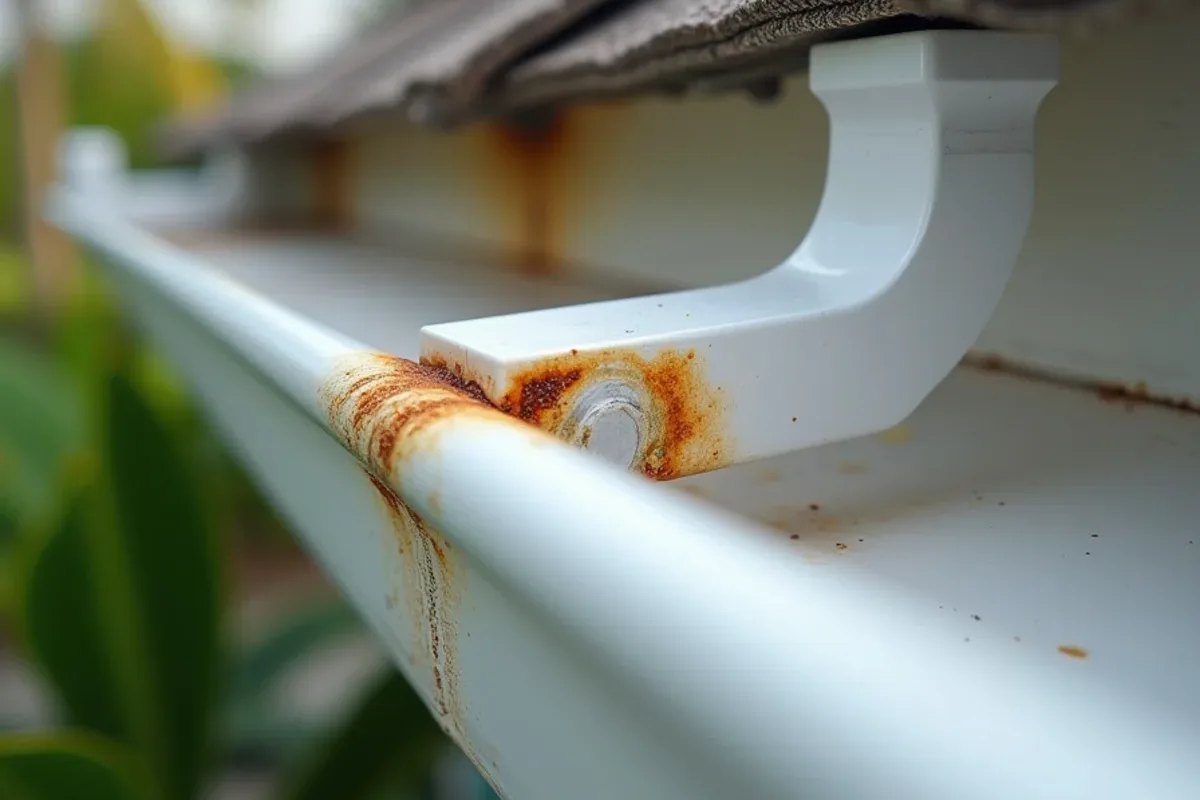
Those rust streaks are more than a cosmetic problem. A rusting screw loses diameter and holding power, and in a hurricane the hangers are what keep the gutter on the house.
Why stainless steel gutter hardware matters near the ocean
Stainless steel resists chloride far better than plated or galvanized fasteners. Among common grades, 316 stainless, sometimes called marine grade, carries molybdenum for extra resistance to salt and is the safest choice right on the beach. Type 304 also performs well a little farther inland. Ask any installer what their screws are made of; it is a fair question and the answer tells you a lot.
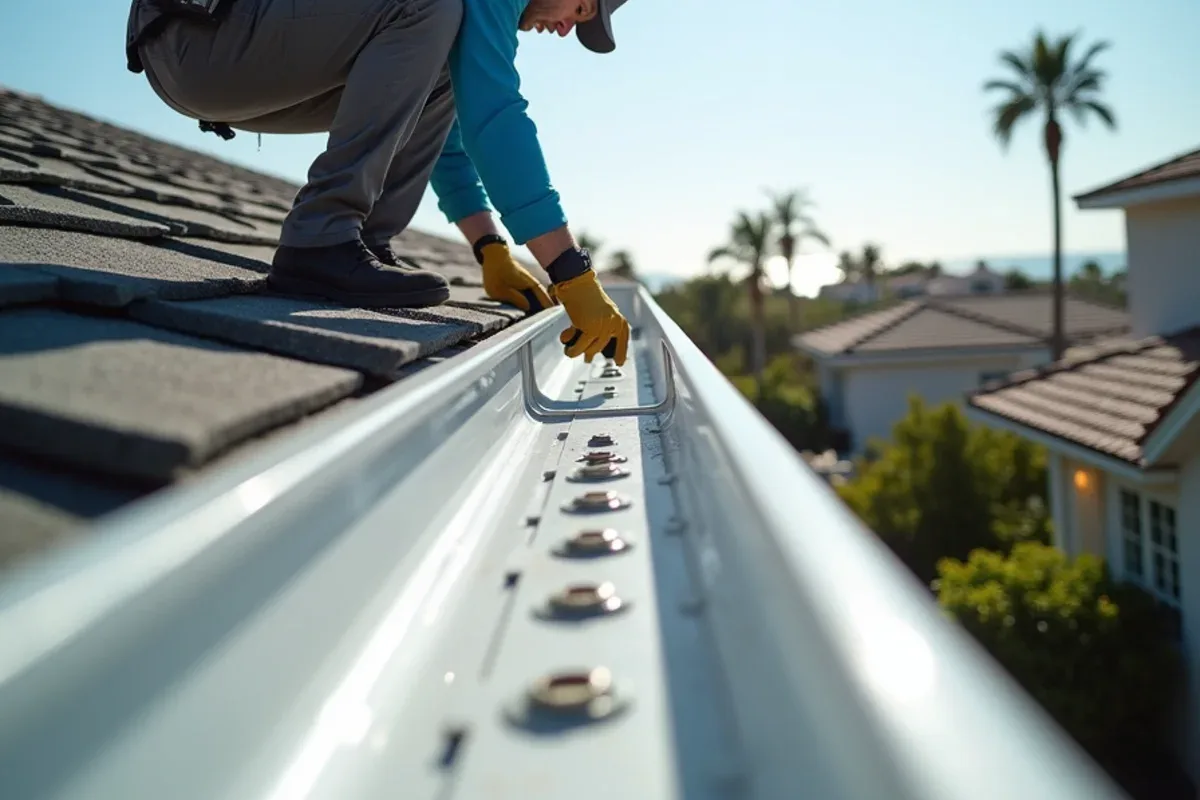
Every seamless gutter installation we do uses stainless-steel hardware as standard, with hidden hangers set into the fascia at close spacing. Cut and exposed edges get painted, and joints are sealed and riveted so salt water does not sit in the seam.
Aluminum gutters on a beach house, or copper?
Painted seamless aluminum is the practical workhorse for coastal homes. The factory finish is a barrier between the metal and the salt film, it comes in many colors, and with stainless hardware it holds up well when kept clean. It is what most oceanfront homes along A1A carry.
Copper is the premium option, and it handles salt air very well. It weathers from bright metal to brown and eventually a blue-green patina, which is itself a protective layer. Copper gutters make sense on high-end and historic-style homes where that look is the point. They must be installed with copper or copper-compatible hangers and fasteners.
Mixing metals: the galvanic corrosion trap
When two different metals touch and are bridged by moisture, one of them corrodes faster than it would alone. Salt water is about the best bridge there is, so on the coast this happens quickly. Aluminum is the metal that loses when it is paired with copper.
- Never fasten an aluminum gutter with copper nails or hang a copper gutter on aluminum straps.
- Keep water coming off copper flashing, a copper roof accent or a copper cupola from draining into an aluminum gutter; dissolved copper in the runoff will pit the aluminum.
- Do not patch a copper gutter with an aluminum section, or the reverse.
- Stainless screws in aluminum gutters are fine; the screw is small relative to the gutter and the pairing is widely used.
Check after other trades
Roofers, screen-enclosure crews and painters sometimes leave mismatched screws or flashing behind. After any work near the roof edge, take a quick look at what metal ended up touching the gutter.
What we see on oceanfront and Intracoastal gutters
The giveaway on a beachside house is a row of orange drip marks spaced exactly like the hangers. Each one is a plated screw giving up. When we pull a gutter like that away from the fascia, the back face often carries a white, powdery crust where salt and wet debris sat against the aluminum for years, and the screw holes in the wood have wallowed out around the rust.
Barrier-island homes add one more ingredient: wind-blown sand. It settles in the trough with the salt and forms a gritty paste that stays damp long after a storm, which is why cleaning matters more on the coast than the leaf count suggests. Corrosion studies and marine-construction guidance agree that salt deposition is heaviest near the surf and drops off sharply within the first few blocks, though strong onshore winds and named storms push spray much farther inland.
| Where the house sits | Hardware we choose | Rinse sheltered spots | Extra attention |
|---|---|---|---|
| Oceanfront or barrier island | 316 stainless screws, aluminum hangers at close spacing | Every few months and after storms | Sand in the trough, balcony-shaded runs |
| Facing the Intracoastal | 316 or 304 stainless | A few times a year | Sea-wall spray on windy days, dock-side runs |
| First few blocks inland | 304 stainless | Twice a year | Rust streaks from older plated screws |
| Well inland | Stainless as standard | After hurricane-season storms | Humidity and tree debris more than salt |
Honest trade-offs on the coast
- 316 stainless is not always necessary. It is the right call on the sand; a few blocks back, 304 performs well and the difference is harder to justify.
- A hardware swap is not always enough. If the fascia has softened around the old screws, new stainless screws need sound wood to bite into first.
- Scratches matter. A ladder scrape through the painted finish exposes bare aluminum, so we touch up any marks before we leave.
After a hurricane passes, rinse the gutters and downspouts with fresh water once it is safe, even on homes that rarely see spray. Our first 48 hours after hurricane gutter damage guide covers what to photograph before anything is cleaned.
Caring for gutters near the ocean
- Keep troughs clean. Wet leaves and sand hold salt against the metal; clean gutters dry out between storms.
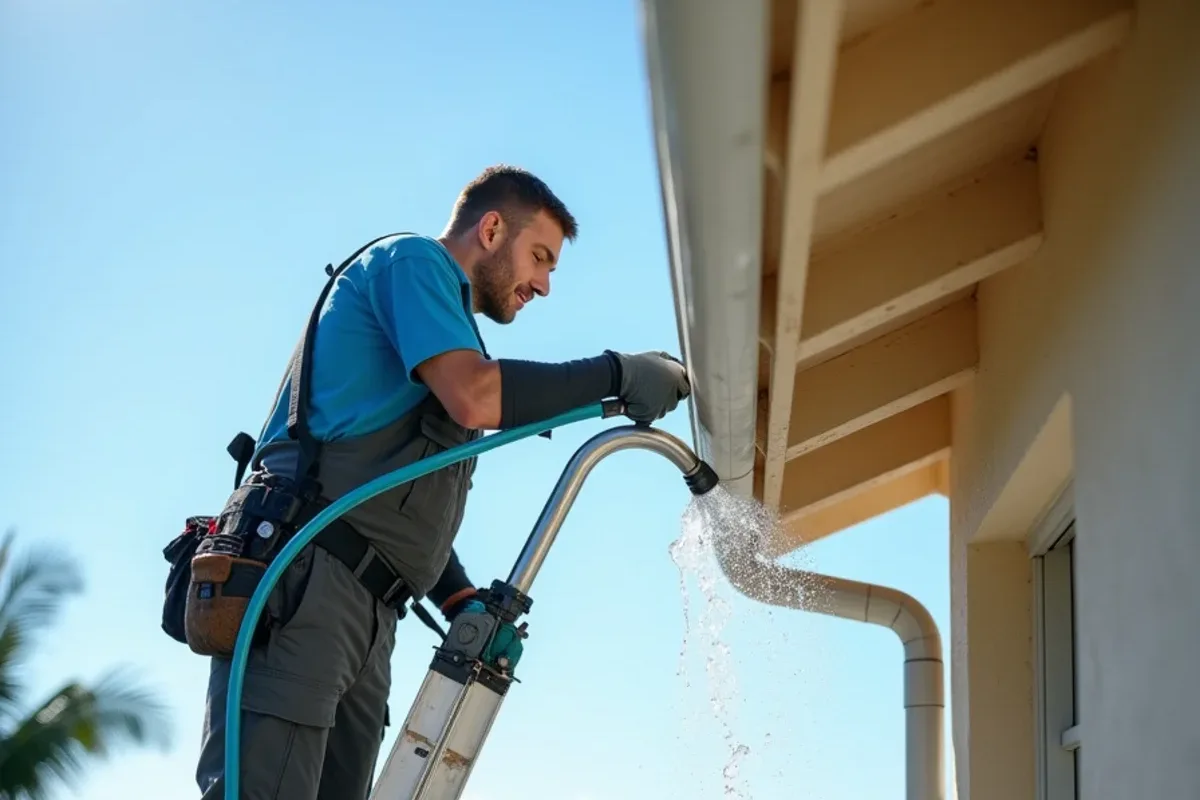
- Rinse the sheltered parts with a garden hose a few times a year, especially under balconies and deep overhangs.
- Look for orange streaks on the gutter face; each one marks a fastener to swap for stainless.
- Check downspout straps and miters after hurricane season, when salt spray is heaviest.
- Replace galvanized steel gutters before rust-through, not after the first big leak.
We service homes on the narrow barrier island of Hillsboro Beach and along A1A in Highland Beach, where the ocean sits on one side and the Intracoastal on the other. On houses like these, a hardware upgrade often extends the life of an otherwise sound gutter, and we will suggest that before suggesting anything bigger.
Keeping coastal gutters on the house
Near the water, gutters fail from the small parts outward. Choose painted seamless aluminum or copper, hang it on stainless hardware, keep metals from mixing and give the sheltered spots a fresh-water rinse. Swapping rusting screws for stainless is often enough to save a sound system.
If you are seeing rust streaks, loose hangers or white crust along your gutters, call Southern Gutters FL for a free estimate. We will check every fastener and hanger, tell you whether a hardware upgrade or a new installation makes sense, and put that scope in writing.
Questions about salt air gutters
How far inland does salt air affect gutters?
It is strongest on oceanfront lots and the first few blocks inland, and on homes facing the Intracoastal. Strong onshore winds and storms can carry spray farther. Homes miles inland see far less of it, though stainless hardware is still a sensible choice anywhere in South Florida’s humidity.
Can I just replace the screws on my existing gutters?
Often, yes. If the aluminum is sound and the fascia is solid, swapping rusted plated screws and steel hangers for stainless hardware is a modest job that can add years to the system. If the gutters are galvanized steel and already rusting through, replacement is the better path.
Do aluminum gutters rust near the ocean?
No. Aluminum does not rust the way steel does, because it forms a protective oxide skin. Under constant salt it can pit or develop a white powdery corrosion in sheltered, damp spots. The orange rust you see on coastal aluminum gutters almost always comes from plated steel screws, hangers or rivets, which is why we hang every run on stainless-steel hardware.
Should I rinse my gutters after a hurricane?
Yes, once it is safe and any damage has been photographed. Hurricanes and strong onshore winds drive salt spray far beyond the beachfront, coating gutters, hangers and downspouts on homes that normally see little of it. A gentle garden-hose rinse of the gutter, the back face against the fascia and the downspouts washes off that film before it settles into the metal.
Services mentioned in this guide
Seamless Gutter Installation
Aluminum gutters roll-formed on site to each wall’s length, hung on stainless hardware, with a 3-year/20-year warranty.
Learn moreCopper Gutters
Soldered copper half-round and K-style gutters, leader heads and downspouts for Mediterranean and estate homes.
Learn moreServing Hillsboro Beach, Highland Beach and the rest of South Florida.