
By Chance, owner of Southern Gutters FL · Published · Last updated
Key takeaways
- Never climb a ladder during rain or lightning; nothing in the gutter is worth a fall.
- Where the water spills over (corner, middle, whole run) usually points straight to the cause.
- Most overflow comes from a clogged outlet or downspout, not a full-length clog.
- Repeat overflow on a clean gutter means too few downspouts, poor pitch or an undersized gutter.
- Check fascia, stucco and the foundation line within a day or two of a bad storm.
When gutters overflow in heavy rain, stay off the ladder, protect the house from the ground and note exactly where the water spills. Once the storm passes, clear the outlet and flush each downspout. If a clean gutter still overflows, the lasting fix is another downspout, corrected pitch or a larger gutter.
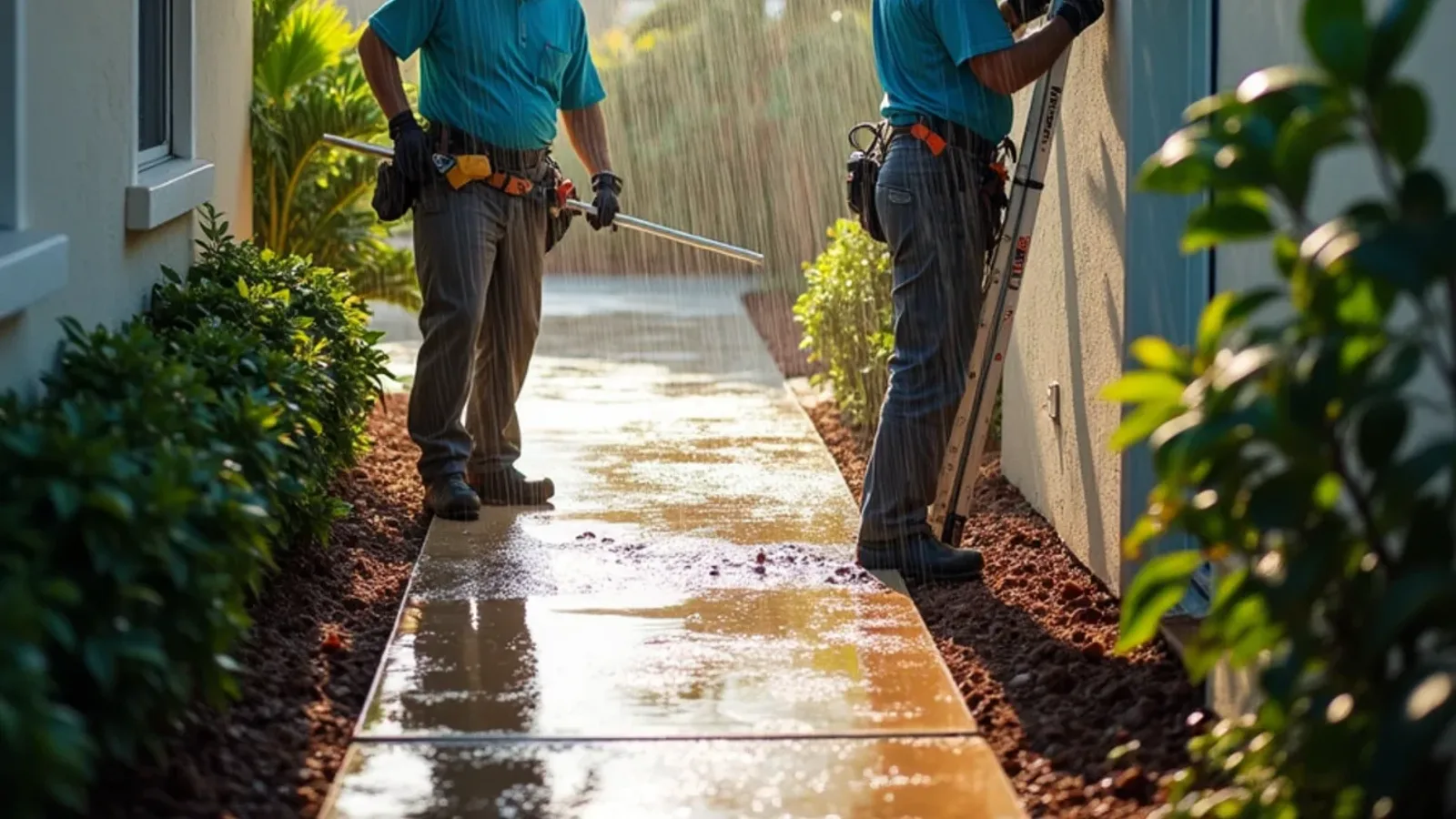
It is 4 p.m. in July, the sky over Broward has gone dark green, and a sheet of water is pouring off the front of your house instead of going down the downspout. Gutters overflowing in heavy rain is one of the most common calls we get during the wet season, and the good news is that most of the damage happens slowly. You have time to act sensibly.
This guide is written for the moment it is happening. First, what to do (and skip) while the cloudburst is still going. Then how to read where the water is spilling, because the spill point tells you the cause. Finally, the permanent fixes, from a simple cleanout to adding a downspout or going up a gutter size.
Water pouring over gutters right now: the first ten minutes
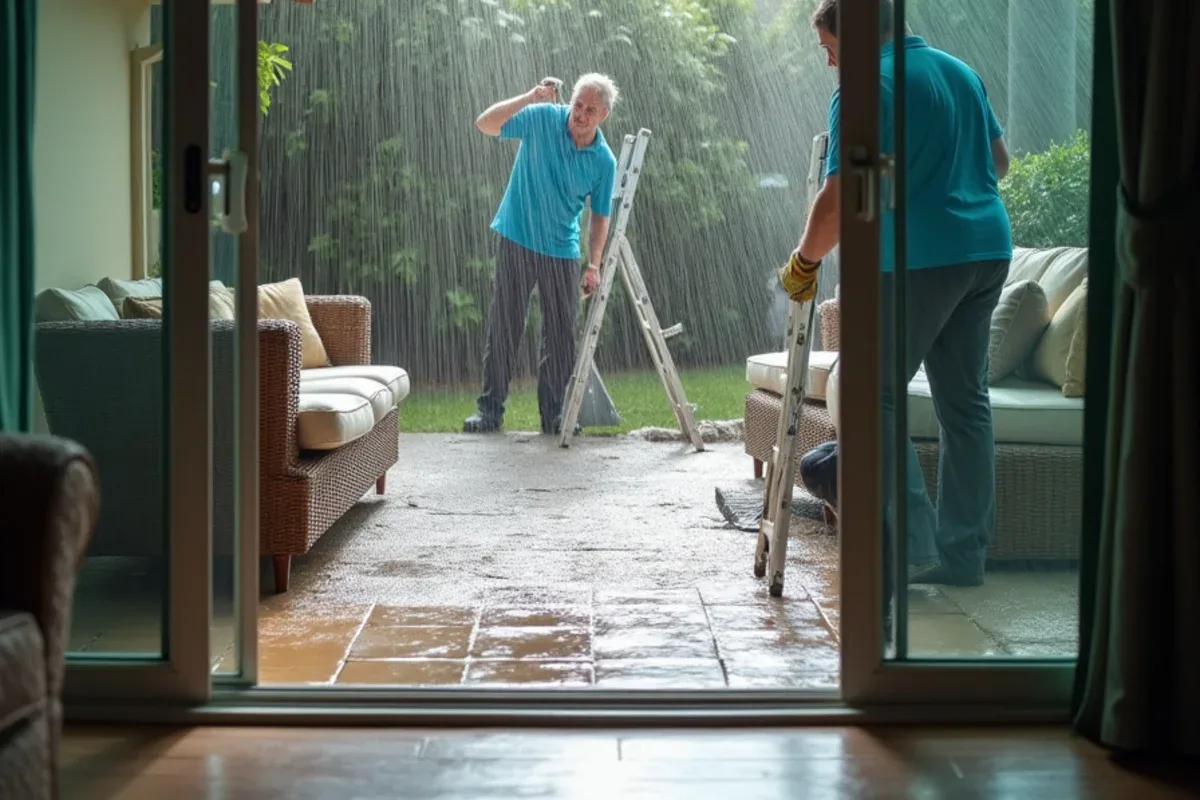
The instinct is to grab a ladder and dig out the clog. Do not. Wet aluminum rungs, a soaked lawn under the ladder feet and a South Florida thunderstorm are a bad combination, and lightning often arrives before the heaviest rain does. Work from the ground and from inside.
- Check inside first. Look at ceilings and walls under the overflowing run, sliding door tracks, and window sills on that side of the house.
- Move anything that can be damaged out of the splash zone: patio cushions, grills, potted plants, bikes under the eave.
- If water is cascading onto a doorway, lay towels at the threshold and keep that door closed until the storm passes.
- Take a short phone video through a window showing exactly where water leaves the gutter. This is gold for diagnosis later.
- Once lightning has moved off, you can set a splash block or a spare bucket under the spill point to keep it from cutting a trench in the mulch bed.
- Wait for the storm to end before doing anything at the roofline.
Safety first
If a gutter section is sagging, pulling away or sheeting water onto an electrical meter, panel or outdoor outlet, stay clear of it and call for help. Water near power is not a homeowner project.
Why gutters overflow in a South Florida cloudburst
Our afternoon storms can drop a huge amount of water in twenty minutes. A gutter that copes fine with a steady drizzle can be overwhelmed by that burst, and any weak point shows up immediately. These are the causes we find most often.
A clogged gutter in a storm usually starts at the outlet
Black olive leaves, royal palm seed pods and oak tassels wash toward the downspout opening and mat together right at the outlet. The gutter itself can look half-empty while the drop is completely blocked. The elbows at the bottom of the downspout are the second favorite hiding spot.
Too few downspouts for the roof area
Plenty of older Broward homes have one downspout draining 40 or more feet of gutter. On a barrel tile roof, where valleys funnel water to a single point, that one outlet simply cannot keep up during a cloudburst.
Pitch, size and guards
A gutter that has settled flat or back-pitched holds water away from the outlet. A 5-inch gutter under a big, steep roof may be undersized. And gutter guards that are matted with fine debris can shed water right over the front edge instead of letting it in.
Where is it spilling? Reading the overflow to find the cause
Watch the video you took, or walk the house after the storm and look for splash lines in the mulch and dirt streaks on the stucco. The location of the spill narrows the cause down fast.
| Where water spills | Most likely cause | Typical fix |
|---|---|---|
| Right beside the downspout | Clogged outlet or downspout elbow | Clear the outlet and flush the downspout |
| At an inside corner under a roof valley | Valley water overshooting the gutter | Valley splash guard, or a downspout closer to the corner |
| Middle of a long run | Low spot from a sagging or loose hanger | Re-hang and re-pitch the section |
| Along the entire run, gutter clean | Undersized gutter or too few outlets | Add a downspout or upgrade to 6-inch |
| Over the front lip of a guarded gutter | Matted guard surface | Clean the guard; check guard type |
| Behind the gutter, against the fascia | Not an overflow; drip edge or apron problem | Flashing correction at the roof edge |
That last row matters. Water running down the wall behind the gutter looks like overflow from the yard, but the fix is completely different. Our guide to water running behind your gutters covers it.
Gutter overflow damage to check once the storm passes
One overflow event rarely causes real harm. A season of them does. Within a day or two of a heavy storm, walk the house and look at these spots.
- Fascia boards behind the spill point: soft wood, peeling paint or a dark line at the bottom edge.
- Stucco and paint below the eave: tan or gray streaks, bubbling paint, or mildew starting in a vertical stripe.
- The foundation line: a trench in the soil, exposed footing or water pooling against the slab edge.
- Soffit vents near the overflow: staining or sagging panels.
- Pavers and pool decks: sunken pavers or a washed-out joint where the sheet of water lands.
- Inside walls and baseboards on that side of the house: swelling or musty smell.
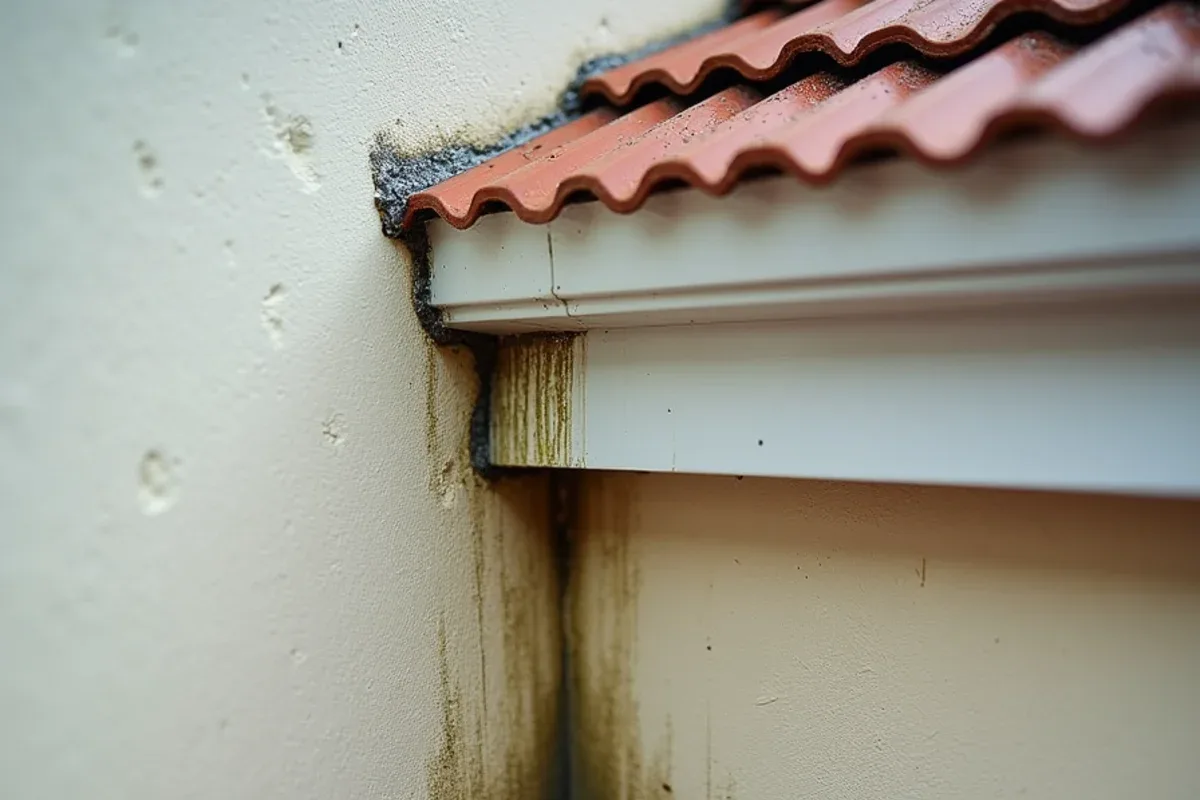
If you find soft fascia, deal with it before the next storm. Rotted wood cannot hold hanger screws, and an overflowing gutter full of water is heavy. That is how a spill problem turns into a gutter on the lawn.
The gutter overflow fix that lasts past the next storm
Start with the cheapest correct answer and work up. In most homes we see, a thorough gutter cleaning with a full downspout flush solves it, especially if the last cleaning was before the spring leaf drop.
- Clean and flush. Remove debris by hand, then run water through every downspout and confirm full flow at the bottom.
- Check pitch with water. Low spots and back-pitched sections show up immediately during the flush test.
- Re-hang loose sections. Replace failed spikes with hidden hangers screwed into solid fascia.
- Add an outlet. A second downspout on a long run often fixes chronic overflow on its own.
- Upgrade size where the roof demands it. A 6-inch gutter with 3x4 downspouts carries far more water than a 5-inch with 2x3s.
- Tame the valleys. A valley splash guard keeps fast water from shooting past the gutter lip.
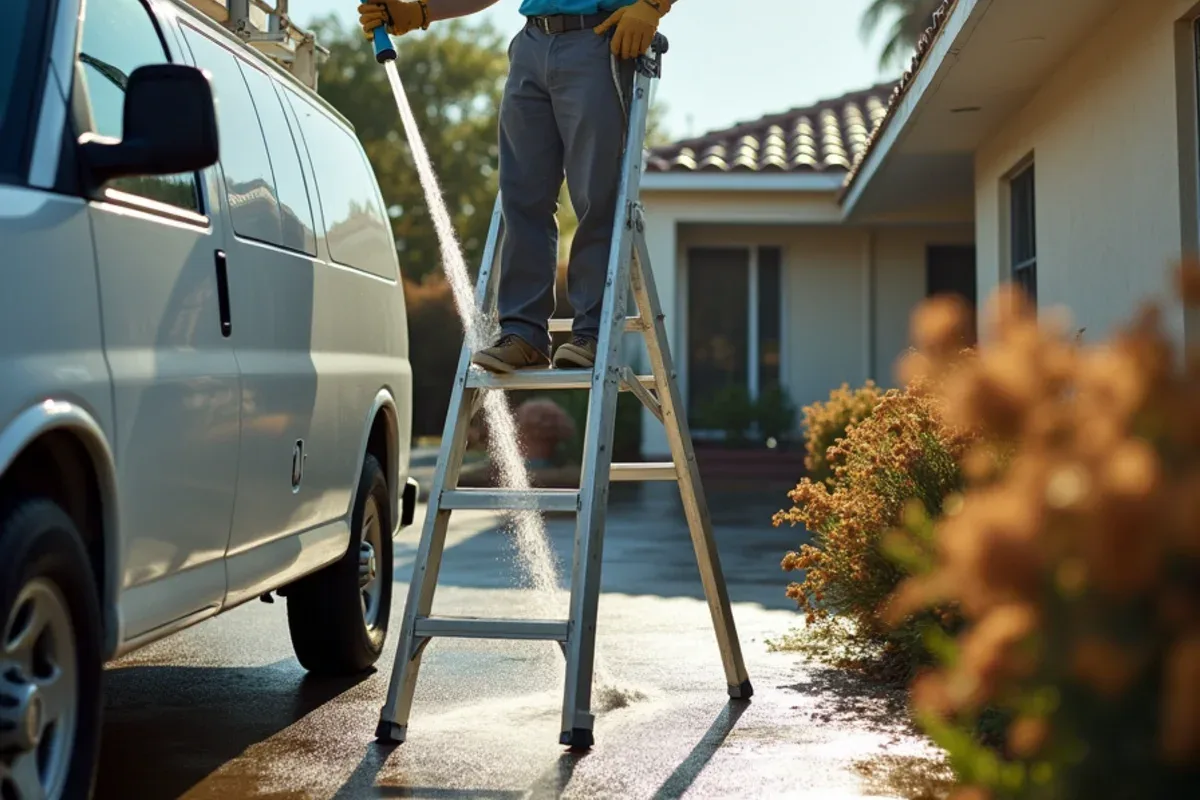
If the overflow is actively causing damage or a section is pulling loose, our overflowing gutter emergency service focuses on clearing the blockage and making the run safe first, with the longer-term fix quoted in writing afterward. We get these calls all over Broward, from older ranch homes in Fort Lauderdale to the tree-heavy streets of Plantation.
Why gutters overflow again and again, and when to call us
If your gutters overflow every time it pours, even right after a cleaning, the system is telling you it is not built for your roof. That is a design problem, not a maintenance problem, and no amount of scooping will fix it.
Call a pro when the spill is near electrical equipment, when any section is sagging, when the roof is two stories or barrel tile, or when you have already cleaned and it still overflows. We will look at the roof area each run drains, the outlet count and the pitch, then give you a written quote that explains which fix we recommend and why.
What our crew finds when we trace an overflow call
Before anyone touches a scoop, we run a hose at the high end of the run and watch where the water goes. If it backs up at the outlet while the trough is still mostly empty, the plug sits in the drop or the bottom elbow. If it stalls halfway along, a hanger has let go and the run has a belly. That five-minute test decides the whole job.
Honest trade-offs we explain on site
- Another downspout is usually the smallest fix for a long run, but it needs a sensible discharge spot away from the slab, a walkway or the neighbor’s lot.
- A size upgrade from 5-inch to 6-inch means replacing the run, so we only suggest it when the roof area and the spill pattern both point that way.
- A valley splash guard is a small part for one specific problem; it does nothing for a plugged outlet.
- Guards cut cleanings under black olive trees, yet fine leaf litter can mat on top and shed water over the lip, so guarded runs still get checked.
- A silted underground line can make a spotless gutter back up. That calls for a flush or drainage work, not another cleaning.
On barrel tile homes we look at the roof edge from a ladder with standoffs instead of walking the tile, because a slipped tile near a valley can change where water lands. Everything we find gets photographed, and the written quote names the fix that matches the cause, so nobody pays for bigger gutters when a packed elbow was the real culprit. If your gutters were cleaned recently and still spill, our guide on why clean gutters still overflow walks through the design side in more depth.
Fix the cause before the next afternoon storm
An overflowing gutter is a warning, not a disaster, as long as you act on it. Stay safe while it pours, record where the water leaves the gutter, check the fascia, stucco and slab edge afterward, and fix the cause rather than the symptom. A clear outlet solves most cases; repeat overflow on a clean system needs more capacity.
If your gutters spilled in the last storm, call Southern Gutters FL at (855) 633-0442 for a free estimate. Our family-owned crew works Monday to Friday from our North Lauderdale base, flow-tests every run it touches, and puts the recommended fix in writing before any work begins.
Questions about gutters overflowing in heavy rain
Is it normal for gutters to overflow in very heavy rain?
A brief spill during the most intense minutes of a severe storm can happen even on a well-designed system. Overflow in ordinary afternoon storms, or every time it rains hard, is not normal and points to a clog, a pitch problem or too few downspouts.
Can I clear an overflowing gutter during the storm?
No. Wait until the rain and lightning have passed and the ladder footing is firm. Protect the house from the ground in the meantime by moving belongings and redirecting splash away from doors and the foundation.
Will gutter guards stop my gutters from overflowing?
Guards keep debris out, which removes the most common cause. They do not add capacity, so a gutter that is undersized or short on downspouts will still overflow in a cloudburst, and a matted guard can shed water over the edge.
Can overflowing gutters damage my foundation?
Over time, yes. Water sheeting off the same spot every storm erodes soil along the slab, keeps the ground at the footing saturated and can push moisture toward interior walls and floors. One storm rarely matters; a full wet season of repeat overflow does. Watch for trenches in the mulch, exposed footing and puddles that linger at the slab edge, and fix the cause before the next rainy season.
Is an overflowing gutter an emergency?
Usually not, but sometimes. A gutter spilling into the mulch during one storm can wait for a scheduled cleaning. It becomes urgent when water is getting inside, sheeting onto an electrical meter or outlet, or when a section is sagging or pulling off the fascia under the weight of trapped water. In those cases stay clear of it and call for help once the storm has passed.
Services mentioned in this guide
Overflowing Gutter Emergency Service
Gutters pouring over toward doors and windows? We clear the clog, fix the outlet and find why it overflowed.
Learn moreGutter Cleaning Service
Hand-cleaned gutters, every downspout flushed and tested, roof-edge debris bagged and hauled away.
Learn moreServing Fort Lauderdale, Plantation and the rest of South Florida.