
By Chance, owner of Southern Gutters FL · Published · Last updated
Key takeaways
- Repair makes sense when problems are isolated: one or two joints, a single sagging run, a bent downspout.
- Replacement makes sense when failures are spread out, the metal is thin or corroded, or the system is sectional with many seams.
- Fascia condition can force the decision, because gutters have to come off to fix rotted boards.
- Age alone is not a reason to replace; condition is.
- If more than about a third of the system needs work, compare a full replacement quote.
Repair your gutters when the trouble is local: one or two leaking joints, a single sagging run or a crushed downspout on an otherwise sound seamless system. Replace them when leaks show up at most seams, several runs hold water, the fasteners are rusting out, or the fascia behind them is rotting along more than one side.
A dripping corner or one sagging run does not automatically mean you need a whole new system. On the other hand, patching a gutter that is failing everywhere just spreads the cost over more visits. The gutter repair vs replacement decision comes down to five things you can check yourself, and we use the same five on every estimate.
We do both kinds of work, and we often recommend the smaller job. This guide explains how we weigh it so you can walk into any estimate knowing what the answer should probably be.
Repair or replace gutters? The five factors that decide it
1. Age and gutter lifespan
Well-installed aluminum gutters in South Florida commonly last twenty years or more. Age matters mostly as a predictor: a fifteen-year-old system with one leak will probably develop more soon, while a five-year-old system with one leak usually just has one bad joint.
2. Material and construction
Seamless aluminum has joints only at corners and ends. Sectional gutters, sold in short lengths and joined every ten feet or so, have many more seams, each sealed with caulk that dries out under our sun. Old vinyl gutters get brittle and crack. Galvanized steel rusts from the inside, especially near salt air.
3. Leak count
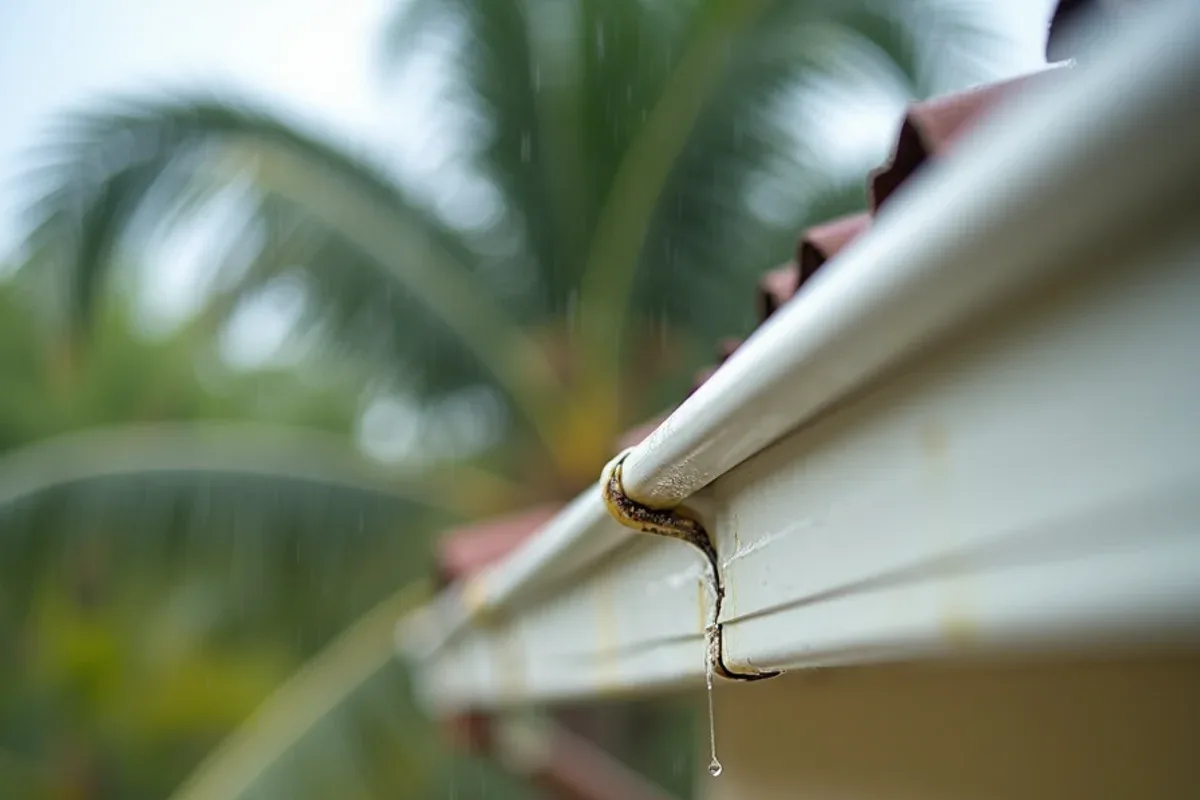
Count the drips during the next storm. One or two leaking spots is a repair. Leaks at most seams means the sealant has reached the end of its life across the whole system.
4. Pitch and alignment
Water standing in the trough or a visible dip in the run points to pitch problems. Re-hanging a run is a standard repair, but when every run has drifted, the labor approaches that of a new system.
5. Fascia condition
Push a screwdriver into the fascia next to a few hangers. Soft wood means the gutter has to come off for the board to be replaced. Once it is off, reinstalling old, tired gutter may not be worth the effort.
A gutter repair vs replacement scoring matrix
Score each factor and add them up. It is not a formula we would bet a house on, but it lines up well with what we recommend in person.
| Factor | 0 points | 1 point | 2 points |
|---|---|---|---|
| Age | Under 10 years | 10–20 years | Over 20 years |
| Material | Seamless aluminum | Seamless, thin or faded | Sectional, vinyl or rusted steel |
| Leaks | None or one | Two or three joints | Most seams or corners |
| Pitch | Drains fully | One run holds water | Several runs hold water |
| Fascia | Solid everywhere | Soft in one area | Soft along multiple sides |
| Total 0–3 | Repair | ||
| Total 4–6 | Get both quotes | ||
| Total 7–10 | Replace |
When repair is the smarter money
Repair wins when the system is mostly sound and the problem has a clear, local cause. Common examples:
- A single inside corner leaking because leaves dammed it for a season.
- One run sagging after a ladder was leaned on it or a royal palm frond hit it in a storm.
- A downspout crushed by a lawn mower or pulled loose at the elbow.
- End caps that have worked loose on an otherwise tight seamless system.
In these cases, our gutter repair visits fix the joint, re-hang the run or replace the damaged piece, then water-test the whole system so you know nothing else is hiding. Repair also makes sense when you are planning a reroof in the next year or two; there is no reason to buy new gutters that will need to come down anyway.
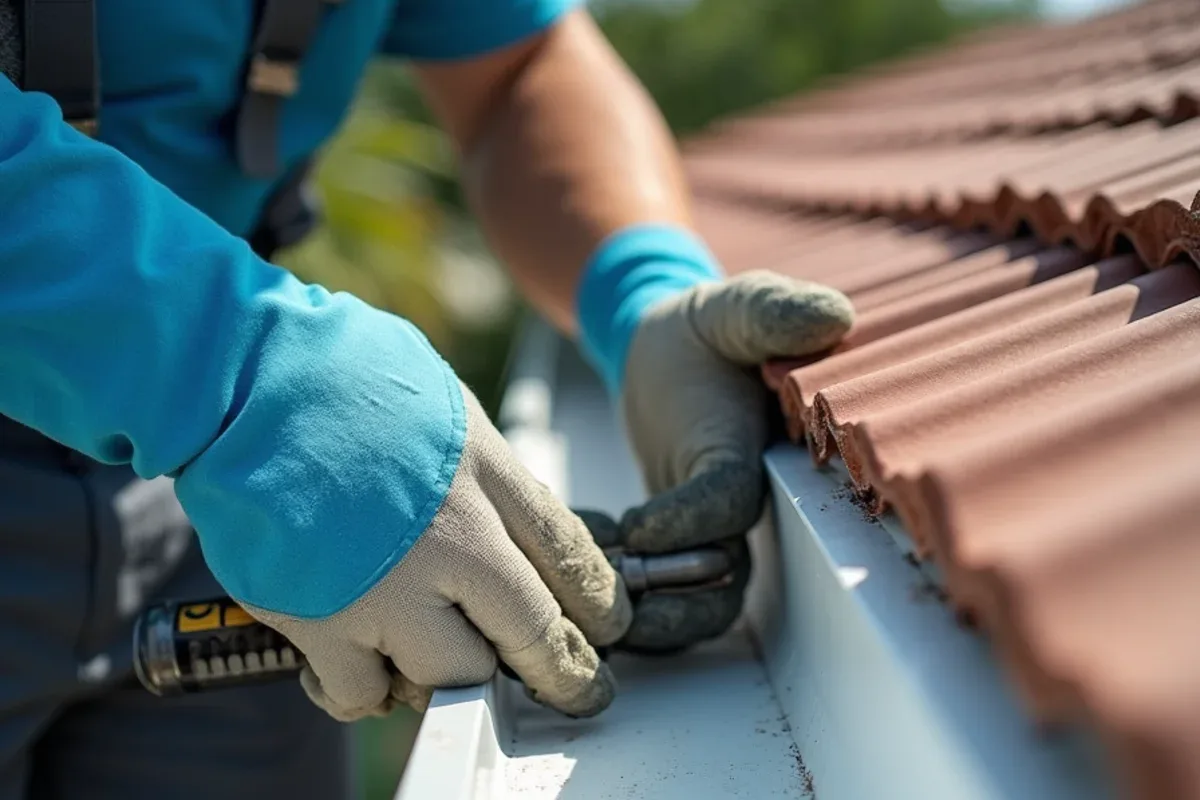
One caution: a repair should not be the third or fourth trip to the same corner. If a joint keeps reopening, ask why. Sometimes the fix is a rebuilt miter or an extra outlet that takes pressure off that corner, which is still a repair, just a more thorough one.
When old gutters should come down
Replacement wins when repairs would be scattered across the house, or when the root problem is the system itself. Sectional gutters are the clearest case. Resealing twenty seams buys a season or two, and then they start opening again.
Undersizing is another. If a house added a tile roof or a large addition, the original 5-inch gutters may overflow no matter how clean they are. A new seamless system sized for the roof, with more or larger outlets, fixes what repairs cannot. Our gutter replacement service includes removing and hauling away the old system and repairing fascia before the new runs go up.
Salt air and hidden corrosion
Within a few miles of the ocean, check the hardware as closely as the gutter. Plated steel screws and spikes rust, stain the fascia and lose their grip long before the aluminum itself wears out. If the fasteners are failing everywhere, re-hanging every run with stainless hardware costs about as much effort as starting fresh, and new coil gives you a clean finish to go with it.
Cost factors, not price tags
Both repair and replacement quotes depend on linear feet, story height, roof type, number of downspouts, fascia work and haul-away. Comparing those line by line shows whether three repairs are really cheaper than one replacement.
How our crew makes the call on the ladder
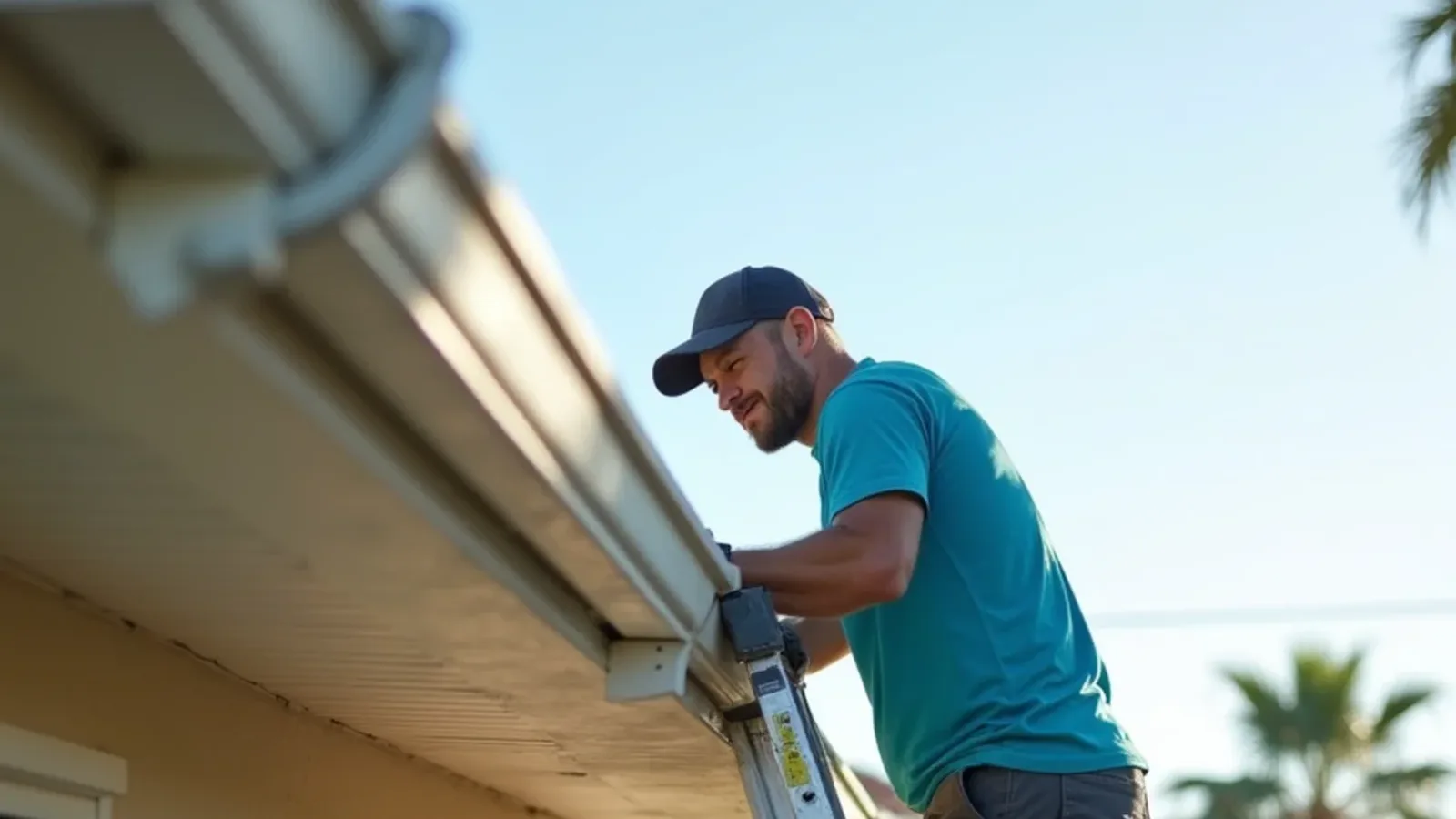
The first thing we do is rule out the easy answer. A packed outlet or a downspout elbow full of seed pods makes a healthy gutter spill at the corners and seams, and from the ground that looks exactly like a failed joint. So we clear the debris and run a hose through every section before anyone talks about repair or replacement.
Only then do we count. One bad miter on a tight seamless system is a short repair. Three unrelated failures on the same elevation, say a dripping seam, a run holding water and a hanger pulling out of soft wood, tell us the problems will keep coming, and we will say so on the estimate.
The trade-offs we explain honestly: a partial replacement saves money but new coil will look brighter beside faded runs; patching sectional gutters is cheap today and recurring tomorrow; and a repair right before a reroof is often the smartest spend of all, because the gutters may come down for the roofers anyway.
Getting a fair answer from any estimate
- Ask for the gutters to be cleared and water-tested before the verdict.
- Ask the estimator to point out each failing joint, run or hanger and photograph it.
- Request the repair scope and the replacement scope on the same written estimate.
- Compare the line items, including fascia work and haul-away, rather than the totals alone.
- Ask what warranty applies to each option, since repairs and new installations rarely carry the same terms.
Sectional gutter repair and the neighborhoods where it keeps coming up
In Margate, many 1960s–70s CBS ranch homes still carry their original sectional aluminum gutters, and the riveted, caulked joints are giving out one after another. Those homes usually score high on our matrix. In Hollywood, the picture is mixed. Mid-century ranch homes in Emerald Hills and Hollywood Hills vary house by house, so we score each one on its own, while the 1920s flat-roof homes around Hollywood Lakes often need scupper and downspout work more than long gutter runs.
If you are on the fence, ask for both options in writing. A good estimate shows you the repair scope next to the replacement scope, and the right answer is usually obvious once you see them together.
Repair, replace, or a little of both
Most gutter decisions are clearer than they first look. Isolated problems on sound metal call for repair. Spread-out failures, sectional seams and rotting fascia call for replacement. A split plan, one side new and the rest repaired, sits comfortably in between when one elevation takes the worst of the weather.
If you want both options laid out side by side, call Southern Gutters FL for a free estimate. We will test the system, show you what we found, and recommend the smaller job whenever it will do.
Questions about gutter repair vs replacement
Can you replace just one side of the house?
Yes. If one elevation takes the worst of the weather or tree drop, replacing that side and repairing the rest is a reasonable plan. We match profile and color as closely as possible, though older faded aluminum will look slightly different next to new coil.
Does a new roof mean I should replace gutters too?
Not automatically. Seamless gutters in good condition can usually be removed and reinstalled. Sectional, undersized or damaged gutters are better replaced while the roof edge is open.
How long does a gutter replacement take?
Many single-family homes are finished in a day when the weather cooperates, because the seamless runs are formed right at the curb. Two-story homes, tile roofs, fascia replacement and underground drain work add time, and afternoon storms in the rainy season can push the last steps to a second visit.
Is it worth repairing old sectional gutters?
Sometimes, for a season or two. If only a few seams drip and the metal is solid, resealing them is a fair short-term fix, especially before a planned reroof. When most of the joints are open, though, each repair buys less time than the last, because the sealant everywhere has aged together. At that point a seamless system with joints only at the corners usually makes more sense.
Services mentioned in this guide
Gutter Repair
Leaking corners, loose hangers, bad pitch and tired end caps fixed with honest, repair-first advice.
Learn moreGutter Replacement
Rusted, leaking or undersized gutters swapped for seamless aluminum, with old runs hauled off and fascia checked first.
Learn moreServing Margate, Hollywood and the rest of South Florida.