
By Chance, owner of Southern Gutters FL · Published · Last updated
Key takeaways
- Finish gutter cleaning and repairs in April, after spring leaf drop and before the storms start.
- Spring is when black olives, live oaks and many palms shed the most debris into gutters.
- Flush every downspout and underground line; clogs hide below the gutter.
- Plan a mid-season check in July or August for homes under heavy tree cover.
- Standing water in gutters during the wet season also breeds mosquitoes.
Rainy season gutter prep in South Florida means finishing the work in April: hand-clean every gutter after the spring leaf drop, flush each downspout and underground line, fix leaking corners and low spots, and point discharge away from the slab. Homes under heavy trees should also book a midsummer clean-out before the peak storm months.
Most of South Florida's yearly rain falls between about mid-May and mid-October. For months before that, gutters sit mostly dry while spring leaf drop, oak tassels and palm debris quietly pile up. Then the first afternoon storm of the wet season arrives and finds every clog at once.
That is why April is the month we push for rainy season gutter prep. The weather is dry, roofs are safe to work on, and you are fixing problems before they show up as water stains instead of after. Below is what to do, why the timing matters, and how to keep the system clear right through to the end of the season.
Why April beats June for gutters before rainy season
Timing is everything with South Florida trees. Live oaks drop their tassels in late winter and spring, black olives shed leaves and those tiny seeds, and many palms are dropping fronds and seed clusters. Clean too early, in January, and the gutters refill before May. Wait until June and you are cleaning after the first storms have already overflowed onto your fascia.
April sits in the sweet spot. The heaviest spring shed is mostly down, the dry season means firm ground under ladders and dry roof surfaces, and there is time to fix what the cleaning reveals before the daily storm pattern sets in.
Florida rainy season gutters: what summer storms do to them
The wet season pattern is predictable: hot, humid mornings, sea breeze storms building inland by early afternoon, and short, intense downpours. That pattern is hard on gutters in specific ways.
The National Weather Service office in Miami treats May 15 to October 15 as the official rainy season and says nearly 70 percent of the region’s average yearly rain falls in that window. Its 2023 season outlook listed average wet-season totals of roughly 37 inches at Fort Lauderdale/Hollywood International Airport and about 45 inches at Miami International. That is a lot of water to move off one roof in five months.
- Volume in short bursts. A small clog that is invisible in a drizzle causes overflow in a cloudburst.
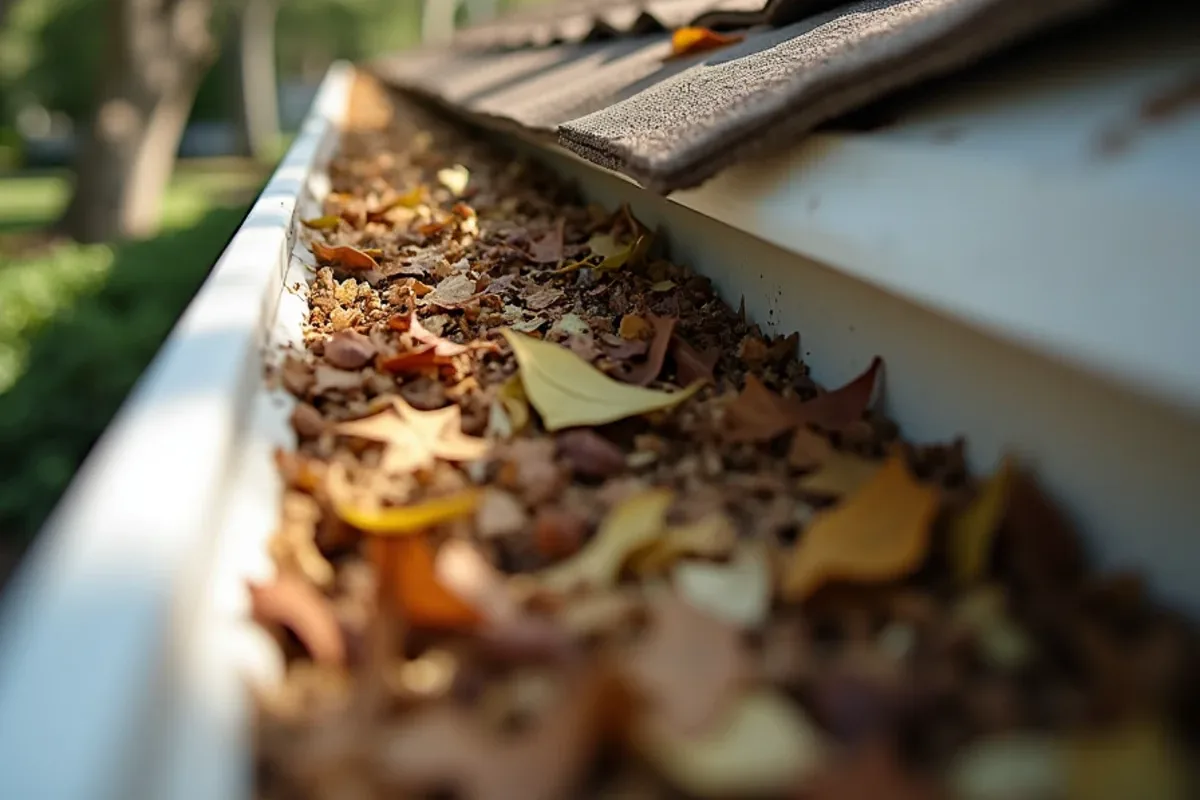
- Repeated wet and dry cycles. Debris in the trough composts into a dense sludge that blocks outlets.
- Constant moisture. Fascia behind leaking corners stays wet for months and starts to rot.
- Saturated ground. Downspouts dumping at the foundation pool against the slab instead of soaking in.
- Mosquito breeding. Standing water in a sagging section or clogged gutter is ideal habitat.
The April rainy season gutter prep checklist
Here is the order we would follow on a typical single-story home. Two-story and tile roofs are where we recommend leaving the ladder work to a crew.
- Clean the gutters by hand from end to end, including inside corners where valley debris collects.
- Flush every downspout with a hose and check the bottom elbow and any underground line for full flow.
- Walk the yard to find each pop-up emitter or downspout outlet and clear grass and mulch around it.
- Look for standing water in the trough after flushing; that is a low spot that needs re-pitching.
- Check corners and end caps for drips, and note any that need resealing.
- Press on the fascia below each corner and outlet for soft wood.
- Trim overhanging branches so summer growth does not reach the roof.
- Set splash blocks or extensions so discharge lands well away from the slab and pool deck.

A professional gutter cleaning covers the roof-level steps, and we note anything else we find on the written follow-up, so you go into May knowing exactly what shape the system is in.
Wet season home prep, month by month
April prep is the big one, but the season is long. Use this calendar as a guide, adjusted for how many trees overhang your roof.
| Month | What is happening | Gutter task |
|---|---|---|
| April | Dry season ending; spring shed mostly down | Full cleaning, downspout flush, repairs |
| May | First sea breeze storms | Watch for overflow during the first heavy rains |
| June | Wet season and hurricane season both underway | Quick ground-level check of outlets and splash blocks |
| July to August | Daily afternoon storms; palm seed and frond drop | Mid-season clean-out for homes under heavy trees |
| September | Peak of hurricane season | Check hanger tightness and clear any new debris |
| October | Rains taper off toward the dry season | Post-season inspection and fall cleaning |
Mosquito tip
If you can see standing water in your gutters two days after a storm, there is a pitch or outlet problem. Fixing it removes a mosquito breeding spot right outside your windows.
What else to check around the house before the rains
Gutters only move water to the ground. Where it goes from there is just as important once the daily storms start, so spend twenty minutes on the rest of the drainage path while you are outside.
- Clear the swale or yard drain along the street of grass clippings and sand so it can take water.
- Turn down irrigation timers once storms become regular; a soaked lawn cannot absorb downspout water.
- Look at the pool deck and patio for spots that slope toward the house or screen enclosure.
- Check that mulch and soil sit below the bottom edge of the stucco, not piled against it.
Keeping gutters clear through summer storms
Homes with little tree cover can usually get through the whole wet season on one April cleaning. Homes under black olives, ficus or clustered palms usually cannot, because those trees keep dropping material all summer.
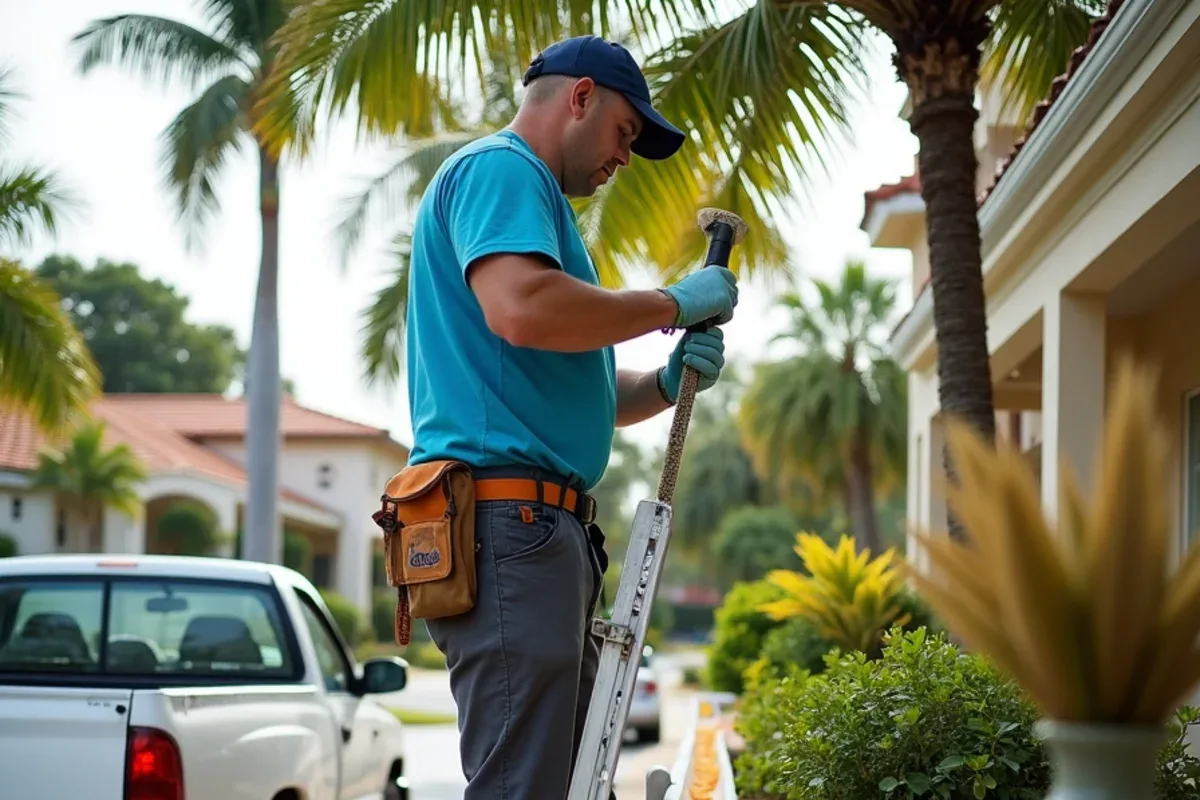
That is where scheduled service earns its place. A gutter maintenance plan sets visits around your trees instead of a generic calendar, typically an April cleaning plus a mid-season or fall visit. We run these routes all over Broward County and north through Palm Beach County, where the mix of mature shade trees and frequent storms makes timing especially important.
What our April visits reveal about the summer ahead
Spring cleanings are where we learn how a gutter system will behave in July. A dry gutter hides a lot, so we always finish with water. The findings below come up so often that we check for them on every April visit.
- Sludge at the outlet, not leaves on top. Winter debris composts into a dark paste that seals the outlet even when the trough looks half clean.
- Emitters buried by new sod or mulch. Landscaping work over the dry season often covers pop-up emitters, so the underground line backs up at the first storm.
- Sand and silt in buried lines. Lines that drained fine last fall can be half full of sediment; a hose flush shows it in minutes.
- Corners that only leak when wet. A miter can look perfect in April and drip all summer, which is why we run water through every corner.
- Oak tassels on guards. Fine spring debris mats on guard surfaces and sheds water over the lip in the first heavy rain.
| Task | Homeowner from the ground | Crew with ladders |
|---|---|---|
| Find and clear pop-up emitters and splash blocks | Yes | Checked during flush test |
| Swale, yard drain and irrigation timer check | Yes | Noted if it affects discharge |
| Hand-clean gutters and inside corners | Single-story, shingle roof only | Two-story, tile, metal and flat roofs |
| Flush downspouts and buried lines | Bottom elbow and outlet only | Full flush from the gutter outlet down |
| Reseal corners, re-pitch low spots, replace hangers | No | Yes, quoted separately from cleaning |
The honest trade-off is cost against coverage. One thorough April cleaning is enough for an open lot. Under black olives, ficus or queen palms, a single spring visit often leaves you overflowing by August, and a second visit is a far smaller job than the fascia repair that repeated summer overflow can lead to. Our plan versus one-time cleaning guide lays out how to decide.
Finish in April, then let the storms come
The wet season is predictable, and that is the advantage. Clean and flush in April while the roof is dry and the ladders sit on firm ground, fix what the water test reveals, and plan a midsummer check if trees overhang the roof. Do that, and the first sea-breeze storm in May finds a clear path instead of a packed outlet.
To get on the April schedule before the calendar fills, call Southern Gutters FL for a free estimate. We are a family-owned crew in North Lauderdale serving homes from Palm Beach County down through Broward and Miami-Dade.
Questions about rainy season gutter prep
When does the rainy season start in South Florida?
It typically begins around mid-to-late May and runs into mid-October, with most of the year's rain falling in that window. The exact start varies a little each year, which is why we suggest finishing gutter prep in April.
Is April gutter cleaning enough for the whole year?
For homes with few trees nearby, a spring cleaning plus a quick fall check is often enough. Homes under heavy tree cover usually need a second cleaning in mid-summer or fall to stay ahead of debris.
Do I need to clean gutters if I have gutter guards?
Yes, just less often. Guards keep larger debris out, but fine material builds up on top of them and in the trough over time. A spring check of the guard surface and a downspout flush is still worth doing.
How much rain falls during South Florida’s rainy season?
A lot, and fast. The National Weather Service in Miami says nearly 70 percent of the region’s average annual rain falls between May 15 and October 15, with averages of roughly 37 inches at the Fort Lauderdale/Hollywood airport and about 45 inches at Miami International in that window. Much of it arrives in short afternoon cloudbursts, which is what exposes a clogged outlet.
Services mentioned in this guide
Gutter Cleaning Service
Hand-cleaned gutters, every downspout flushed and tested, roof-edge debris bagged and hauled away.
Learn moreGutter Maintenance Plans
Spring, pre-hurricane and fall cleanings booked for you, with a yearly inspection and storm-season priority.
Learn moreServing Broward County, Palm Beach County and the rest of South Florida.