

By Chance, owner of Southern Gutters FL · Published · Last updated
Key takeaways
- Do the big gutter work early in the season, not when a storm is two days out.
- Clean gutters and flush every downspout so hurricane rain has somewhere to go.
- Tighten or replace loose hangers; a loose run is what wind grabs first.
- Remove or stow detachable downspout extensions and splash blocks before high winds.
- Stop all ladder and roof work once a watch is posted and the wind starts building.
Hurricane prep for gutters means cleaning every run and flushing every downspout early in the season, tightening loose hangers, downspout straps and corners, and trimming limbs over the roof. When a storm is forecast, stow removable extensions and rain barrels. Finish all ladder work before a watch is posted; after that, work only from the ground.
Shutters, water, batteries, gas in the car. Most South Florida storm lists stop there. Hurricane prep for gutters rarely makes the list, yet a clogged or loose gutter is one of the easiest ways for a storm to push water into your soffit, rot your fascia or turn a section of aluminum into a projectile.
This checklist is organized by timing, because the right task depends on how far away the storm is. Some jobs belong in June when the season opens on June 1. Others make sense once a cone includes your county. And some things should simply not be attempted once the outer bands are close.
Hurricane season gutter cleaning: the June list
The best time to get gutters storm-ready is the first weeks of the season, when crews have openings and the weather is still mostly afternoon showers. Work through this list once, properly, and the later steps become quick.
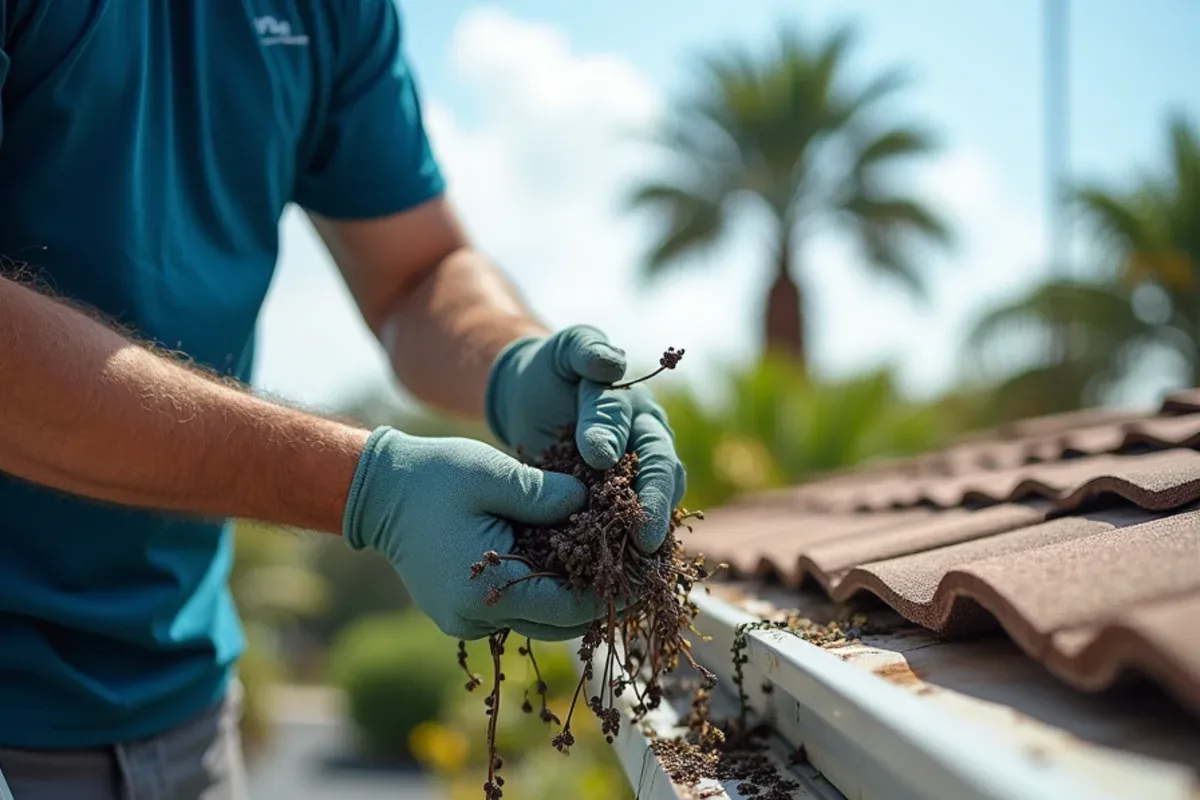
- Clean every gutter by hand and bag the debris rather than dumping it in the beds where it can wash back.
- Flush each downspout with a hose and confirm water exits freely at the bottom or at the underground pop-up.
- Walk the roofline looking for sags, gaps between gutter and fascia, and corners that have opened up.
- Check the fascia behind the gutters for soft spots or peeling paint.
- Trim branches hanging over the roof, especially oak limbs and palm fronds that can tear a gutter loose when they fall.
- Check gutter guards, if you have them, for matted debris on the surface and for any loose clips.
If you would rather not track this every year, a gutter maintenance plan puts a pre-season visit on the calendar automatically, along with a follow-up later in the year.
How do you secure gutters before a storm?
Wind does not usually rip off a gutter that is tight to solid wood. It peels off the run that is already loose. So securing gutters is mostly about finding and fixing weak attachment points while you have time.
Fasteners
Old spike-and-ferrule fasteners should be swapped for hidden hangers with screws. Any hanger whose screw spins without biting needs new wood behind it, not a bigger screw.
Spacing
Hangers spaced far apart leave long unsupported spans that flex in gusts. Adding hangers on exposed, windward elevations is a quick, sensible upgrade.
Corners and end caps
Open miters and loose end caps give wind a place to start lifting. Resealing and re-riveting them is a small job that pays off in a storm.
A storm prep checklist for the home, timed to the forecast
Use this table when a system is being tracked toward South Florida. The point of the right-hand column is to be honest about which tasks still make sense to do yourself as the clock runs down.
| When | Task | Who should do it |
|---|---|---|
| Start of season | Full cleaning, downspout flush, hanger and fascia check | Pro for two-story and tile roofs |
| 5 to 7 days out | Book any open repairs; clear leaves that fell since cleaning | Pro, if they have a slot |
| 3 to 4 days out | Ground-level outlet and splash block check; trim low branches | Homeowner |
| About 48 hours out | Stow removable extensions, rain barrels and loose parts | Homeowner, from the ground |
| Watch or warning posted | No ladder or roof work; secure the yard and go inside | Nobody on a ladder |
Know when it is too late to climb
Once tropical-storm-force gusts are possible, a ladder is the most dangerous object on your property. A full gutter is a far smaller problem than a fall, and most of what matters can be done from the ground.
Downspout extensions in a hurricane: stow them or keep them?
Hinged flip-up extensions, loose vinyl splash blocks and corrugated drain hoses are handy in the rainy season, but in hurricane winds they become loose objects. Store anything that is not screwed or buried in place.
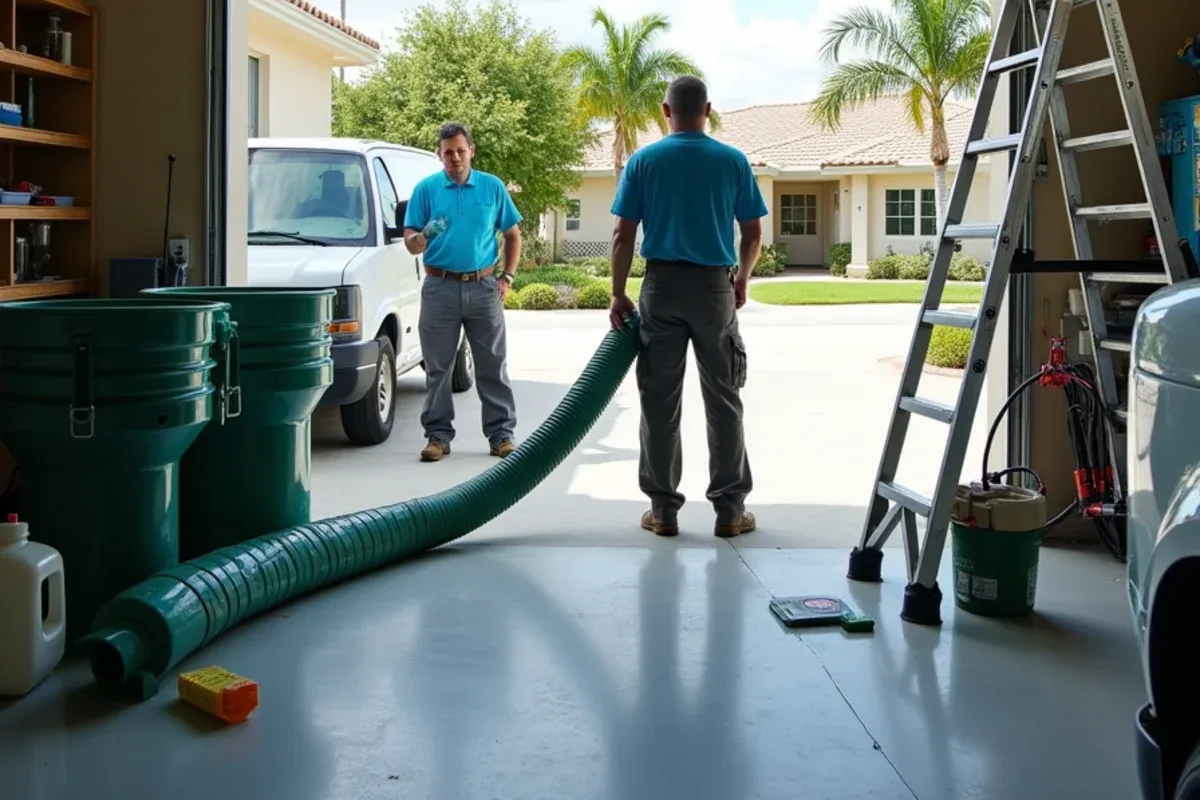
That leaves the downspout discharging right at the house during the heaviest rain of the year, which is exactly why permanent solutions are worth thinking about. Buried underground drains with pop-up emitters move water away without anything to blow around. If your extensions keep getting knocked off or blown away, that is a sign to plan for a permanent route after the season.
Do gutter guards help in a hurricane?
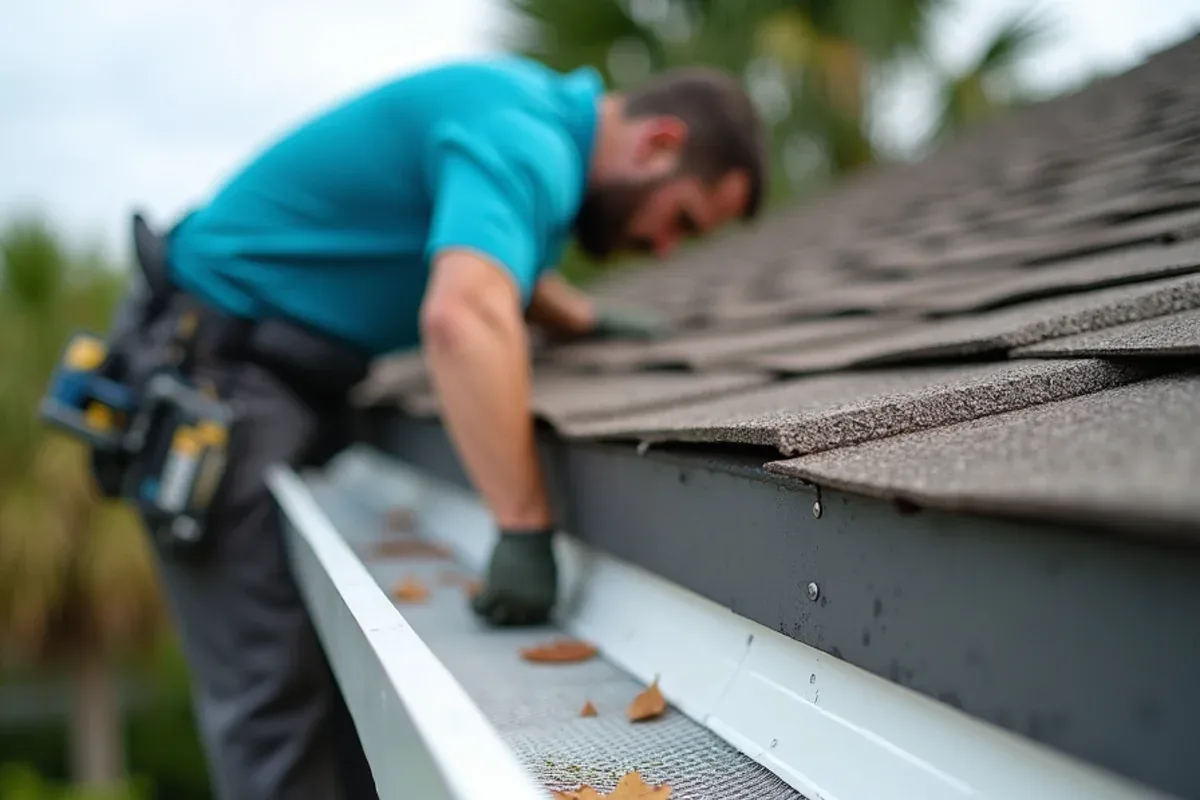
Guards help with the debris that a hurricane strips off trees, keeping leaves and small twigs out of the trough so the gutter can drain during long rain bands. They will not stop a large limb, and a poorly attached guard can lift in strong gusts.
If you have guards, make sure every clip or screw is tight before the season, and plan on a post-storm check, because hurricane debris often coats the surface even when the trough underneath stays clear.
Getting professional pre-hurricane gutter prep on the calendar
When a storm shows up in the forecast, phones across South Florida light up at once, and every crew's schedule fills within hours. Homes that were prepped in June are the ones that do not need a last-minute slot.
Our pre-hurricane gutter prep visit combines cleaning, a downspout flush, hanger tightening and a fascia check, with a written list of anything we found that needs repair. We schedule it across Broward County and down into Miami-Dade County, and the earlier in the season you call, the easier it is to fit in.
What our pre-storm visits turn up most often
Clogs are the obvious item, but the findings that matter most in a hurricane are the attachment points people never look at. Walking South Florida rooflines season after season, the same weak spots come up again and again.
- Downspouts held by one strap. Tall downspouts on two-story homes are often fastened only near the top, so the bottom swings in a gust and pries the outlet loose. A strap near the bottom and one in between fixes it.
- Elbows knocked off by mowers. The bottom elbow gets bumped all year, and a loose one dumps the storm’s runoff right at the slab.
- Separated seams on sectional gutters. A seam that has pulled apart a little is the first place wind and water work into.
- Guard clips that have let go. A guard missing two or three screws can peel up along the whole run in a strong gust.
- Limbs resting on the roof edge. Black olive, mahogany and oak branches that touch the gutter tear it when they move in the wind.
- Soft fascia behind a tight-looking gutter. The gutter looks fine until the wood behind it is loaded with storm water.
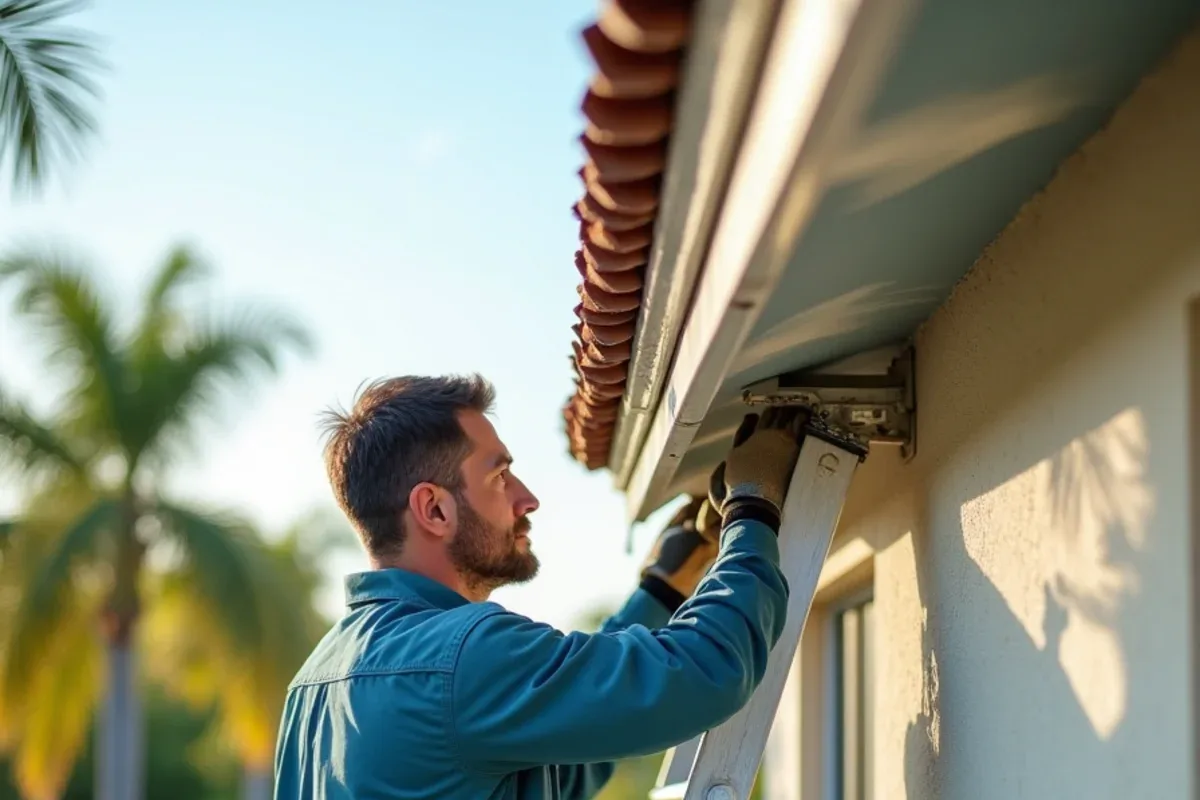
Not every finding has to be fixed before the next storm, and we say so. A loose strap or a lifted guard is a same-visit fix. A rotted fascia board or a full gutter replacement is better planned for after the season, with the run temporarily secured in the meantime. The written list you get separates the two, so you can spend on what protects the house now and schedule the rest.
One more honest note: a well-prepped gutter can still be damaged by a direct hit or a falling tree. Prep reduces the odds of a gutter turning into a projectile or pouring water into the soffit; it does not make any roof edge storm-proof.
Prep in June, check from the ground in September
Pre-hurricane gutter work is front-loaded on purpose. Clean, flush and tighten while the season is quiet, keep a short ground-level routine when a storm is tracked toward you, and stop climbing once a watch is posted. That order keeps both the house and the people in it safer.
To get a pre-season visit booked before the forecast gets busy, call Southern Gutters FL for a free estimate. Our family-owned crew covers Broward, Palm Beach and Miami-Dade from our North Lauderdale base, Monday through Friday.
Questions about hurricane prep gutters
When should I clean my gutters before hurricane season?
Late May or June is ideal, after the spring leaf drop and before the busiest part of the season in August through October. If a storm approaches later and leaves have built up again, a quick clear-out from a crew is worth booking if the schedule allows.
Should I take my gutters down before a hurricane?
No. Properly attached gutters are meant to stay on through storms. Removing them leaves rain running straight off the roof onto the fascia and foundation. Focus on making sure they are tight and clear instead.
Should I empty my rain barrel before a storm?
Yes. A full barrel is heavy but an empty one can blow over, so drain it and either move it indoors or strap it down, and disconnect any diverter so the downspout drains freely during the storm.
Do downspouts need extra straps for hurricane season?
Often, yes. A downspout should be fastened to the wall with straps near the top, near the bottom and in between on tall runs. One strap at the top lets the bottom swing in gusts, which can tear the outlet out of the gutter. Checking straps is a quick, dry-weather job; on two-story homes it is a ladder job best left to a crew.
Services mentioned in this guide
Pre-Hurricane Gutter Prep
Gutters cleared, hangers tightened, downspouts strapped and loose guards fastened before a named storm arrives.
Learn moreGutter Maintenance Plans
Spring, pre-hurricane and fall cleanings booked for you, with a yearly inspection and storm-season priority.
Learn moreServing Broward County, Miami-Dade County and the rest of South Florida.