

By Chance, owner of Southern Gutters FL · Published · Last updated
Key takeaways
- Two cleanings a year is the minimum for most South Florida homes: one before the rains start and one as they wind down.
- Homes under black olive, live oak, ficus or seed-dropping palms often need three or four visits a year.
- Timing beats frequency. A clear system in mid-May carries you through the summer storms far better than two visits in the wrong months.
- Barrel tile and flat roofs hold debris and release it slowly, so they usually belong on the more frequent end.
- A maintenance plan locks in the dates so the pre-season cleaning never slides into June.
Clean gutters in South Florida at least twice a year: once in late April or early May before the rainy season, and again in October or November after it. Homes under black olive, oak, ficus or palms, and most barrel tile or flat roofs, need three or four cleanings a year.
Most gutter advice online is written for places with one big autumn leaf drop. South Florida does not work that way. Our trees shed on staggered schedules, the rainy season runs from roughly mid-May to mid-October, and one afternoon cloudburst can push more water through a gutter than a northern home sees in a week. That is why the twice-a-year figure is a floor, not a target.
Below is how we at Southern Gutters FL set a cleaning frequency for a specific house, the calendar timing that matters more than the raw count, and the signs that tell you your current routine is falling behind.
Gutter cleaning frequency by tree cover and roof type
The count comes down to two things: what lands on your roof and how well the roof sheds it. This is the starting point we use the first time we look at a house. Treat it as a baseline that gets adjusted once we see how fast your particular gutters fill.
| Your situation | Cleanings per year | Why |
|---|---|---|
| Shingle or metal roof, nothing overhanging | 2 | Mostly roof grit, wind-blown leaves and the odd frond; two visits bracket the wet months. |
| Palms near the roofline (royal, queen, coconut) | 2–3 | Fronds, flower stalks and seed clusters drop on their own cycle and bridge across the trough. |
| Black olive, live oak, ficus or mahogany overhead | 3–4 | Small leaves, tassels and pods fall in waves and pack into a wet mat at each outlet. |
| Barrel tile roof with any tree cover | 3 | Leaves lodge in the tile pans and keep washing down for weeks after each drop. |
| Flat roof drained by scuppers | 2–4 | One blocked scupper backs water up across the entire roof deck. |
| Rental, vacant or seasonal home | 2 minimum, on fixed dates | Nobody is there to notice an overflow during a July storm. |
Not sure which row fits? Look up. Any branch within reach of your roof edge counts as overhead, even when the trunk stands in the neighbor’s yard.
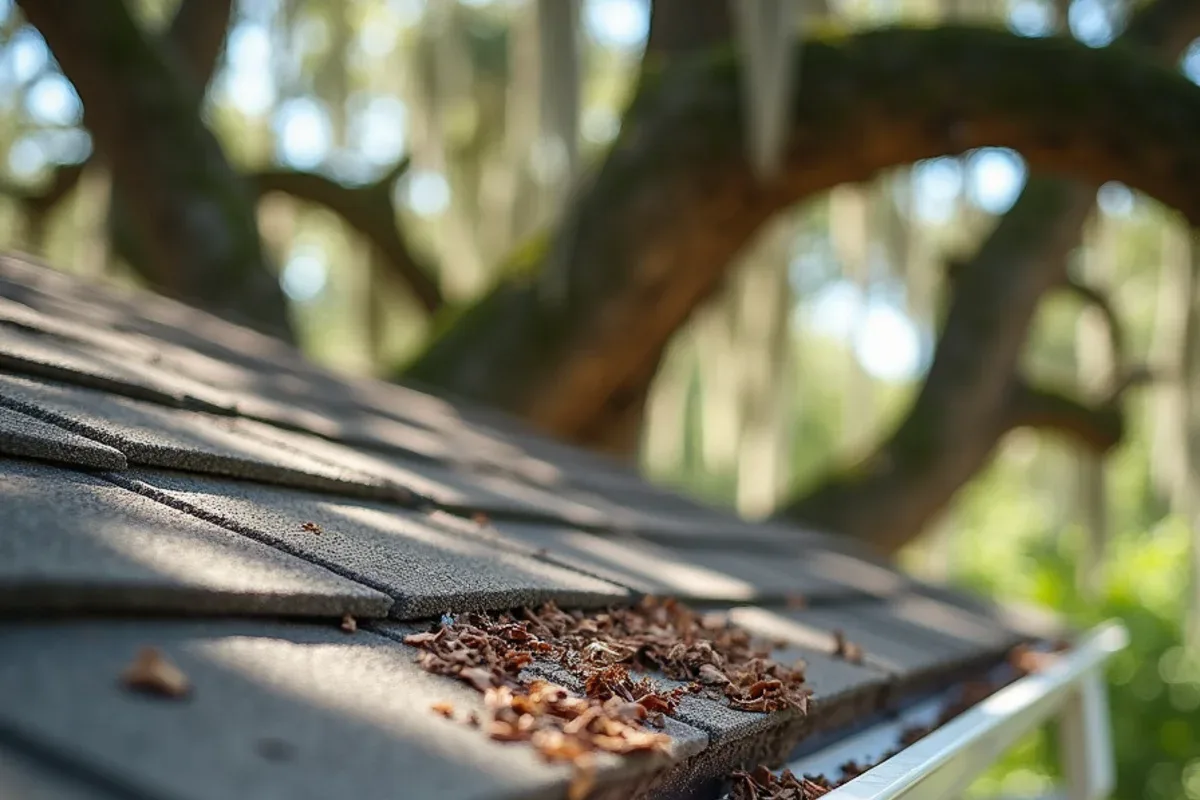
When to clean gutters in Florida: the calendar matters more than the count
Two cleanings done in the wrong months can leave you worse off than a single cleaning done at the right moment. The real goal is an empty, free-flowing system on the day the heavy rain shows up, not hitting some arbitrary number.
Late April to mid-May: the visit that counts most
This is the one we never let customers skip. Months of dry weather let leaves, seed pods and pollen settle and bake into a dense layer along the gutter bottom. Clearing that layer and flushing every downspout sets the house up for the thunderstorms that start building in late May.
Midsummer: a check, and sometimes a cleaning
Rainy season gutter cleaning in July or August makes sense for homes in the three-to-four row. Heavy rain shoves loose debris toward the outlets, so a gutter that looked fine in May can have a plug parked right over the downspout by midsummer. It is also the run-up to the busiest stretch of hurricane season, which officially runs June 1 to November 30.
October to December: the wind-down visit
Once the rains taper off, we clear whatever the summer storms brought down and look for damage: loose hangers, separated seams, sections bent by wind. This visit also catches debris dumped by tropical systems that passed offshore without ever making landfall.
February to March: only for heavy-drop trees
Plenty of South Florida trees push out new growth in late winter and spring and shed old leaves as they do it. Live oaks are the classic example. If one hangs over your roof, a late-winter cleaning keeps that drop from sitting wet in the gutter all spring.
How often to clean gutters in Fort Lauderdale and other coastal neighborhoods
Coastal neighborhoods add a wrinkle. Around Fort Lauderdale we see older homes under mature canopy where one house on a street is fine with two cleanings while the neighbor needs four, simply because of which way a big oak leans. Salt air matters too. Wet debris pressed against aluminum for months speeds up corrosion at seams and fasteners, so on waterfront homes we lean toward the more frequent schedule even when the leaf load is light.
A little farther up the coast, homes in Pompano Beach often pair palms around the pool deck with sea grape or ficus hedges that grow taller than anyone planned. Those hedges never look like a gutter problem from the driveway, yet their leaves land in the run above the lanai every week.
Windy days count too
After any day with strong gusts, glance down the gutter line from the yard. One frond lying lengthwise in a trough can dam it as well as a season of leaves.

Is your gutter cleaning schedule falling behind?
If you notice any of these between visits, move yourself up a row in the table above:
- Water sheets over the front lip during an ordinary afternoon shower, not only during a downpour.
- A downspout stays dry or barely trickles while the gutter above it spills over.
- Seedlings, grass or small ferns are sprouting from the gutter.
- Dark drip lines show up on the fascia or on the stucco below.
- More mosquitoes hang around the eaves after a wet stretch.
- Mulch beds under the roof edge wash out or develop a trench.
Each of these means debris is collecting faster than your routine clears it. For a longer list of what to watch for, read our guide to the signs your gutters are clogged.
Booking one-off visits vs. putting your gutter cleaning schedule on a plan
For a house in the twice-a-year row, booking our gutter cleaning service each spring and fall works fine, provided you actually call before the rain starts. The catch is that the pre-season window is exactly when every other homeowner remembers too.
At three or four visits a year, a gutter maintenance plan usually makes more sense. We set the dates around your trees and roof, you never have to chase the calendar, and the crew sees the same gutters again and again. That repetition makes it easy to spot a hanger starting to pull or a corner starting to weep before it turns into a repair.
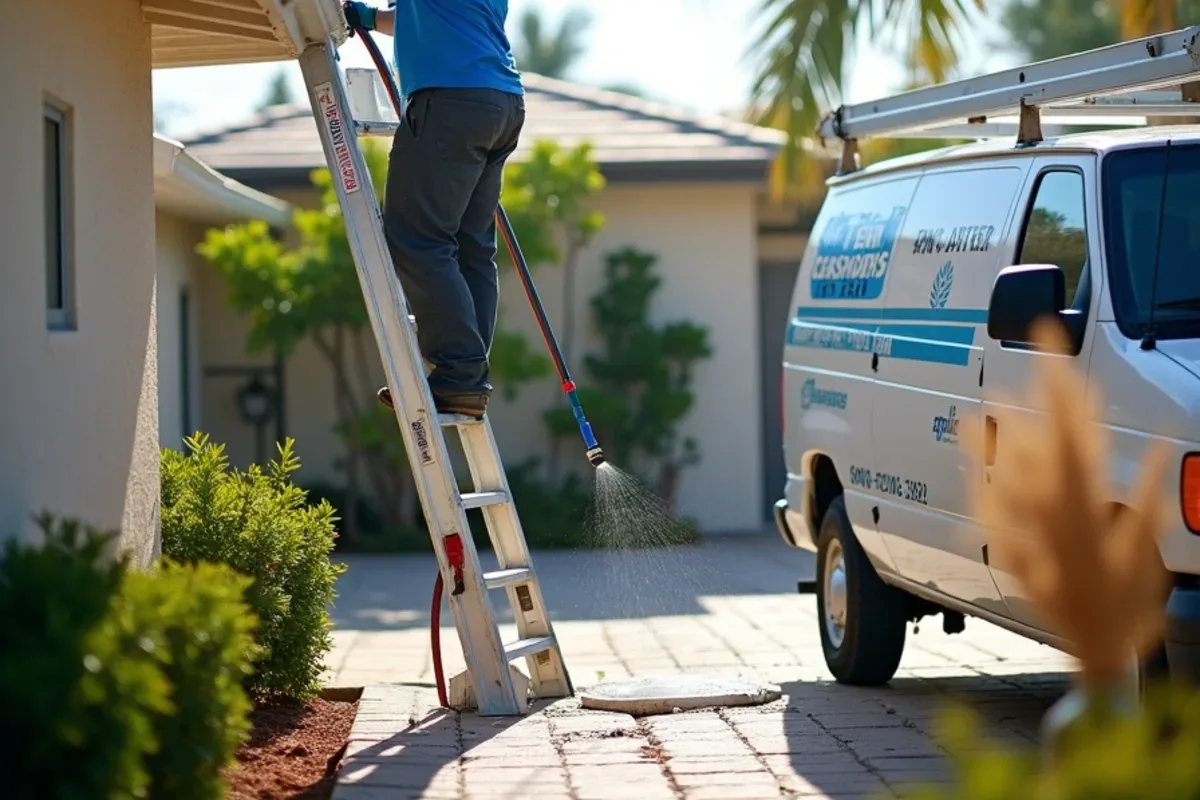
Either way, a proper visit is more than scooping. Our crews clear the troughs by hand, flush every downspout to prove it runs, check the pitch wherever water pools, and bag and haul off the debris instead of leaving it in your flower beds. If you are still weighing the options, our breakdown of a maintenance plan versus one-time cleaning covers the trade-offs.
What our crew sees when a cleaning schedule is too thin
You can tell how long it has been from the first scoop. A gutter cleaned on time gives up loose, dry leaves. One that skipped a season gives up a black, wet sludge of rotted leaves and roof grit that has settled into the bottom of the trough, often with seedlings rooted through it. That layer holds water for days, adds steady weight to every hanger, and keeps the back edge of the fascia damp.
The downspout tells the same story. On overdue homes the outlet is usually capped by a plug of seed pods and silt, and the first elbow below it is packed solid. Clearing that takes a hand snake and a flush rather than a scoop, and it is the reason an overdue cleaning runs longer than a routine one.
The honest trade-off runs the other way too. A newer shingle roof with no trees nearby does not need four visits, and we will say so. Our before-and-after photos show how much built up between visits, and that record is what we use to move a date earlier, push it later, or drop a visit altogether.
- Stand in the yard and note every tree, hedge or palm with branches over the roofline, including the neighbor’s.
- Find your row in the frequency table above and start with that number.
- Book the first visit for late April or early May, before the daily storms begin.
- Watch the gutters during the first heavy storm of June and note any run that spills.
- Ask for the photos after each visit; if the trough was more than about a third full, add a visit next year.
The short answer, and the next step
Twice a year, timed around the wet season, keeps most South Florida gutters flowing. Overhanging trees, tile or flat roofs and empty seasonal homes push that to three or four. Get the spring visit done before the storms, and let what the gutters look like at each cleaning set the rest of the calendar.
If you would rather not guess, Southern Gutters FL will look at your roof, your trees and your downspouts and put the right frequency in a free written estimate. Call (855) 633-0442 or book a visit from our North Lauderdale base.
Questions about how often clean gutters south florida
Is once a year enough for gutters in South Florida?
For very few homes. A single yearly cleaning leaves either the rainy season or the dry-season leaf drop uncovered. It can work on a newer shingle or metal roof with no trees nearby and good guards, but even then we suggest a quick look and a downspout flush before the summer storms begin.
Do gutter guards change how often I need cleaning?
They stretch the interval but do not end it. Guards keep large leaves and fronds out, yet fine debris, roof grit and pollen still collect on the mesh or slip past it. Most guarded homes here still need a guard cleaning and flush once or twice a year, more often under black olive or oak.
Should I clean gutters before or after a hurricane?
Both, if you can manage it. Clear gutters before a named storm reduce overflow against your walls and keep the downspouts from becoming the weak point. Once the storm passes, check for packed debris, loose sections and bent hangers before the next band of rain arrives.
What months should you clean gutters in Florida?
In South Florida, the two months that matter most are April or early May, just before the wet season begins, and October or November, after it winds down. Homes under heavy-drop trees add a midsummer visit in July or August, and live oak homes sometimes need a February or March cleaning when the old leaves fall.
What happens if gutters go a whole rainy season without cleaning?
Debris rots into a wet sludge that holds water against the fascia, weighs down the hangers and plugs the downspout outlet. During afternoon storms the water then spills over the front lip, stains stucco, washes out mulch beds and can pool against the slab. Standing water left in the trough also gives mosquitoes a place to breed.
Services mentioned in this guide
Gutter Cleaning Service
Hand-cleaned gutters, every downspout flushed and tested, roof-edge debris bagged and hauled away.
Learn moreGutter Maintenance Plans
Spring, pre-hurricane and fall cleanings booked for you, with a yearly inspection and storm-season priority.
Learn moreServing Fort Lauderdale, Pompano Beach and the rest of South Florida.