
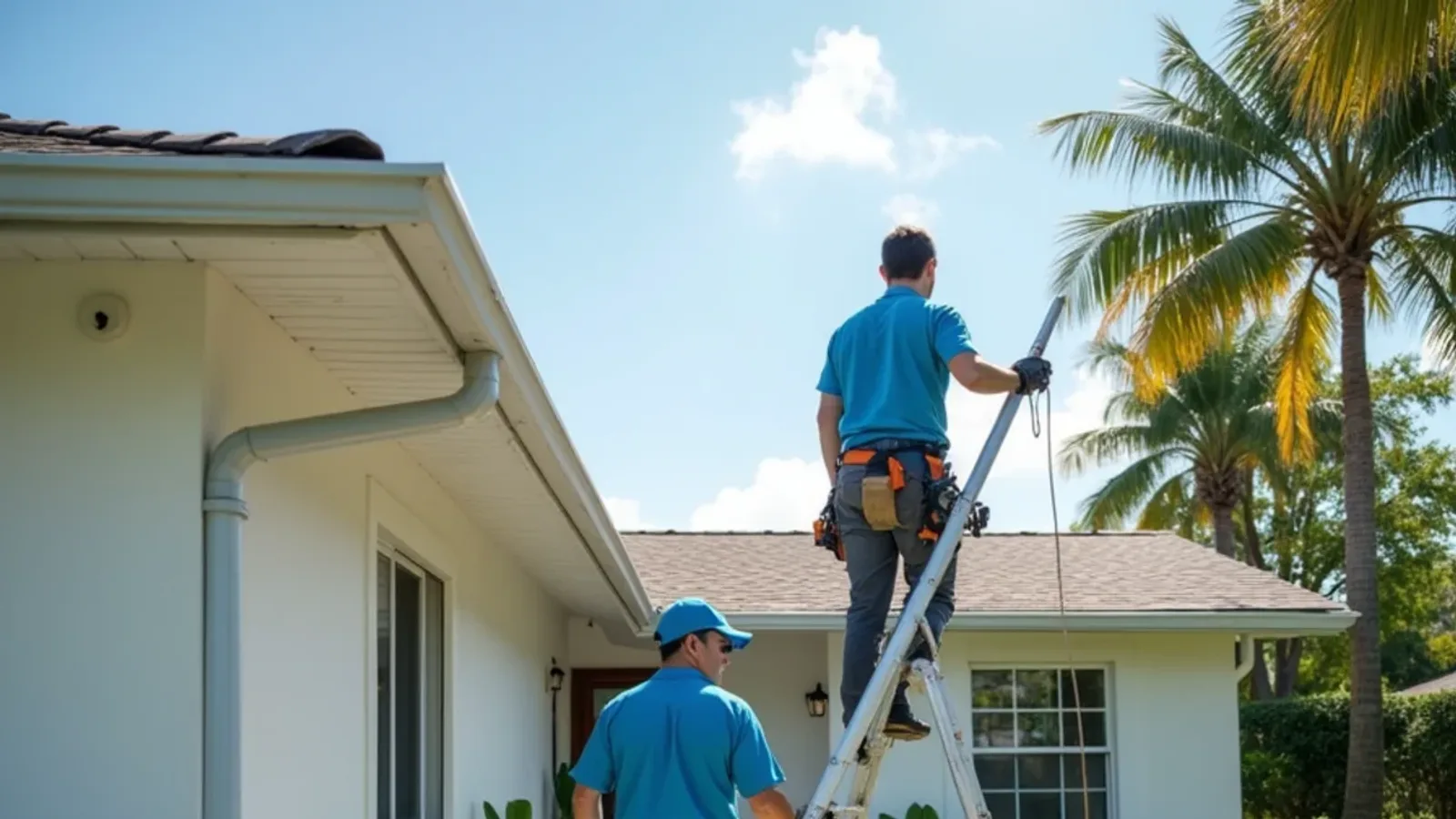
By Chance, owner of Southern Gutters FL · Published · Last updated
Key takeaways
- Keep people, pets and cars out from under a hanging gutter until it is down or secured.
- Never pull on, hang from or climb toward a detached run; it can drop or swing without warning.
- Most gutters let go because the fascia behind them is rotted or the fasteners have failed.
- Reattaching a gutter to soft wood only buys a few weeks; the fascia has to be repaired first.
- Photograph the damage before anything is moved, especially if a storm caused it.
If a gutter pulled off your house, keep people, pets and cars out from under it, stay off the ladder and photograph it before anything moves. Make sure it is not touching wires, then call for repair. The lasting fix is sound fascia first, then new hidden hangers and stainless screws, not old screws in stripped holes.
You hear a bang, or you pull into the driveway and see it: one end of the gutter has dropped, and the rest is hanging off the fascia at an angle. A gutter pulled off the house looks like a cosmetic problem. It is actually a safety problem first, because a 20-foot aluminum run full of wet leaves can swing down on whoever walks underneath.
Here is what to do in the next hour, what not to try, why this happens to South Florida homes in particular, and what a proper repair looks like. Short version: secure the area, take photos, and be suspicious of any fix that just puts the old screws back into the same holes.
Is a gutter hanging off the roof dangerous?
Yes, more than most people expect. A seamless aluminum gutter is light when empty, but packed with soaked black olive leaves and standing water it gets heavy fast. When the last hangers holding one end let go, the run pivots on whatever is still attached and can sweep across a walkway, a car hood or a pool screen.
The other danger is the ladder. A detached gutter gives you nothing solid to lean on, and the fascia it pulled from may be soft. Leaning a ladder against a damaged roof edge is how a gutter problem turns into an injury.
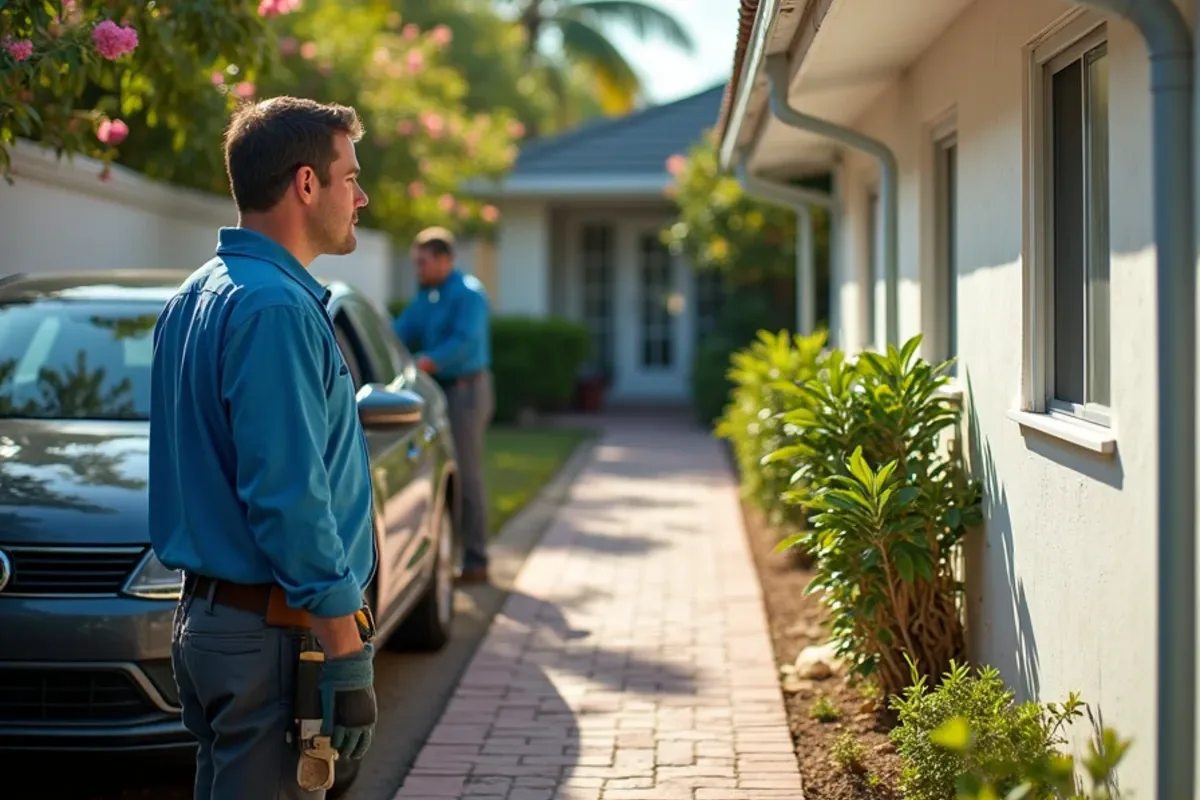
Gutter fell off? Do this now, and skip these mistakes
| Do | Don't |
|---|---|
| Rope off or block the area under the hanging run | Walk, park or let kids play underneath it |
| Photograph it from several angles before touching it | Yank it down to get it out of the way |
| Check whether it is touching any wires, meters or lights | Touch it if it is anywhere near electrical lines |
| Move cars, grills and furniture from the drop zone | Climb a ladder against the damaged fascia |
| Look inside for leaks on that wall | Tape, zip-tie or wire it back up as a fix |
| Call for help if it is on a second story or a tile roof | Stand on the roof to pull it back into place |
If a short, low section has fully dropped and is lying on the ground, it is fine to drag it aside. Just set it somewhere it will not blow around in the next storm, and keep it. The pieces help show how and why it failed.
Why a detached gutter happens: the usual South Florida causes
Gutters do not usually fall for no reason. When we examine a run that has let go, the cause is almost always one of these.
Rotted fascia
Years of water running behind the gutter, or overflowing onto the board, soften the wood until hanger screws just pull out. This is the number one cause we find, and it is common on homes from the 1970s and 1980s where the original fascia has never been replaced.
Old spike-and-ferrule fasteners
Older installs used long nails driven through a sleeve. Every heating and cooling cycle backs them out a little, until the gutter is held on by friction alone.
Weight and wind
A run clogged with palm seed pods and leaves, holding water after a downpour, puts enormous load on its hangers. Add a gusty squall line or a tropical storm and the weakest point lets go.
Ladders, iguanas and roof work
Ladders leaned on the gutter itself, roofers prying at the edge during a re-roof, and iguanas climbing along the run can all loosen hangers over time.
Gutter fascia damage: what you can't see from the lawn
When a gutter pulls loose, the important question is what is behind it. From the ground, fascia often looks fine because the paint is intact. Up close, a screwdriver sinks into it.
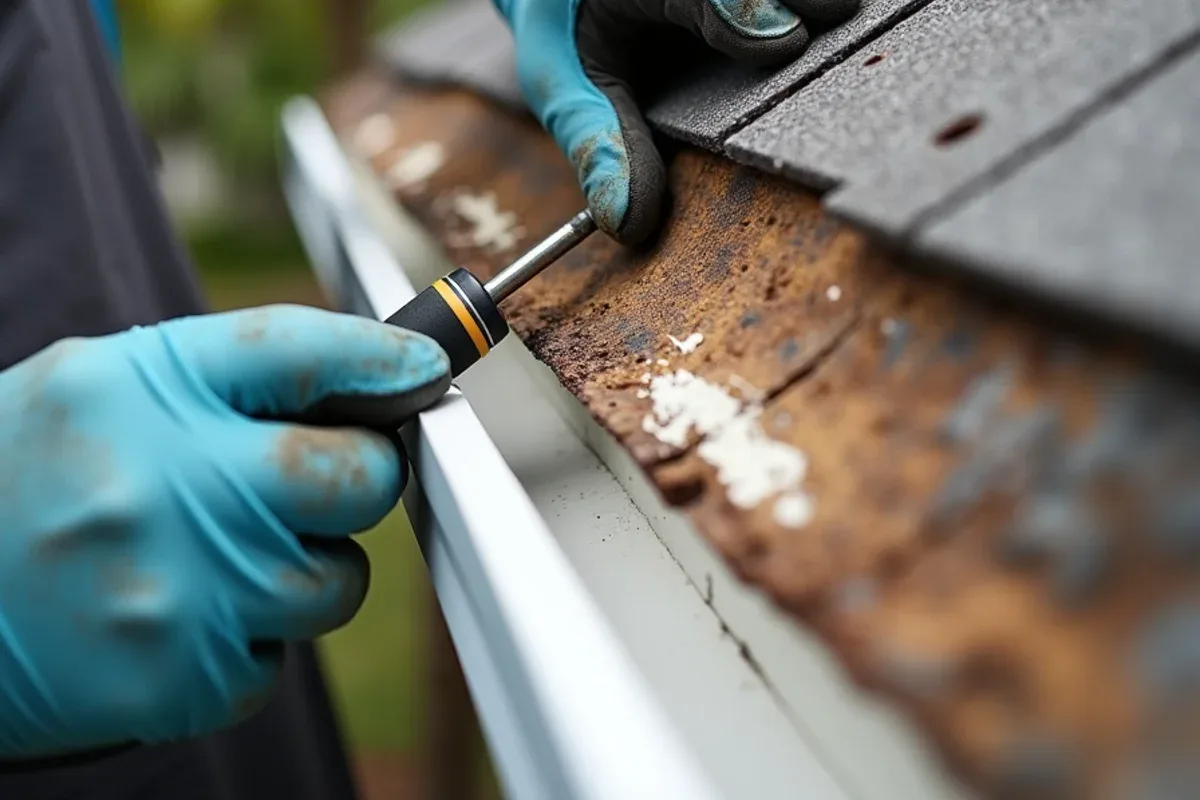
- Dark staining or swelling along the bottom edge of the board
- Hanger screw holes that are stripped, oversized or crumbling
- Gaps where the fascia has separated from the rafter tails
- Stains or sagging on the soffit panels directly below
- Signs of insects or wood dust along the board
If the wood is soft, the board needs replacing before any gutter goes back up. Our fascia board repair work replaces only the damaged lengths when the rest is sound, then primes and paints the new wood so the gutter has something solid to grip.
Can you reattach a gutter yourself, or should a crew do it?
On a single-story home with sound fascia and a short section that simply lost a few hangers, a handy homeowner can reattach it with new hidden hangers and screws. Check the pitch toward the downspout and test with a hose before calling it done.
Leave it to a crew when the run is long, when it is over a second story or a pool screen, when the roof is barrel tile, when the fascia is soft, or when the seams or corners have been bent. A kinked seamless gutter usually cannot be straightened back to proper shape, and a new piece can be formed to exact length on site.
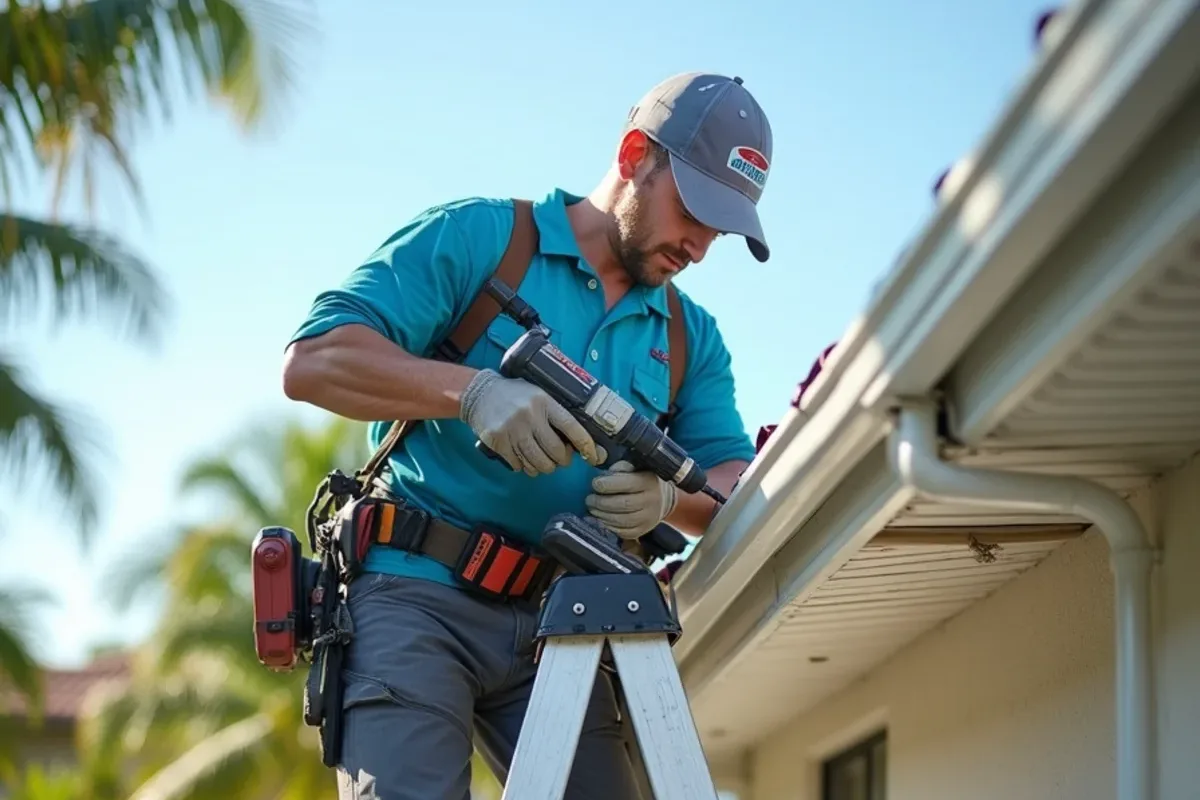
Our fallen and detached gutter repair visit makes the area safe, checks the fascia, then re-hangs or replaces the run with hidden hangers and stainless-steel screws. We do a lot of this in older villa and single-family neighborhoods in Tamarac and Margate, where original fascia boards are reaching the end of their life.
Keeping a re-hung gutter on the house
Once the gutter is back up on solid wood, three habits keep it there: clean it before the wet season so it never carries a heavy, soaked load; never lean a ladder on the gutter itself; and look along the roof edge after any big storm for a run that has started to tilt. Catching a loose hanger early costs far less than another fall.
What a fallen gutter tells us when we take it down
Before we lower what is left of the run, we look at what stayed behind on the fascia. The failure leaves a signature, and reading it decides whether the fix is a few hangers, new wood or a new gutter.
| What we find | What it usually means | What the repair needs |
|---|---|---|
| Screws pulled out with wet, crumbly wood on the threads | Rotted fascia | New fascia lengths before any gutter goes back |
| Long spikes backed out, sleeves still in the gutter | Old spike-and-ferrule fasteners worked loose | Hidden hangers with screws into sound wood |
| Hangers bent or snapped, wood still solid | Overload from wet debris or a wind gust | Re-hang, add hangers, clean and flow-test |
| Hangers spaced far apart along the run | Too little support for a loaded gutter | Closer hanger spacing on the re-hang |
| Gutter kinked at the point where it folded | Metal damaged in the fall | Replace that run, formed to length on site |
Hanger spacing matters more than most people think. Hangers every two to three feet are common practice, and closer spacing makes sense on runs that carry black olive leaves or sit under a valley. On many older Broward homes we find hangers much farther apart than that, which is part of why a heavy, soaked run finally gave way.
The honest trade-off is between saving the old gutter and replacing it. Re-hanging a straight run on new fascia costs less and is often the right call. When the run is kinked, leaks at its seams or is a mismatched color from earlier patching, a new seamless section roll-formed to the exact length usually serves you better, and we will say which one we would choose on our own house.
Safe first, then fix the wood, then the gutter
A gutter that has pulled away from the house is a hazard before it is a repair. Clear the area beneath it, take your photos, keep it away from wiring and resist the ladder. When the repair happens, insist on the right order: sound fascia, proper hangers and a hose test that proves the run drains to its downspout.
If a gutter has come loose on your home, call Southern Gutters FL for a free written estimate. Our family-owned crew handles everything from one dropped section to full fascia and gutter replacement, and new installations carry our 3-year workmanship and 20-year materials warranty.
Questions about gutter pulled off house
Can a gutter pulled off by wind be reused?
Sometimes. If the section is straight, the seams and corners are intact and only the hangers failed, it can go back up on new hangers. Bent, kinked or crushed sections usually need to be replaced, since they will not hold proper pitch.
Why did my gutter fall off on a calm day?
Calm-day failures nearly always come from rotted fascia or fasteners that have backed out over time. A heavy load of wet debris after a storm can be the final straw, even if the weather that day is clear.
How far apart should gutter hangers be?
Every two to three feet is common practice, with closer spacing where gutters carry heavy, wet debris or catch water from a roof valley. Wide spacing lets a loaded run flex and pull on each fastener. When we re-hang a fallen gutter we add hangers where the old spacing was too wide and drive every screw into solid fascia rather than reusing stripped holes.
Does homeowners insurance pay for a gutter that fell off?
It depends on why it fell, and only your insurer can decide that. A gutter torn off in a named storm is treated differently from one that dropped because the fascia rotted over years. Photograph everything before it is moved and read our guide on how Florida policies usually treat gutter damage before you call your agent.
Services mentioned in this guide
Fallen & Detached Gutter Repair
Hanging or fallen gutter secured, then re-hung on sound fascia with new hangers or replaced where it is creased.
Learn moreFascia Board Repair & Replacement
Rotted fascia cut back to sound wood, new boards primed and finished, and gutters re-hung tight in one visit.
Learn moreServing Tamarac, Margate and the rest of South Florida.