
By Chance, owner of Southern Gutters FL · Published · Last updated
Key takeaways
- Half of the checklist can be done from the ground with a pair of binoculars and a rainy afternoon.
- Pitch, hangers and fascia are the structural checks; seams and outlets are the leak checks.
- A downspout flow test catches buried clogs that a visual check misses.
- Once a year is the minimum in South Florida; homes under heavy trees benefit from twice.
- Ask for findings in writing, with photos, so you can plan repairs instead of reacting to them.
A gutter inspection covers ten points: the line and pitch of each run, staining, the ground at the drip line, hangers, joints, fascia, the roof edge, debris and guards, downspout flow, and where the water discharges. In South Florida, inspect at least once a year, ideally in late April or early May before the rainy season.
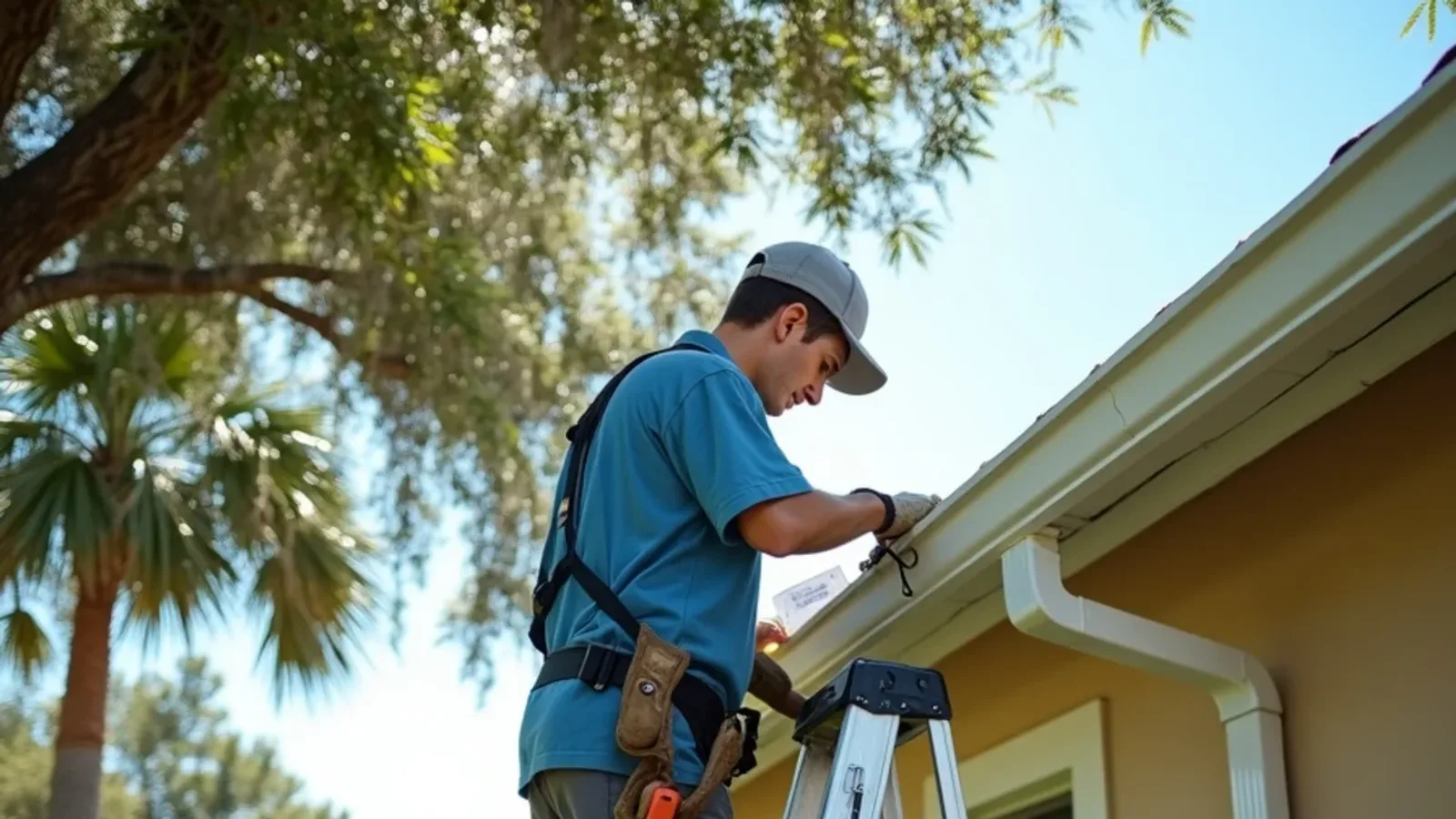
A gutter inspection takes less time than most people expect, and it catches problems while they are still cheap. Our crews run through the same ten points on every cleaning and service call, whether the house is a 1950s ranch or a two-story home with a pool cage. By the time we pack the ladders, you know what is working, what is wearing, and what needs attention before the next rainy season.
This is that checklist, in the order we do it. You can use it yourself from the ground for several items, and it also works as a guide to what a home inspector or gutter contractor should be looking at.
Checks 1–3: what we look at before the ladder goes up
1. Overall line and gutter pitch check
We sight down each run from the corners. A good run falls gently and evenly toward its outlets with no dips. Waves, bellies or a run that rises toward the downspout tell us to measure more closely once we are up top.

2. Stains on walls, soffits and the gutter face
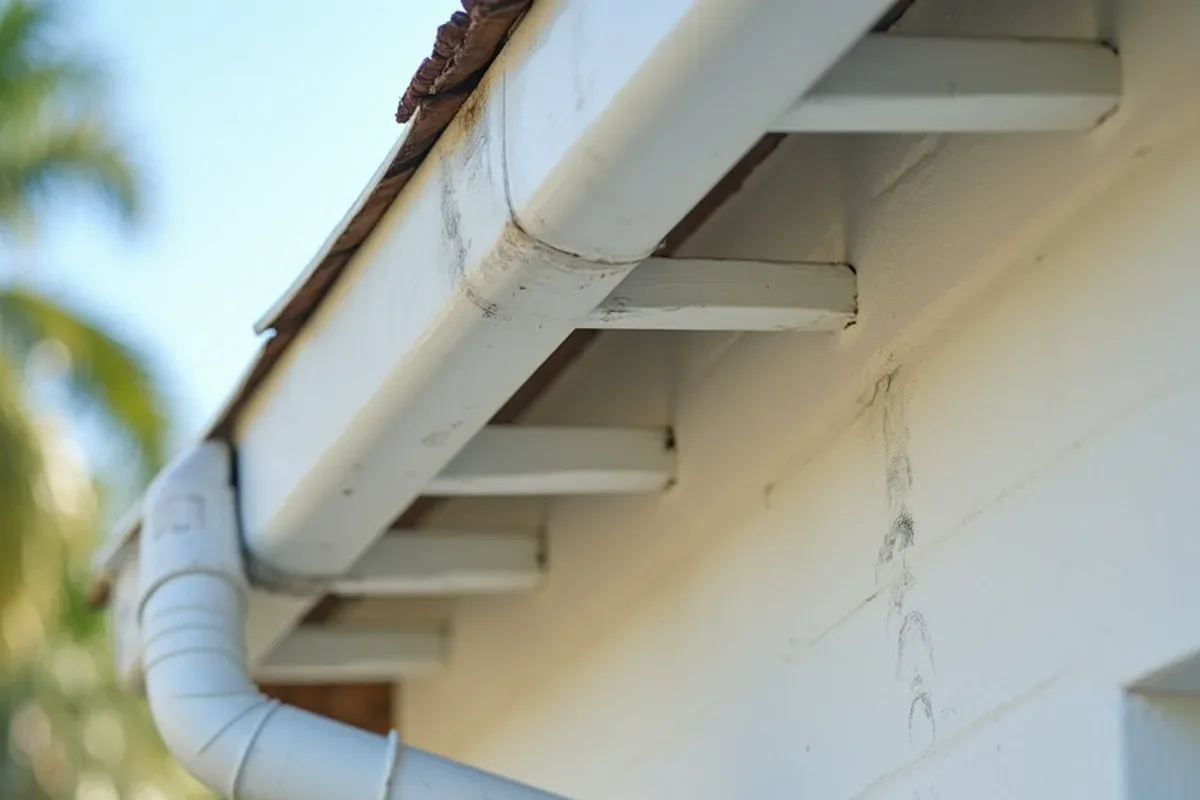
Streaks on stucco under a corner, dark lines on the gutter face and water rings on soffits are a record of where water has been going. They often point straight at a failed joint or a spot where water overshoots.
3. Ground at the drip line and downspout exits
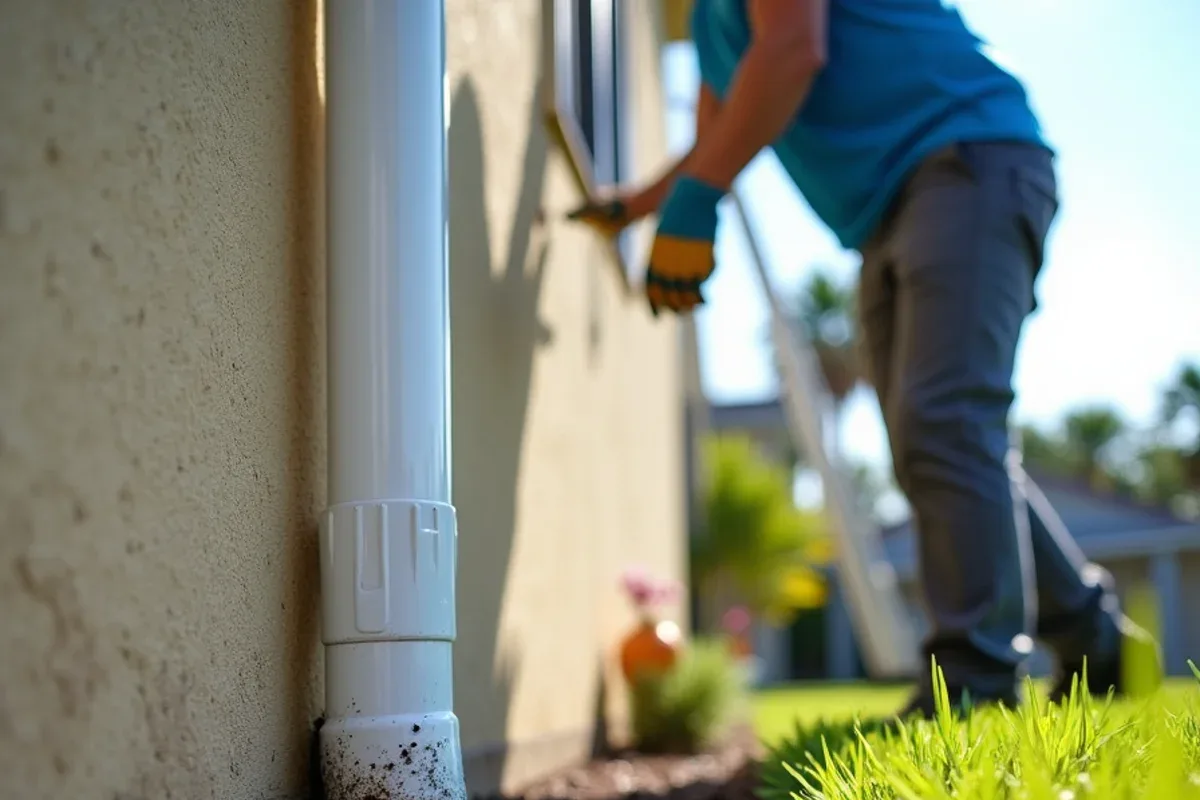
Eroded mulch, splashed walls and soggy patches near downspouts show us where the system is failing to carry water away from the house.
Checks 4–7: hangers, seams, fascia and the roof edge
4. Hangers
We put a hand on hangers along each run. Any that move, any spikes backing out, and any long gaps between supports get noted. In hurricane country, a loose hanger is a gutter waiting to peel off in the next storm.

5. Seams, corners, end caps and outlets
Every joint gets a look for cracked sealant, missing rivets and rust trails. On sectional systems, this item takes the longest because there are so many seams.
6. Fascia inspection
We probe the fascia behind the gutter at several points, especially at corners and below outlets. Soft wood, peeling paint and gaps between the board and the gutter back are early signs of rot.
7. Roof edge and drip edge
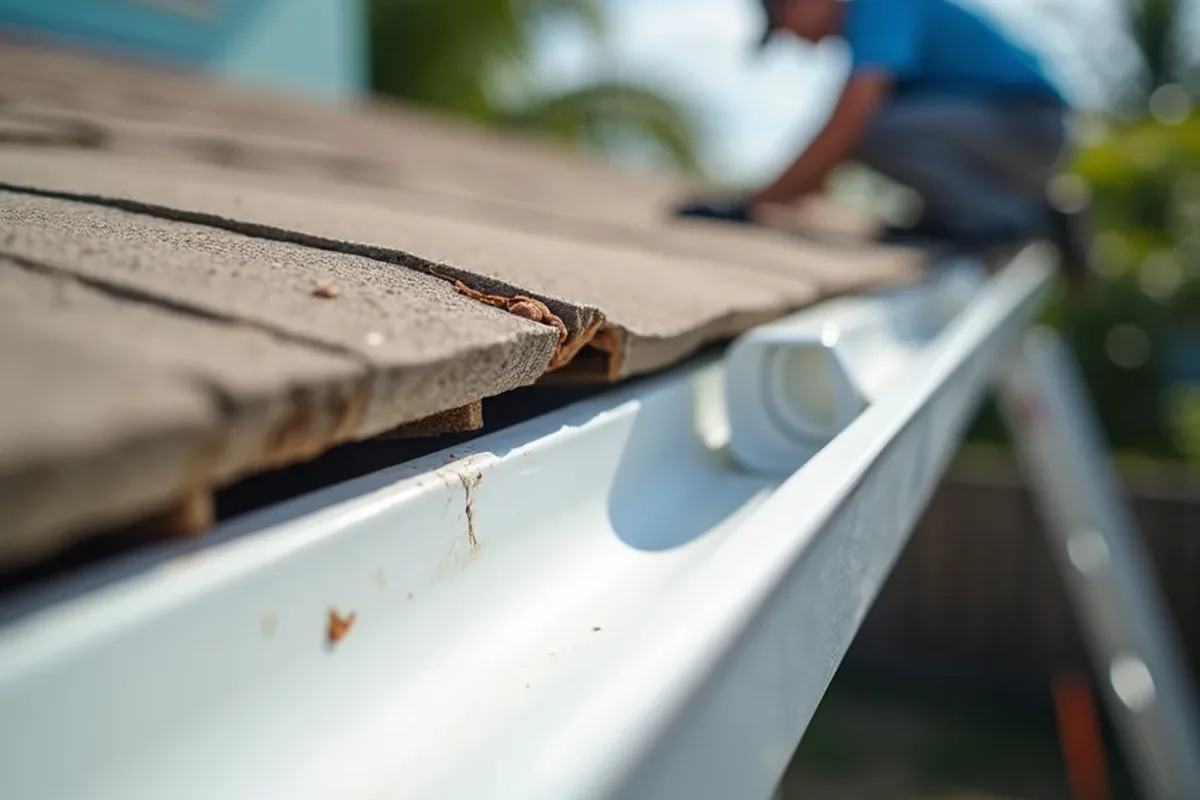
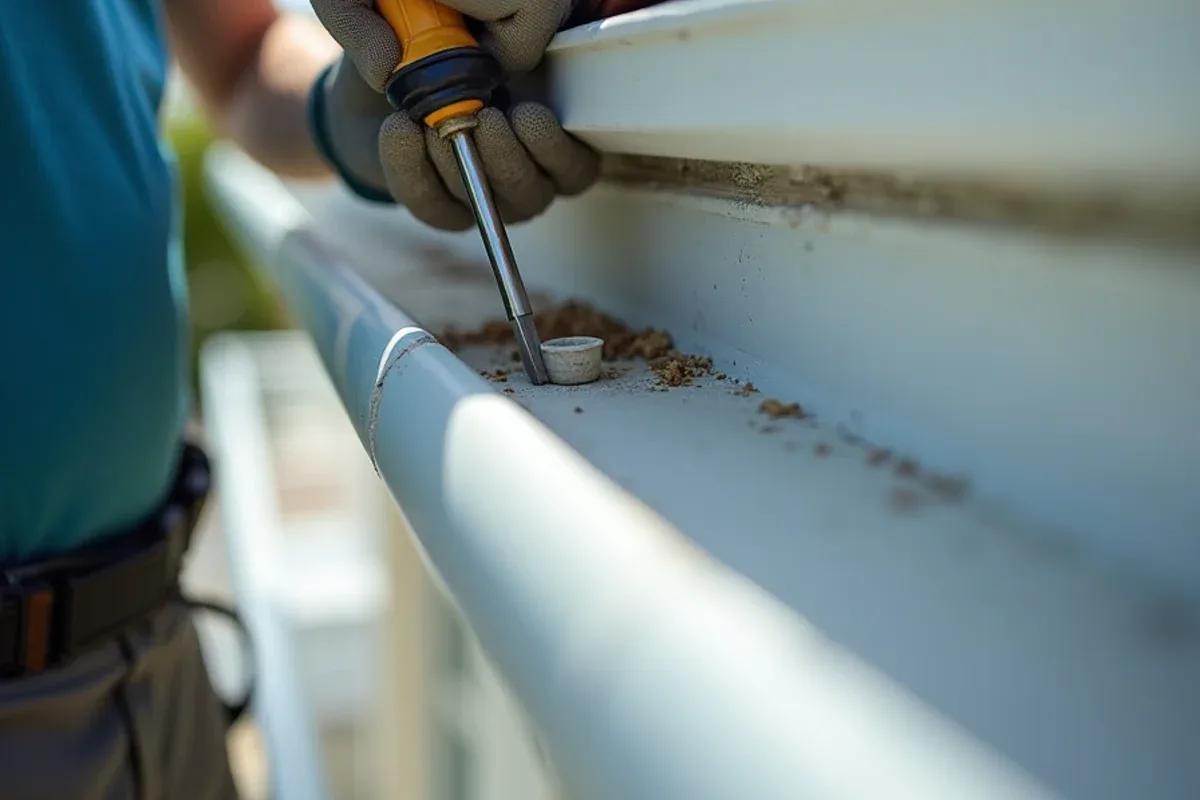
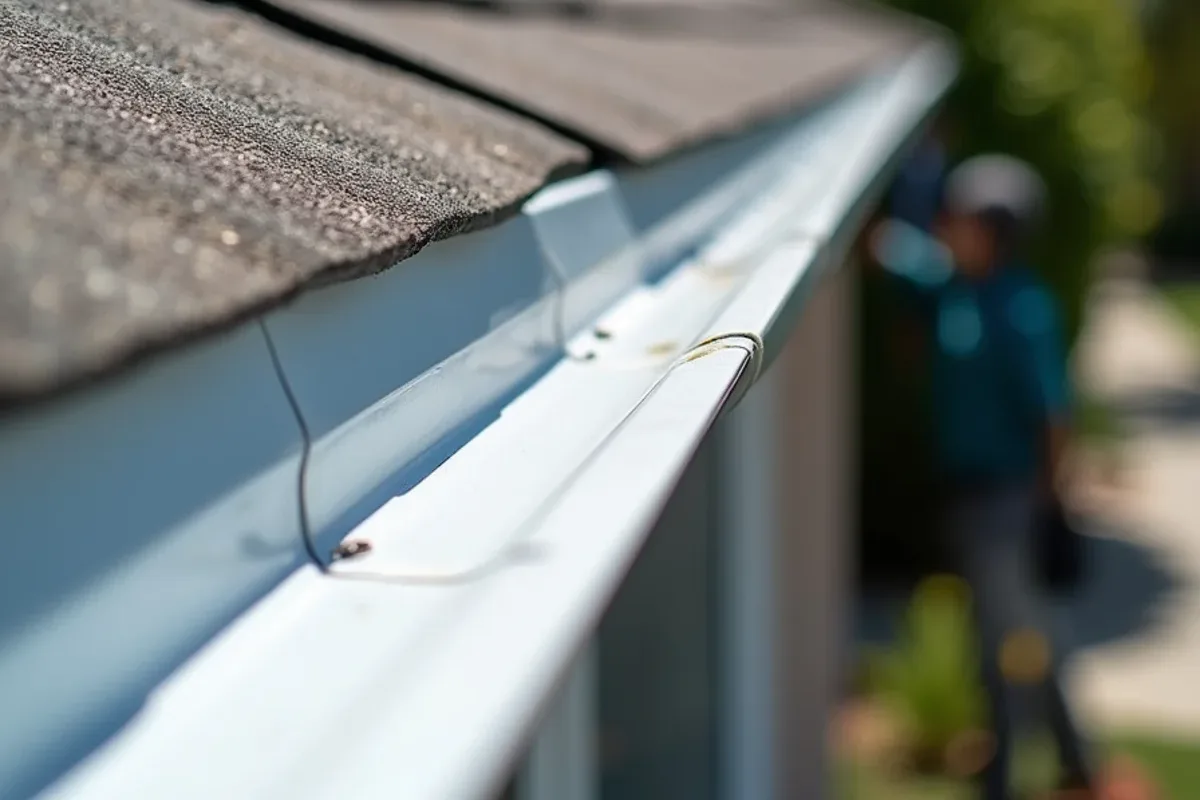
We check that roof water lands in the gutter rather than behind it. Missing drip edge, tiles that overhang too far or flashing that has lifted can all send water down the fascia even when the gutter is perfect.
Checks 8–10: outlets, downspouts and where the water goes
8. Debris load and gutter guard condition
We note how much debris was in the troughs and what kind: black olive leaves, palm seed stalks, oak tassels or roof grit from aging shingles. If there are gutter guards, we check that they are seated, not crushed and not matted over.

9. Downspout flow test
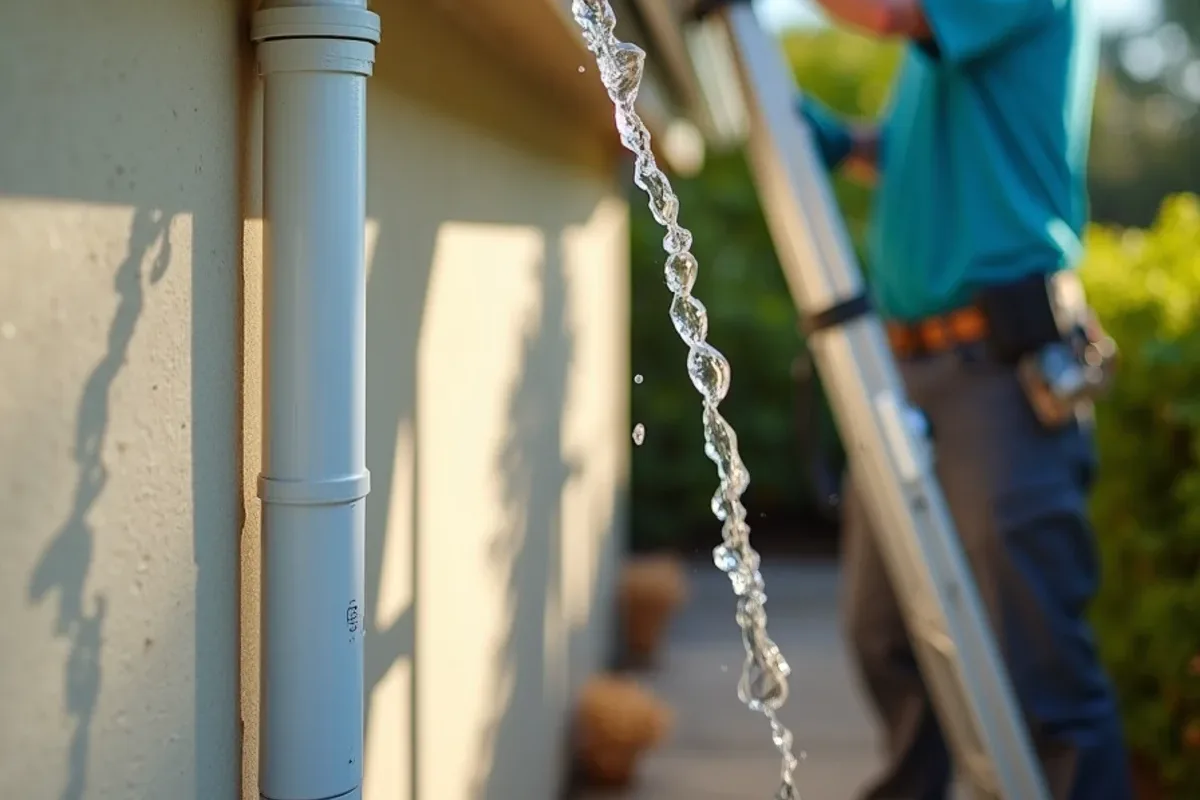
Each outlet gets water from a hose, and we watch it come out the bottom. A slow or silent downspout means a clog at the elbow or inside the pipe. We also check that every downspout is strapped to the wall.
10. Discharge and underground drains
Water should leave the downspout and keep moving away from the slab: onto a splash block, through an extension or into an underground line that pops up at the swale. We check that buried lines actually flow out the far end.

Gutter inspection checklist at a glance
Here is the same list as a simple matrix. Keep it for your own walk-around after big storms.
| # | Check | Passes when | Needs work when |
|---|---|---|---|
| 1 | Line and pitch | Even fall toward outlets | Dips, bellies, water standing |
| 2 | Stains | Clean walls and soffits | Streaks under joints, soffit rings |
| 3 | Ground | Beds intact, no soggy spots | Trenches, splash marks, puddles |
| 4 | Hangers | Tight, evenly spaced | Loose, spikes backing out, gaps |
| 5 | Joints | Sealant intact, rivets tight | Cracks, rust trails, drips |
| 6 | Fascia | Firm wood, sound paint | Soft spots, peeling, gaps |
| 7 | Roof edge | Water lands in the trough | Water running behind the gutter |
| 8 | Debris and guards | Light load, guards seated | Packed debris, crushed guards |
| 9 | Downspout flow | Full flow at the bottom | Slow, silent or backing up |
| 10 | Discharge | Water moves away from the slab | Pooling at the foundation |
Reading your gutter condition report
After an inspection, we walk you through what we found and put anything that needs work in a written estimate. Items usually fall into three groups: fine for now, watch at the next visit, and fix before the rainy season or hurricane season. That last group is where gutter repair comes in: resealing a joint, re-hanging a run, replacing a crushed downspout or swapping a section of rotted fascia.
The easiest way to make sure this happens every year is a gutter maintenance plan, which pairs scheduled cleanings with the full ten-point check so small problems never get the chance to grow.
Buying or selling?
Home inspection gutter notes are often a single line. If the report flags gutters, a dedicated gutter inspection gives you specifics to negotiate with or to fix before listing.
What a careful inspection catches that a quick look misses
Most gutter problems announce themselves eventually. The value of an inspection is finding the quiet ones first. These are the items we most often flag on houses where the owner thought everything was fine:
- Fresh paint over soft fascia. A recent exterior paint job can hide rot completely. Only a probe behind the hangers tells the truth.
- A crushed bottom elbow tucked behind a hedge, where a mower or a trimmer has flattened it over the years.
- A buried drain line with no exit. The pop-up emitter at the swale has been mowed over, sodded or silted shut, so the pipe backs up into the downspout.
- Guards that look clean from below but are matted with fine seed debris and shingle grit on top, so water sheets over them.
- Rusting fasteners near the coast. The aluminum looks new while plated screws inside the hangers are corroding.
One honest limit: a dry-day inspection is a snapshot. It cannot show how a run behaves when an afternoon cloudburst drops an inch of rain in an hour. That is why checks 2, 3 and 9 matter so much, and why we ask homeowners to watch the roofline during the next big storm and tell us what they see.
A general home inspection is a different job. Inspectors typically view gutters and downspouts from the ground or the roof and note visible defects. Flow-testing every downspout and probing fascia behind each hanger usually falls outside that scope, which is where a dedicated gutter check adds detail.
When to schedule a gutter inspection in South Florida
Late spring, before the rainy season begins in May, is the best single time. A second visit in late fall makes sense for homes under heavy canopy, like the 1950s–60s ranch homes in Plantation beneath mature oaks and mahoganies. Older flat-roof homes in Delray Beach near Atlantic Avenue add scuppers and leader heads to the list, and those get the same flow test as any downspout.
After any tropical storm or hurricane, walk the house with this checklist in hand. If something on it looks wrong, call before the next storm finds it first.
Make the ten-point check a yearly habit
Ten checks, once a year, catch most gutter problems while they are still small: a loose hanger instead of a fallen run, a cracked joint instead of a rotted board, a slow downspout instead of a flooded patio. Do the ground-level checks yourself after big storms, and leave the ladder work to someone with standoffs and a spotter.
If you would like the full inspection with written notes and photos, call Southern Gutters FL for a free estimate. We will walk through every item with you and separate what needs fixing now from what can wait.
Questions about gutter inspection
How long does a gutter inspection take?
On a typical single-story home, the inspection itself fits inside a normal cleaning visit. Larger homes, two-story houses and properties with underground drains take longer, mostly because of the flow tests at each downspout.
Can I inspect my own gutters?
You can do checks one through three, and nine during a rainstorm, entirely from the ground. Hangers, joints and fascia need a close look from a ladder, which is safest left to someone with the right equipment, especially on two-story or tile-roof homes.
What should I do if the inspection finds rotted fascia?
Plan to fix it soon rather than at the next cleaning. Rot spreads along the board and loosens every hanger in that stretch. The repair means taking down that part of the gutter, replacing the damaged wood, and re-hanging the run, ideally on a dry day before the rainy season sets in.
Do gutters affect a Florida 4-point or wind mitigation inspection?
Not directly, as far as we know. A 4-point inspection for insurers focuses on the roof, electrical, plumbing and HVAC, and a wind mitigation report looks at roof deck attachment, roof-to-wall connections and opening protection. Gutters are not scored items on either form. Water damage they cause can still show up, though, as stained soffits or roof-edge rot that an inspector photographs, so a sound gutter system helps the overall picture.
Services mentioned in this guide
Gutter Repair
Leaking corners, loose hangers, bad pitch and tired end caps fixed with honest, repair-first advice.
Learn moreGutter Maintenance Plans
Spring, pre-hurricane and fall cleanings booked for you, with a yearly inspection and storm-season priority.
Learn moreServing Plantation, Delray Beach and the rest of South Florida.