
By Chance, owner of Southern Gutters FL · Published · Last updated
Key takeaways
- Match the guard to your smallest common debris, not your biggest; fronds sit on top of almost anything.
- Black olive leaves and oak tassels slip through or mat on coarse screens; fine stainless mesh handles them far better.
- Barrel tile roofs need guards that fasten to the gutter lip, not ones that tuck under the roof edge.
- Every guard style still needs periodic service under heavy South Florida tree cover.
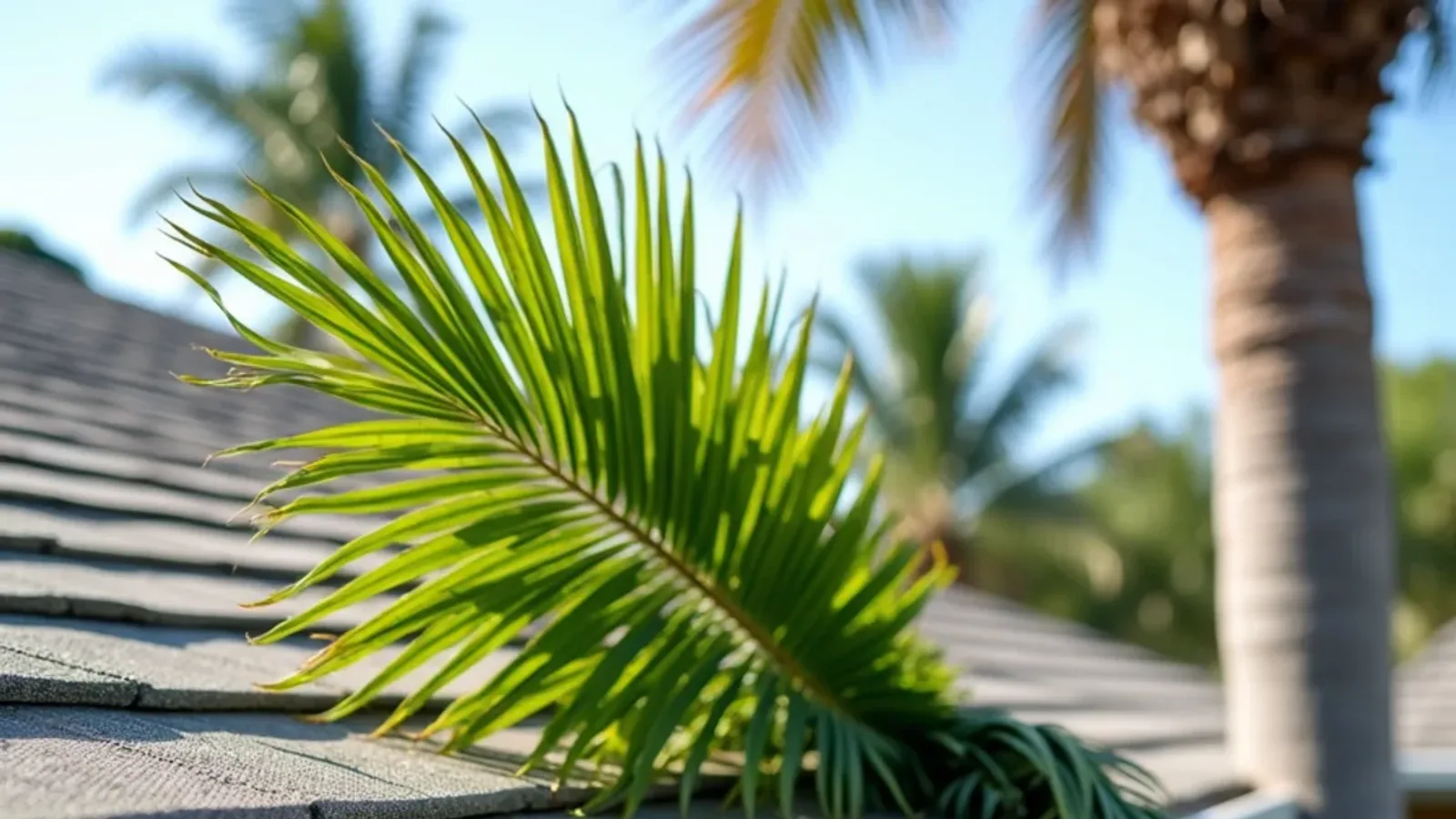
The best gutter guards for palm trees and black olives in South Florida are fine stainless micro-mesh panels screwed to the gutter. Fronds rest on top of any guard and are easy to clear; the small olive leaves, oak tassels and queen palm fruit are what beat coarse screens and foam, so pick the guard for your smallest debris.
Most guard advertising is written for maple leaves and pine needles. South Florida yards throw a different mix at the roof: royal palm fronds the length of a car, queen palm fruit, small waxy black olive leaves, spring oak tassels, ficus berries and woody mahogany pods. The best gutter guards for palm trees can be a poor choice under a black olive, and the reverse is just as true.
So instead of ranking products, this guide starts from the debris. Identify what falls on your roof, then match a guard style that sheds it. We will also cover the roof and wind details that rule some styles out entirely here.
Start with what falls on your roof
Walk the yard and look in the gutter where it is lowest and dirtiest, usually near a downspout outlet. What you find there is the debris your guard has to beat. Here is how the common South Florida culprits behave.
- Royal and coconut palm fronds: huge, heavy and infrequent. They land across the gutter rather than in it.
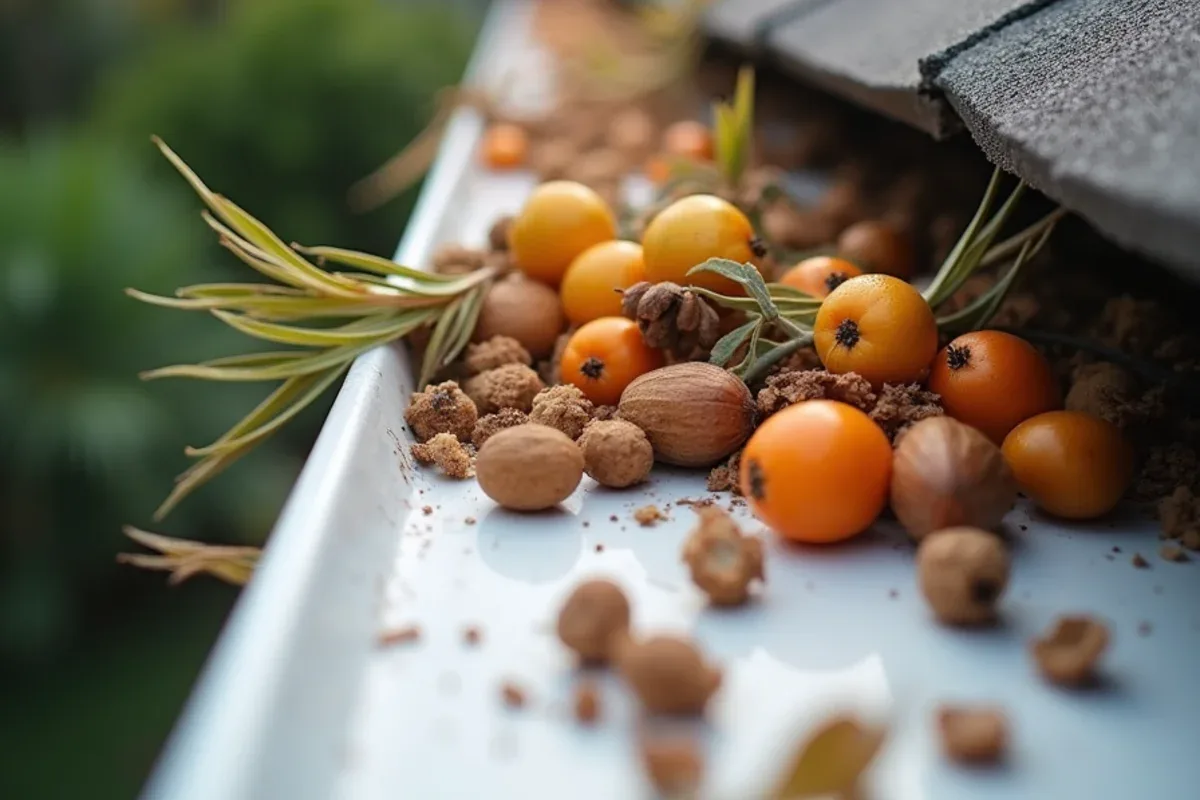
- Queen palm fruit and flower stalks: marble-sized fruit and stringy stalks that roll into open gutters and rot there.
- Black olive leaves and seed pods: small, waxy and constant through much of the year. They slide into gaps and pack into a dense mat.
- Live oak tassels and pollen: a heavy spring drop of stringy tassels plus fine yellow dust that coats everything.
- Ficus leaves and berries: steady small litter that breaks down into sludge quickly in summer heat.
- Mahogany pods: woody capsules that split on the roof and scatter winged seeds.
Which guard styles handle which debris?
We install and service several styles of gutter guards. This matrix reflects how each style tends to perform against local debris. Real results vary with roof pitch, guard quality and how well the guard is fitted.
| Debris | Stainless micro-mesh | Perforated aluminum screen | Plastic snap-in screen | Foam or brush insert |
|---|---|---|---|---|
| Palm fronds | Sit on top; cleared easily | Sit on top; cleared easily | Can crush or dislodge screen | Sit on top, but the insert underneath can trap stalks |
| Queen palm fruit | Rolls off | Usually rolls off | Can lodge in openings | Gets caught in bristles or foam |
| Black olive leaves | Blocks them; leaves may rest on top | Small leaves can wedge in holes | Leaves slip through larger openings | Leaves embed in brush or foam |
| Oak tassels and pollen | Blocks tassels; pollen film needs brushing | Tassels mat across holes | Tassels mat and clog | Pollen and tassels pack the insert |
| Ficus and fine litter | Best of the group | Fair | Poor | Poor; insert holds sludge |
The pattern is clear: big debris is easy, small debris separates good guards from bad ones. That is why fine mesh is usually where we start the conversation in heavily treed yards.
Gutter guards for black olive trees and oak tassels
These two trees cause much of the trouble we see when we are called out to service guards. Black olive leaves are just small enough to wedge into perforations, and once a few lodge, the rest pile up behind them. Oak tassels are stringy and knit together on any surface with texture.
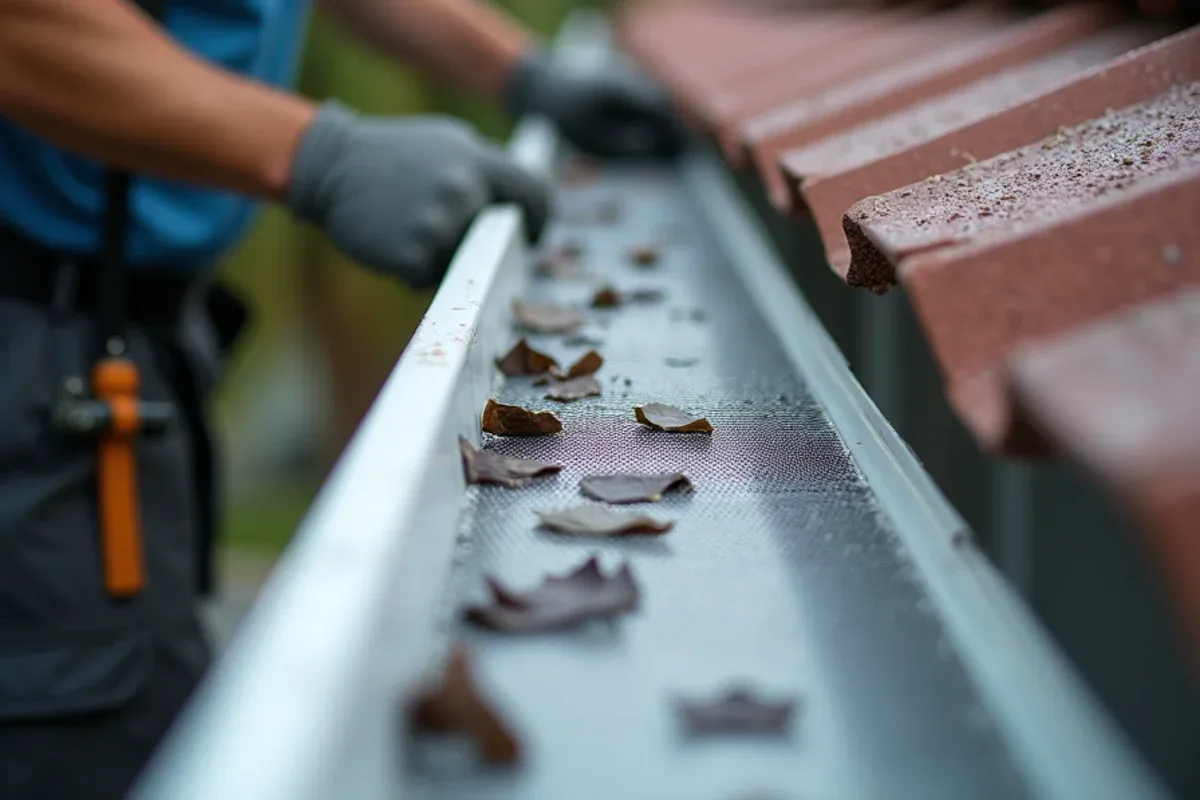
A tight stainless micro-mesh gutter guard keeps both out of the trough. The debris still lands on the mesh, but it dries and blows off or is brushed away in minutes instead of rotting inside the gutter. Pollen leaves a film that slows water entry over time, which is why mesh guards under oaks still need a gentle brushing.
Is a palm frond gutter guard necessary?
If palms are the only trees near the house, maybe not. A royal palm frond lands across the gutter whether there is a guard or not, and someone has to pick it up. What guards prevent is the stuff that comes with palms: fruit, flower stalks and the fibrous boots that break off frond bases.
Where the main issue is occasional big fronds, a scheduled palm frond and roof debris removal visit before hurricane season may be the smarter spend. Where palms mix with black olives, ficus or oaks, guards make more sense.
Trim first
Keeping fronds and limbs trimmed back from the roofline reduces debris and wind damage regardless of which guard you choose.
Tile roofs, screen enclosures and hurricane wind
Many guards sold nationally slide their back edge under the first row of shingles. That does not work on barrel tile, and lifting tile to try it risks cracking. On tile roofs we use styles that fasten to the front lip and back edge of the gutter itself.
Where a gutter feeds a pool cage or screen enclosure, a clogged guard can send water over the front edge and onto the screen roof. Guards there need to be easy to reach for service.
Wind is the other local test. Guards that clip in loosely can lift in a tropical storm. Screw-fastened frames hold far better, and a solid guard on loose gutters is pointless, so hangers and fascia should be checked before installation.

What our crew notices when guards meet South Florida trees
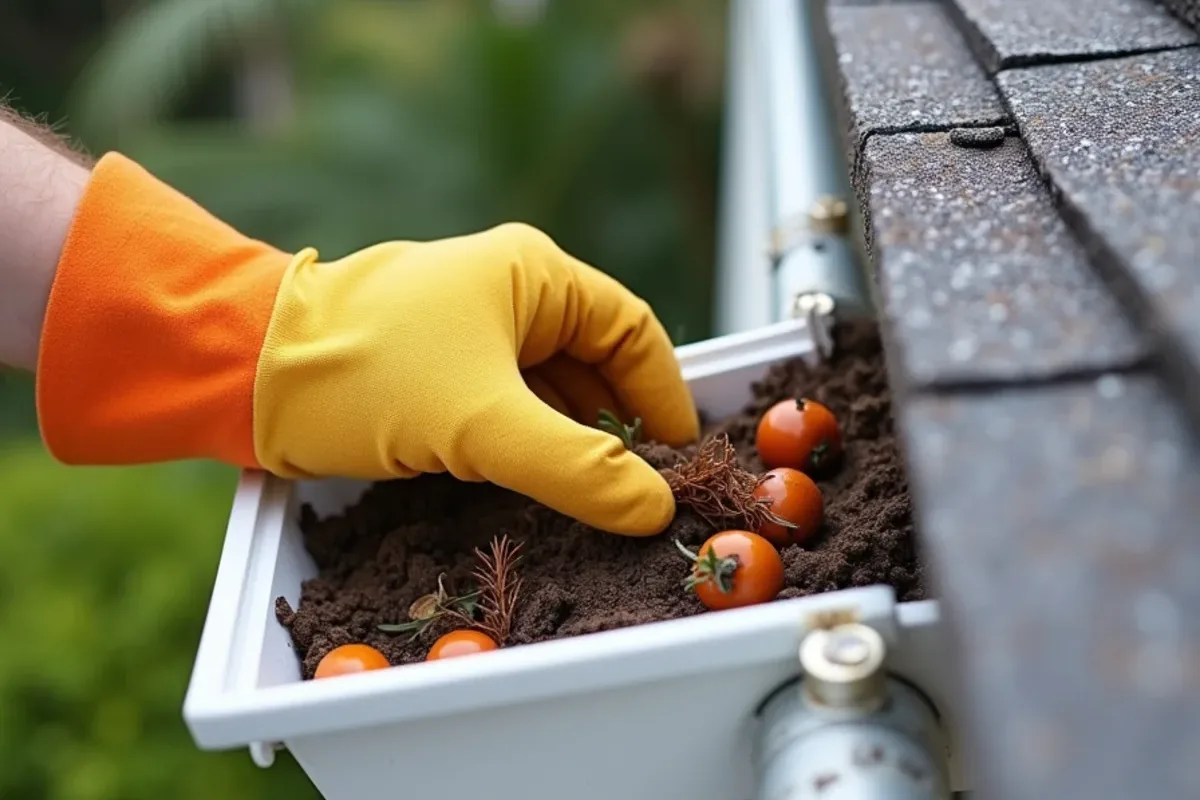
Before quoting any guard, we pull a handful of debris from the lowest outlet and look at it. That sample usually settles the style question faster than a conversation about brands, because it shows the smallest thing your guard has to keep out.
- Valleys get tested first. Where two roof planes meet, rain arrives in a concentrated stream. Guards at valley corners clog and overshoot before the rest of the run, so we inspect and fit those spots most carefully.
- A filmed mesh can mimic a clog. Oak pollen and black olive residue leave a skin on fine mesh that slows water entry. In a cloudburst, water then sheets over the front edge and the homeowner assumes the gutter is full. A soft brushing fixes it.
- Sun is hard on plastic. Strong UV breaks down many plastic screens and foam inserts over time, which is one reason we lean toward stainless mesh in aluminum frames on exposed roofs.
- A guard cannot fix an undersized gutter. If a 5-inch gutter overflows in heavy rain while clean, a guard will not change that. Larger gutters or an added downspout come first.
Guard-shopping checklist for treed yards
- Identify your smallest frequent debris from an outlet sample.
- Confirm the guard fastens to the gutter, not under barrel tile.
- Ask how the frames are secured against storm wind.
- Have hangers, pitch and fascia checked before guards go on.
- Get the recommended service interval for your tree cover in writing.
What we see in Plantation and Coral Springs yards
Neighborhoods in Plantation often combine mature live oaks and black olives with palms planted later, which is exactly the mixed debris that rewards fine mesh. Around Coral Springs, community landscaping frequently includes black olives and a mix of palms along streets and backyards, and many homes have screen enclosures where gutter overflow matters.
If you are unsure what your trees will do to a guard, a year on scheduled cleanings will show you, and it gives us a clear picture before recommending a style. When you are ready, we will look at the trees and the roof together and quote the style that fits.
Matching your guard to your trees
Palms make headlines with their fronds, but black olives, oaks, ficus and queen palm fruit decide which gutter guard succeeds. Start from what you find at the outlet, rule out styles that do not suit tile or storm wind, and plan for light service even with the best mesh.
We install and maintain guards from our North Lauderdale base across Broward, Palm Beach and Miami-Dade. Call (855) 633-0442 for a free estimate, and we will look at your trees and roof together before suggesting any style.
Questions about best gutter guards for palm trees
Do gutter guards stop palm fronds?
Guards keep fronds out of the trough, but fronds still rest on top and need to be removed. Their bigger benefit around palms is blocking fruit, flower stalks and frond fibers that would otherwise rot inside the gutter.
What is the worst guard for black olive trees?
In our experience, coarse plastic screens and foam inserts struggle most, because the small leaves slip through or embed in them. Fine stainless mesh fastened to the gutter is a much better match.
Do gutter guards work in heavy Florida rain?
Good ones do, when they are clean and the gutter is sized for the roof. Fine mesh lets water through quickly, but a pollen film or a frond lying on top slows it, and water then sheets over the edge in a cloudburst. Valleys see the most stress. Regular brushing and correctly sized gutters matter as much as the guard itself.
How long do gutter guards last in the Florida sun?
It depends on the material. Stainless mesh in an aluminum frame holds up well to sun and salt air, while many plastic screens and foam inserts degrade under strong UV and need replacing sooner. Fastening matters too: screw-mounted frames stay put through storm seasons, while loose snap-in pieces tend to shift, crack or blow out.
Services mentioned in this guide
Gutter Guards
Guards matched to the palm, black olive and oak debris over your roof, fitted to new or existing gutters.
Learn moreMicro-Mesh Gutter Guards
Fine stainless mesh that keeps black olive leaves, oak tassels and pine needles out while letting heavy rain through.
Learn moreServing Plantation, Coral Springs and the rest of South Florida.