
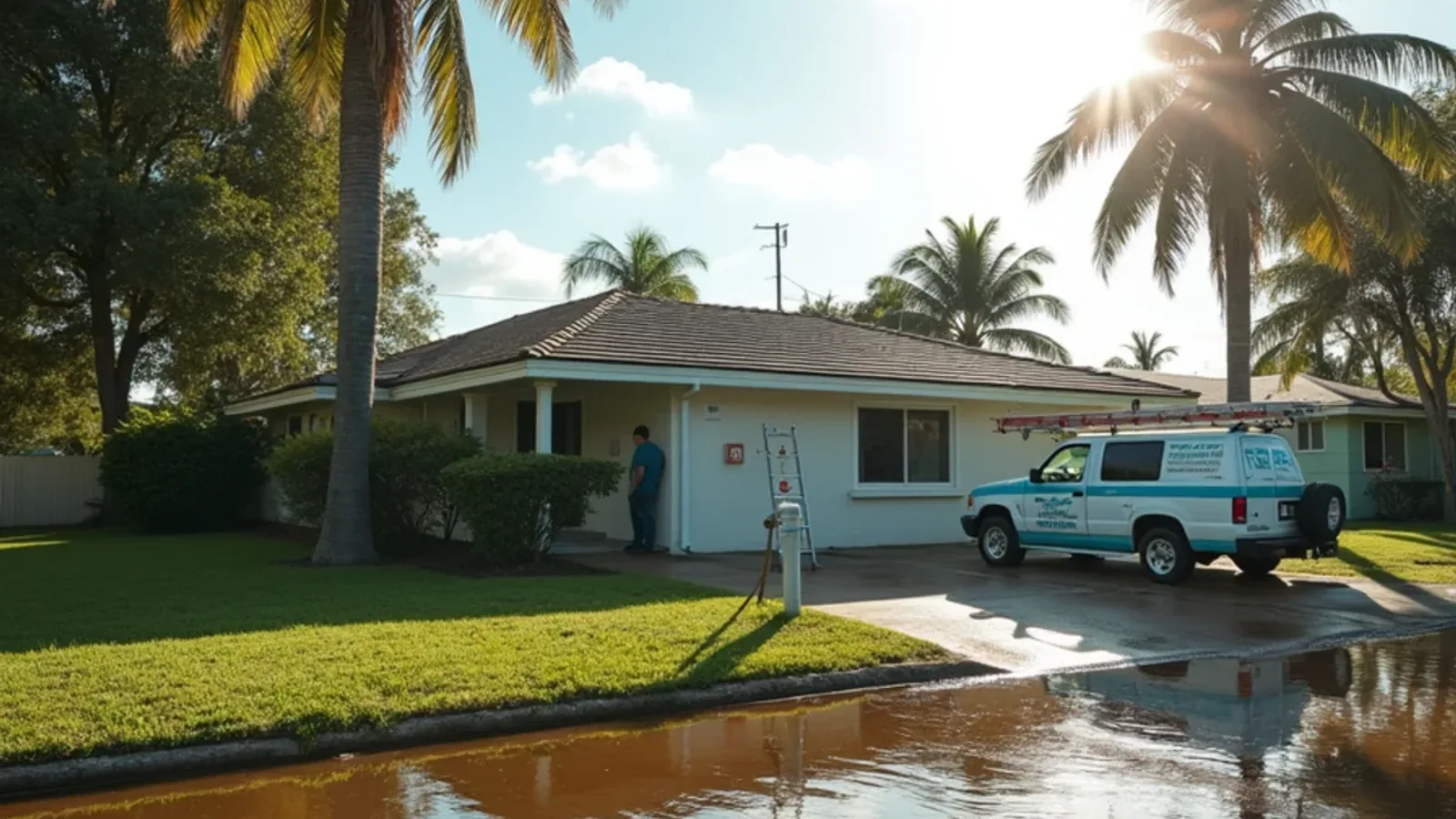
By Chance, owner of Southern Gutters FL · Published · Last updated
Key takeaways
- Gutters are sized for rainfall intensity in short bursts, not daily totals.
- Bigger downspouts often matter more than a bigger gutter.
- Underground drains only work when their outlet sits above the water around it.
- Discharging roof water against the slab adds to flooding at the most vulnerable spot.
- Gutters manage roof runoff; they cannot protect against rising surface water.
The April 2023 Fort Lauderdale flood proved that gutters cannot stop rising street water, but they decide whether your roof adds to it. Homes with enough downspouts, 3x4 outlets, properly sized gutters and discharge points well away from the slab coped better. Fixing everyday overflow now buys real margin for the next extreme storm.
On April 12, 2023, Fort Lauderdale-Hollywood International Airport recorded roughly 26 inches of rain in about a day, a record for the city by a wide margin. Streets became rivers, the airport shut down, and water reached living rooms across eastern Broward. For anyone thinking about Fort Lauderdale flood gutters and home drainage, that storm is the most useful case study we have.
We want to be straight about one thing first: no gutter system stops a flooded street from coming up the driveway. What gutters and downspouts do is control the water that lands on your roof. In April 2023, the homes where that roof water was handled well had one less problem to deal with. These are the lessons we took from it.
April 2023 Fort Lauderdale rain: what actually happened
The storm was a slow-moving band of heavy thunderstorms that kept redeveloping over the same part of eastern Broward for hours. Rain rates in the worst stretches were extreme, and the ground, canals and storm drains had no time to catch up.
The airport total, widely reported at just under 26 inches, far exceeded the city's previous 24-hour record from 1979. The airport itself closed for well over a day. Neighborhoods on low ground saw water in homes, and many cars were lost in the streets.
The National Weather Service office in Miami put the preliminary 24-hour total at 25.91 inches and noted that the rain in the worst six-hour stretch had roughly a 0.1 percent chance of happening in any given year, the so-called 1-in-1,000-year storm. Broward County uses the same description. No residential drainage is designed for that, which is exactly why the lessons below focus on margin, not on making a house flood-proof.
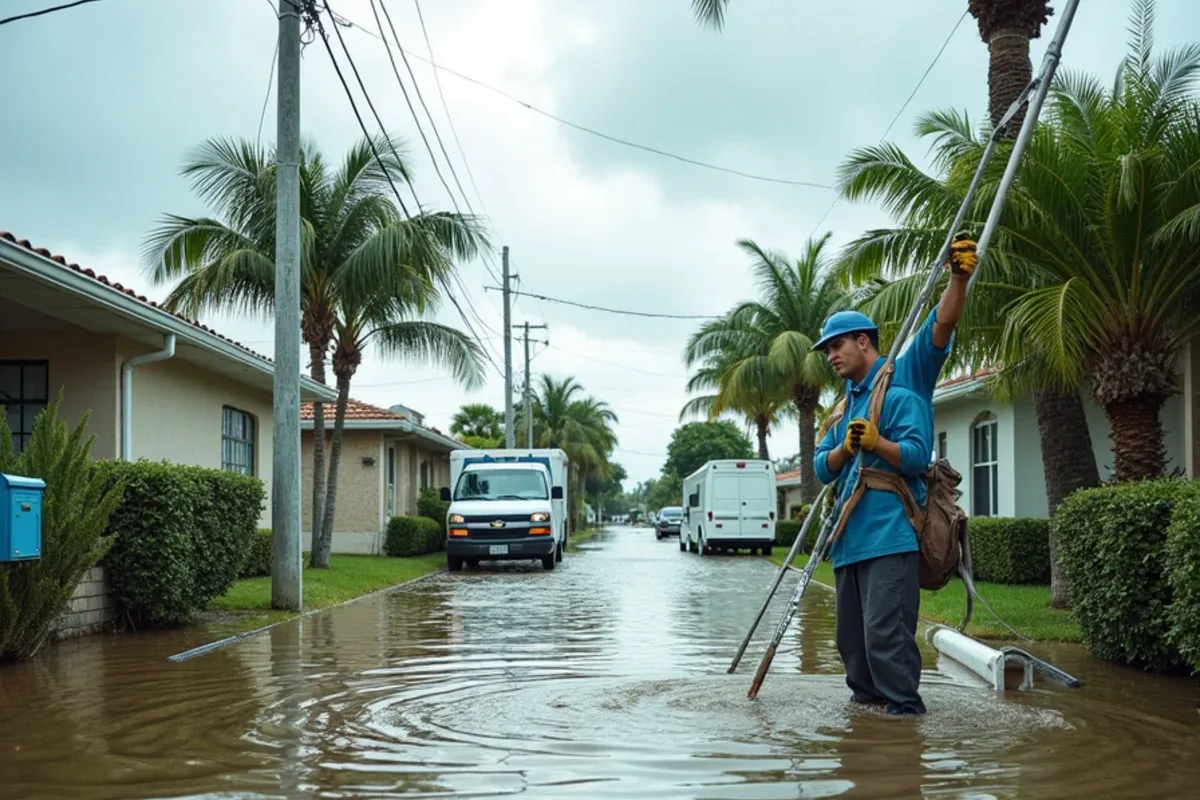
Once the water receded, the calls we got were telling. Few were about gutters failing outright. Most were about water that had nowhere to go once it left the downspout.
Lesson 1: gutters in heavy rain are sized for the worst ten minutes
Gutter capacity is about how much water arrives per minute, not per day. Ordinary South Florida afternoon cloudbursts already test a 5-inch K-style gutter on a large or steep roof. During the April 2023 storm, rates went far beyond that for long periods.
The practical lesson: if your gutters overflow in a normal summer storm, they had no chance in a record event. Correcting that everyday overflow, by adding outlets or going up a size, gives you real margin when a bigger storm arrives.
| Component | Typical older Broward home | Upgrade option | What changes |
|---|---|---|---|
| Gutter | 5-inch K-style | 6-inch K-style | Deeper, wider trough holds and moves noticeably more water |
| Gutter (large or commercial roofs) | 6-inch K-style | 7-inch K-style | More capacity for big roof areas and long runs |
| Downspout | 2x3 inch | 3x4 inch | About double the opening area, so the gutter empties faster |
| Outlet count | One per long run | Two or more per long run | Shorter path for water, less overflow at the far end |
Lesson 2: are 6 inch gutters in Florida worth it without bigger downspouts?
A bigger trough helps, but the downspout is usually the bottleneck. A 6-inch gutter draining through the same small 2x3 downspout will fill up and overflow almost as fast as the old one. The best results come from pairing oversized 6-inch and 7-inch gutters with 3x4 downspouts and enough outlets for the roof area.
Roof style matters too. Barrel tile valleys and hip roofs concentrate water at corners, and that is where an extra downspout often earns its keep.
A simple self-check during the next big storm
Next time a heavy afternoon storm rolls through, stand at a window and watch the far end of each long gutter run, the end farthest from the downspout. If water spills there while the outlet end looks fine, the run needs a second downspout. If it spills along the whole length, the trough or the downspout is too small for that slice of roof. Write down what you see; it makes any estimate faster and more accurate.
Lesson 3: downspout drainage during flooding depends on the outlet
Underground downspout lines are excellent in normal rain. They carry water across the yard and release it at a pop-up emitter or into a swale. But the water has to have somewhere lower to go. When the yard, swale and street are all underwater, the pipe simply fills and the downspout backs up.
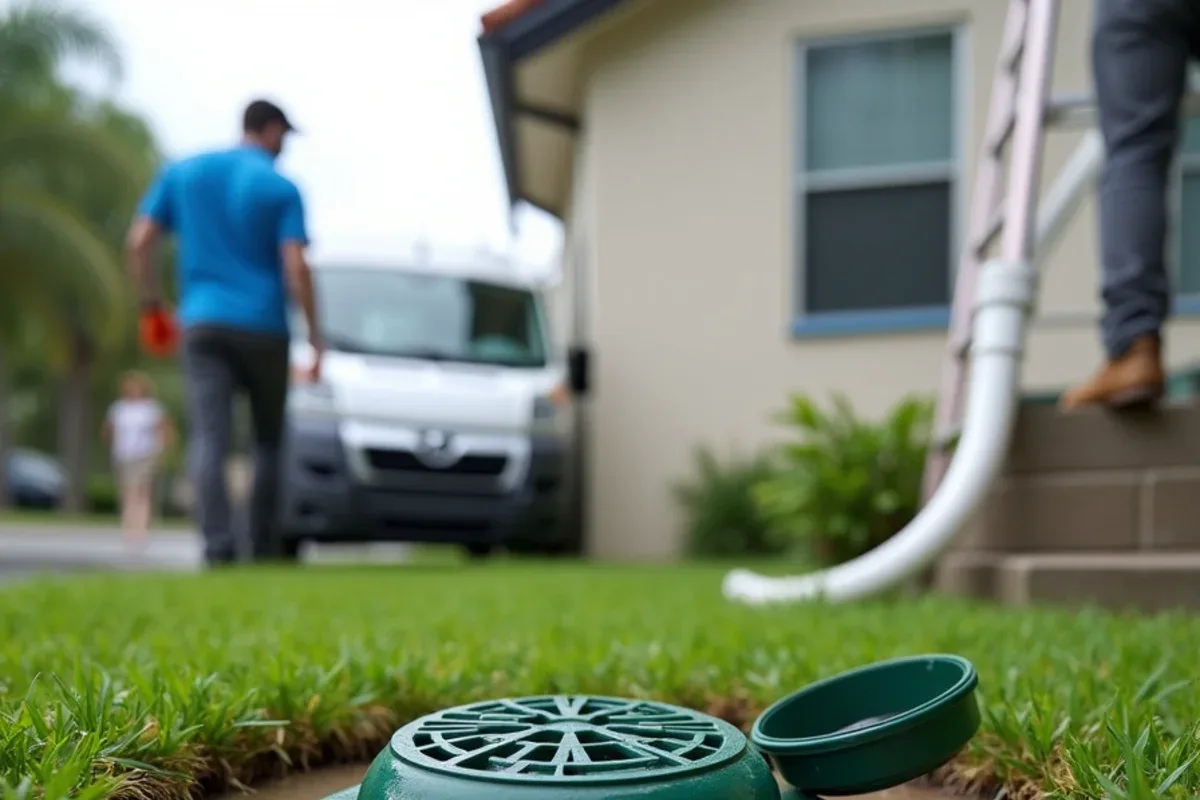
That does not make underground drainage a mistake. It means the outlet location matters. Release points should be as far from the house and as low as the lot allows, the line should slope steadily, and every downspout connection should have a way to overflow above ground rather than backing up against the wall. A well-planned downspout and drainage system is designed around where the water will sit in a bad storm, not just a dry day.
Lesson 4: flood-proofing home drainage starts at the slab edge
Many South Florida homes sit on slabs only slightly above the surrounding grade. Every downspout that dumps right at that slab edge adds water to the exact spot where floodwater gets in first. In April 2023, homes with downspouts discharging against the wall had pooling at doorways even before street water arrived.
- Move discharge points several feet out from the slab, onto ground that slopes away.
- Keep mulch and soil below the slab edge so water cannot pond against stucco.
- Check that pavers and patios slope away from sliding doors, not toward them.
- Keep yard drains and swales clear of grass clippings and leaves.
Lesson 5: know what gutters can't do, and plan for it
Gutters are roof-water management. They will not stop surface flooding, a rising canal or storm drains that are overwhelmed. Homeowners in low-lying areas should also look at flood insurance, door barriers and moving valuables off the floor during forecast heavy rain.
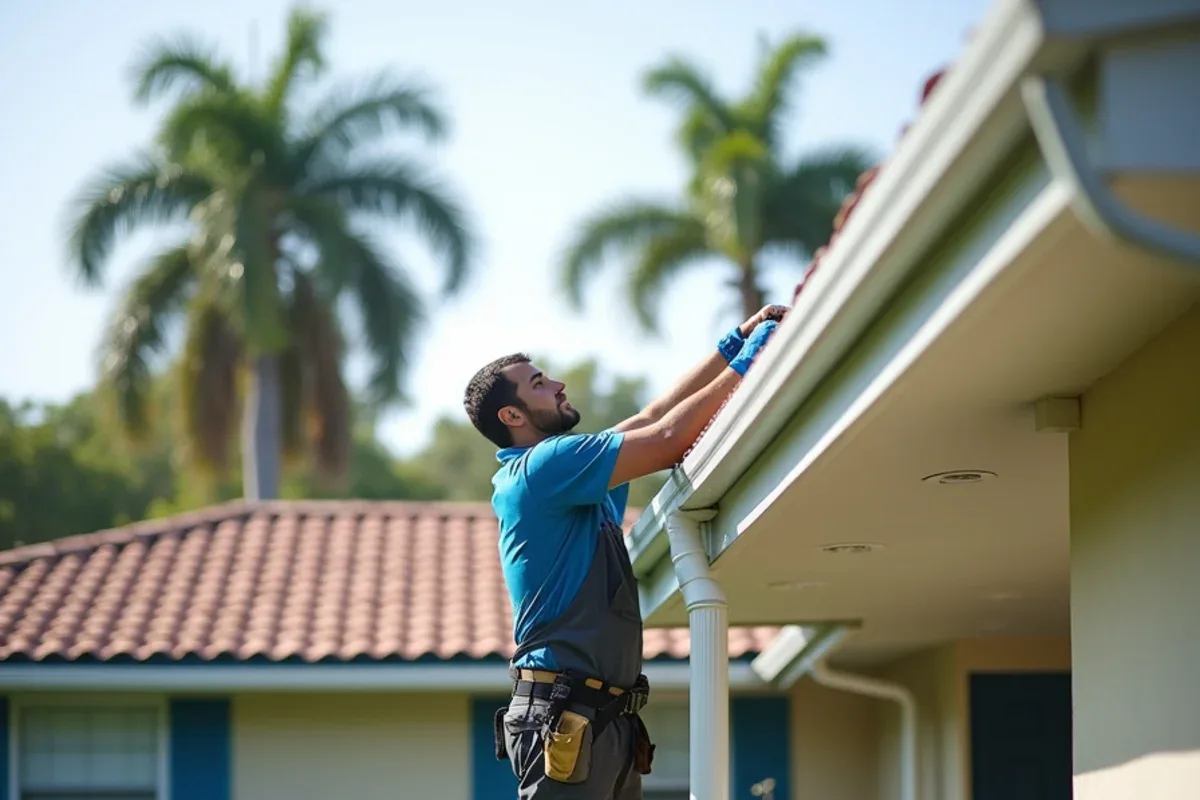
Where gutters do help is in making sure your roof is not adding to the problem. After the 2023 storm, we spent a lot of time in Fort Lauderdale and in flat, older neighborhoods of Oakland Park and Lauderdale Lakes, adding downspouts, upsizing runs and rerouting discharge away from slabs. If you want a second opinion on your setup, we measure the roof area each run drains and give a written recommendation.
How we audit a Broward home’s roof drainage after a big rain
When a homeowner calls after a storm like April 2023, the question is rarely “are my gutters broken?” It is “why did water end up where it did?” Answering that takes a walk around the whole lot, not just a look at the roof edge. This is the order we follow.
- Map every downspout and the slice of roof each one drains, noting valleys and hip corners that dump extra water on one outlet.
- Watch the homeowner’s storm video or photos, if they have them, to see which runs spilled first and where.
- Flow-test each run with a hose and follow the water to its exit, including any buried line and its pop-up emitter.
- Compare the outlet height with the yard’s low spot. An emitter sitting in the lowest corner of a flat lot will be underwater early in a heavy storm.
- Check the grade at the slab, the mulch line and any patio or paver slope that pushes water back toward doors.
- Write up options in order of cost and disruption, from moving a discharge point to adding outlets or upsizing a run.
The trade-offs are real. Upsizing to a 6-inch gutter means replacing the run, while adding a downspout is a smaller job but needs a sensible place to discharge. Burying a line keeps the yard tidy, yet on low lots near canals the water table can sit close to the surface, a problem covered in our guide to underground downspouts on a high water table. Sometimes a plain above-ground extension onto ground that falls away from the house is the most reliable answer.
And sometimes the honest finding is that the problem is lot grading or street drainage, not the gutters. When that is the case, we say so rather than selling new metal that will not change the outcome.
Getting ready for the next record storm
April 2023 will not be the last extreme rain in eastern Broward. Gutters cannot hold back a flooded street, but a roof that drains quickly to discharge points away from the slab keeps one source of water away from your doors. Start with the overflow you already see in ordinary summer storms; fixing that is where most of the margin comes from.
If you want your gutters, downspouts and discharge points checked against a big-storm scenario, call Southern Gutters FL for a free on-site estimate. We are a family-owned crew based in North Lauderdale, a short drive from Fort Lauderdale’s older east-side streets.
Questions about fort lauderdale flood gutters
Would bigger gutters have prevented flooding in April 2023?
Not street flooding. Larger gutters and downspouts reduce overflow and keep roof water off the foundation, which helps, but they cannot hold back surface water rising from the street or yard during a storm of that size.
Should I disconnect underground drains when heavy rain is forecast?
Usually not, but you should know where each line comes out and keep the emitters clear. If a line backs up regularly, have the slope, outlet and connections checked so overflow happens away from the house rather than at the wall.
How much rain fell in Fort Lauderdale in April 2023?
The National Weather Service in Miami reported a preliminary 25.91 inches at Fort Lauderdale-Hollywood International Airport in the 24 hours ending the morning of April 13, 2023, far above the city’s earlier one-day record. Meteorologists described the heaviest six hours as roughly a 1-in-1,000-year event. Totals elsewhere in eastern Broward varied widely from street to street.
Are 6-inch gutters worth it on a Fort Lauderdale home?
Often, on large or steep roofs, barrel tile homes with deep valleys, and long runs with a single outlet. On a modest single-story ranch, adding a downspout or switching to 3x4 downspouts may solve everyday overflow without replacing the gutter. Measuring the roof area each run drains is the only honest way to decide, and we do that on every estimate.
Services mentioned in this guide
6" & 7" Oversized Gutters
Wider 6- and 7-inch seamless troughs with 3x4 downspouts that keep up with cloudbursts and big tile roof valleys.
Learn moreDownspouts & Drainage
Downspouts sized, placed and routed so roof water clears your slab, patio and the neighbor's yard.
Learn moreServing Fort Lauderdale, Oakland Park and the rest of South Florida.