
By Chance, owner of Southern Gutters FL · Published · Last updated
Key takeaways
- K-style gutters are the default for most commercial eaves up to 7 inches; box gutters suit very large roofs, low-slope metal buildings and designs that hide the gutter.
- Size follows roof area, roof pitch and design rainfall, and South Florida’s rainfall intensity pushes sizes up.
- Downspouts are usually the bottleneck; more or larger downspouts often matter more than a wider gutter.
- Aluminum suits most South Florida commercial work; steel and copper have specific uses and trade-offs.
- In Broward and Miami-Dade, attachment must meet the stricter High-Velocity Hurricane Zone standards.
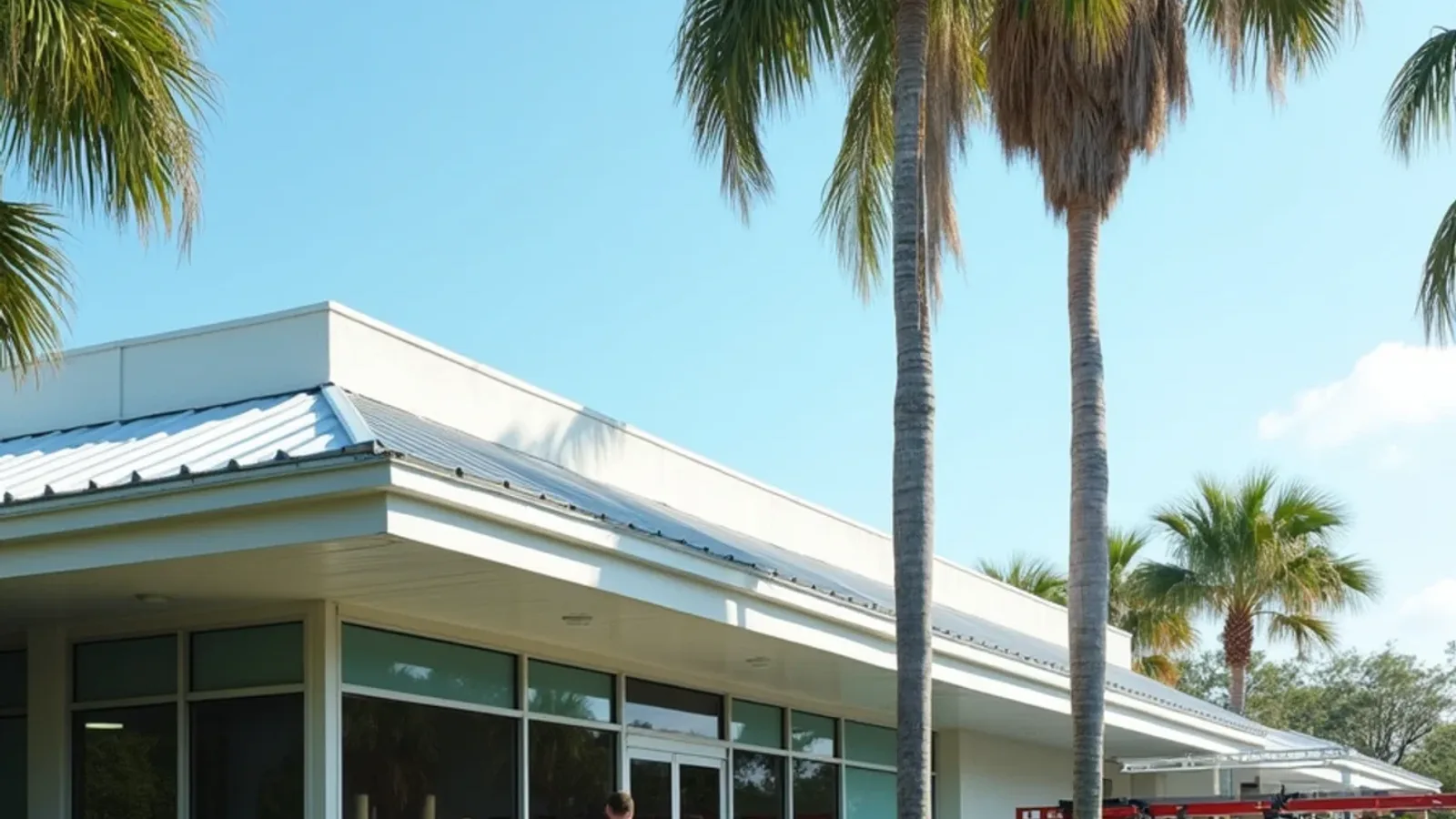
Choose a commercial gutter system by roof area, pitch and design rainfall, not by looks. Seamless K-style gutters in 6 or 7 inches handle most South Florida plazas, offices and churches, while 8-inch box gutters suit very large low-slope metal roofs. Either way, enough well-placed downspouts matter more than extra gutter width.
Commercial gutter systems fail for the same reason residential ones do, just on a bigger scale: too much water arriving faster than the system can carry it. A warehouse roof can send the runoff of several houses into one eave line, and in a South Florida cloudburst that line has to keep up for an hour without spilling over a loading dock or a storefront.
Choosing the right system comes down to four decisions: profile, size, downspout capacity and material. This guide walks through each one for owners, facility managers and builders planning a new install or a replacement.
K style vs box gutter: how the two profiles compare
A K-style gutter has a flat back and bottom with a decorative ogee front, the profile most people picture. A box gutter is a plain rectangle with straight sides. The names get used loosely, but the practical differences are real.
| Factor | K-style | Box |
|---|---|---|
| Common commercial sizes | 6 and 7 inch | 7 and 8 inch and larger, often custom |
| How it is made | Usually roll-formed seamless on site | Often fabricated in sections from heavier stock |
| Capacity for its width | Good; the ogee shape adds stiffness | High; straight walls hold more water |
| Look | Finished, matches residential and retail | Plain, industrial, or hidden in the roof edge |
| Typical buildings | Plazas, offices, churches, schools, small warehouses | Large warehouses, metal buildings, custom architectural roofs |
| Main risk | Undersizing on big roofs | Seams and, for built-in versions, leaks into the building |
Built-in box gutters, set into the roof structure behind the edge, deserve a special warning. They look clean, but if they clog or a lining fails, the overflow goes inside the wall rather than off the eave. They need a well-sealed lining, overflow provisions and a strict cleaning schedule.
Commercial gutter size: what decides 6, 7 or 8 inches
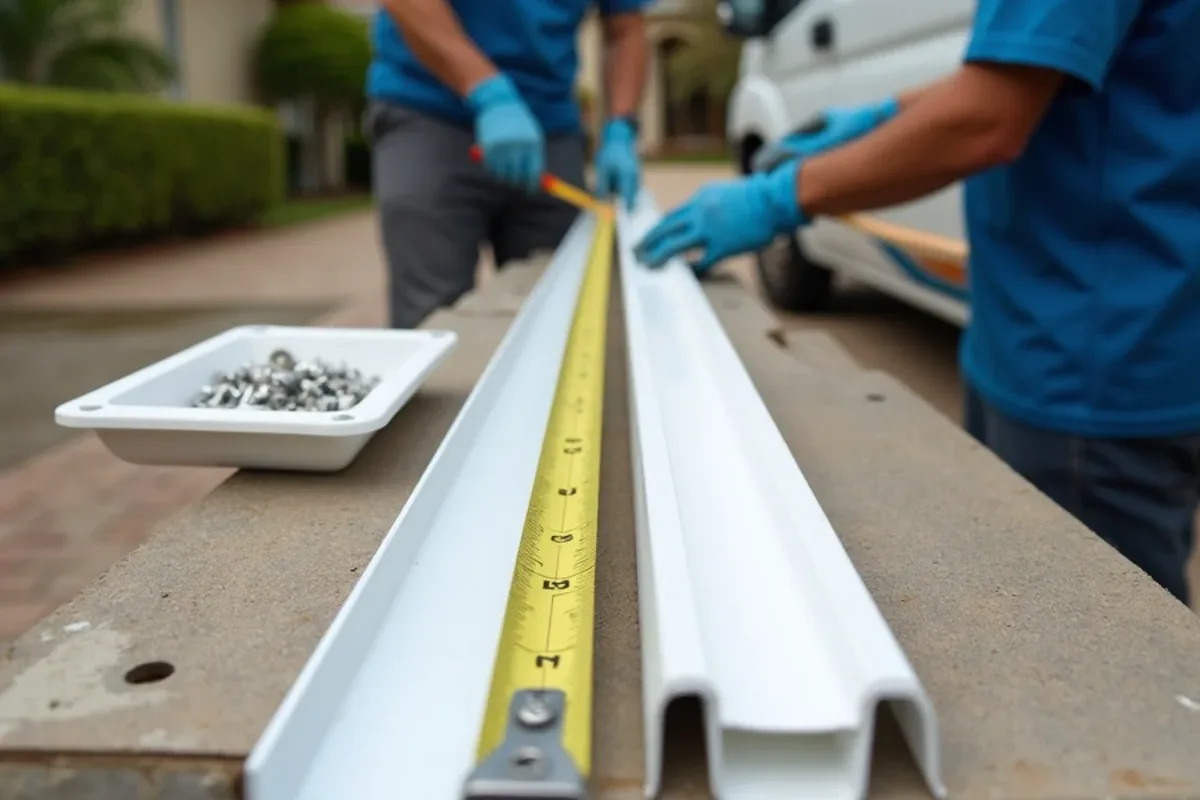
Gutter sizing is not about how big the building looks. It depends on three things:
- Roof area draining to each run, measured in plan, plus any wall above that sheds water onto the roof.
- Roof pitch: steeper roofs deliver water faster and can overshoot a narrow gutter.
- Design rainfall rate: Florida’s plumbing code sizes roof drainage to a design rainfall intensity, and South Florida’s rates are among the higher ones in the country.
In practice, a lot of strip-center canopies and small office buildings are well served by a 6-inch K-style. Large pitched roofs, long runs and buildings with valleys concentrating water at one corner often step up to 7-inch. Our 6-inch and 7-inch oversized gutters cover most of that ground on low-rise commercial work.
When do 8 inch gutters make sense?
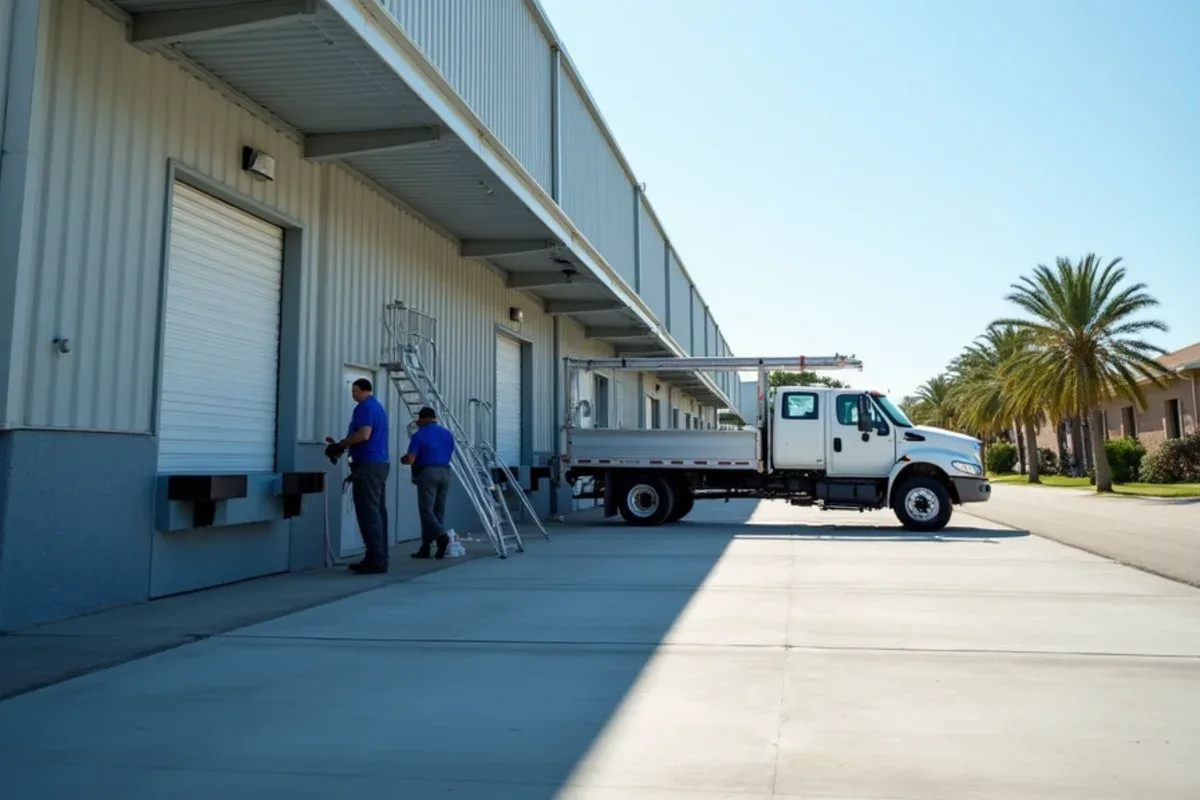
Eight-inch gutters, nearly always box profile, appear on big low-slope metal buildings, distribution warehouses and some custom architectural roofs. They earn their place when one eave collects water from a very large, uninterrupted roof plane and adding downspouts is impractical because of dock doors, glazing or interior layout.
They are not automatically better. A larger gutter is heavier when full, needs stronger hangers at closer spacing, and still overflows if the outlets cannot drain it. Before going to 8 inches, check whether more downspouts on a 7-inch line would do the job. Often they will.
Commercial downspouts: the real bottleneck
A gutter can only empty as fast as its outlets allow. On many commercial overflow calls, the gutter is big enough and the downspouts are the problem: too few, too small or placed at the wrong end of a long run.
- Size: 3x4-inch rectangular is standard on houses; 4x5-inch or larger round and rectangular downspouts are common on commercial buildings.
- Count and spacing: more outlets mean less water traveling the length of the gutter, which lowers the peak level in the trough.
- Placement: put outlets where roof valleys and long slopes concentrate water, not just at convenient corners.
- Discharge: plan where each downspout goes at grade, whether into a storm system, a swale or a landscape area, so the water does not puddle at a doorway or across a sidewalk.
Overflow at the same spot every storm?
Before replacing the whole system, check the downspout nearest the overflow. Adding an outlet or upsizing one downspout often solves it.
Materials and attachment for South Florida commercial roofs
Aluminum
Seamless aluminum is the workhorse for low-rise commercial buildings here. It does not rust, handles humidity well and comes in many factory colors to match a facade. Heavier-gauge coil and close hanger spacing give it the strength for large runs. Exposed cut edges should be painted, and stainless-steel fasteners avoid the rust streaks that cheaper hardware leaves.
Steel
Galvanized or coated steel is stiff and common on metal buildings, but near the coast, salt air attacks scratches and cut edges. On Florida jobs it needs careful detailing and touch-up to last.
Copper
Copper shows up on churches, upscale retail and historic buildings for looks and long life. It costs more and must not be mixed with aluminum or steel fasteners that react with it.
Attachment in the HVHZ
Broward and Miami-Dade counties fall within Florida’s High-Velocity Hurricane Zone, which carries stricter wind-resistance requirements. Hanger type, spacing and fasteners matter as much as the gutter itself. Ask any contractor how their installation meets the requirements for your building, and for their county license details and certificate of insurance.
What we see when commercial gutters cannot keep up
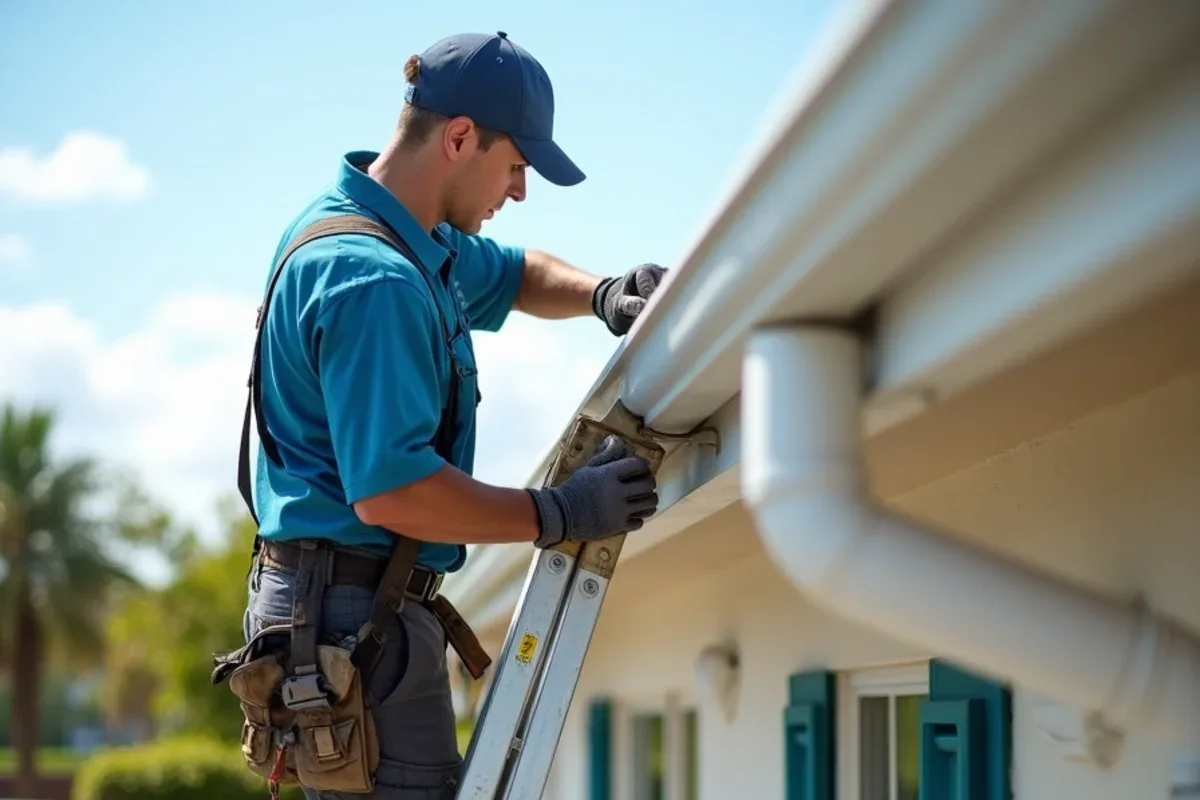
The most common mistake we are called to fix is a gutter that was upsized while the outlets stayed the same. An owner replaces a 6-inch run with a 7-inch one after years of overflow, keeps the original two downspouts, and the first big storm spills at the same corner. Sizing references, including the SMACNA architectural sheet metal manual that many designers work from, rate a gutter for a given rainfall rate, and the downspouts have to match that rating.
Outlets are also cheap capacity. Industry guidance often notes that doubling the number of downspouts can nearly double what a gutter run can carry, because water travels a shorter distance to an exit. On a plaza with fixed storefronts, finding room for one more outlet between two bays is often the best money an owner spends on drainage.
Long runs bring a quieter problem. Aluminum grows and shrinks with South Florida heat, and a straight run along a warehouse eave moves every day. Without expansion joints at sensible intervals, that movement works seams, end caps and hangers loose over a few summers.
Questions to ask before approving a commercial gutter bid
- What roof area drains to each run, and what rainfall rate was the size based on?
- How many downspouts, what size, and where will each one discharge at grade?
- What hanger type, spacing and fasteners will be used to meet HVHZ wind requirements?
- Where are expansion joints placed on long runs?
- Does the scope include a permit where the building department requires one?
- What warranty applies to workmanship and to materials, and in writing?
The trade-off is appearance versus capacity. A hidden box gutter or a slim profile looks cleaner on a modern facade, but it leaves less margin when a cloudburst arrives. On buildings where a spill means water at a dock door or a storefront, we lean toward capacity.
How we plan a commercial gutter installation
Our commercial gutter installation estimates start on the roof, not with a catalog. We measure each roof plane that drains to each run, note valleys and wall flashing, look at where water can go at grade, and then recommend the profile, size and downspout layout that fits. You get it in a written quote that lists every run, outlet and downspout.
Business parks and retail centers in Miramar and industrial areas across Miami-Dade County are typical of the buildings where this matters: big flat or low-slope roofs, heavy summer storms and doors where nobody wants a waterfall.
Matching the gutter system to the roof and the rain
Box or K-style, 6 inch or 8 inch, aluminum or steel: the right commercial system is the one sized to the roof area and the rainfall, drained by enough downspouts, and fastened to stand up to HVHZ winds. Get those decisions right on paper and the gutters disappear into the building, which is what you want.
For a new install or a replacement, call Southern Gutters FL for a free estimate. We will measure the roof planes, lay out every run and outlet in a written quote, and explain how our commercial gutter services fit the building after the install.
Questions about commercial gutter systems
Are box gutters better than K-style for commercial buildings?
Not automatically. Box gutters carry more water for their width and suit very large roofs, but K-style gutters in 6 or 7 inches handle most plazas, offices and churches well and can be roll-formed seamless on site. The roof area and downspout layout decide which fits.
Can we add downspouts instead of replacing the gutters?
Often, yes. If the gutters are sound and properly pitched, adding outlets or upsizing downspouts is frequently the most effective fix for overflow on a commercial building.
How much water can a commercial gutter handle?
It depends on width, profile, slope and above all the number of outlets. Manufacturer and SMACNA-style sizing tables rate gutters for a set rainfall rate, so the rating has to be scaled to South Florida storms. Because water exits faster with more outlets, adding downspouts can raise a run’s practical capacity almost as much as stepping up a gutter size.
Do commercial gutter installations need a permit in South Florida?
Often, yes, especially for new or replacement systems on commercial buildings in Broward and Miami-Dade, where High-Velocity Hurricane Zone rules apply. Requirements vary by city and county building department. Ask any contractor whether a permit is included in the scope, and confirm with the local building department before work starts.
Services mentioned in this guide
Commercial Gutter Installation
Large-format seamless and box gutters with oversized downspouts, sized for big roofs and phased around tenants.
Learn more6" & 7" Oversized Gutters
Wider 6- and 7-inch seamless troughs with 3x4 downspouts that keep up with cloudbursts and big tile roof valleys.
Learn moreCommercial Gutter Services
Cleaning, installation and repair for plazas, warehouses, churches and associations, with insured crews and photo reports.
Learn moreServing Miramar, Miami-Dade County and the rest of South Florida.